28 citations
,
August 2005 in “Journal of Investigative Dermatology” TG5 helps maintain hair follicle health, while TG3 aids in hair shaft development.
5 citations
,
July 1996 in “Journal of Cutaneous Medicine and Surgery” This study explains that while trichothiodystrophy and xeroderma pigmentosum share genetic defects, TTD patients primarily exhibit issues in transcription initiation, not the increased skin cancer risk seen in XP.
 November 2023 in “PubMed”
 This study showed that intralesional injections of pentoxifylline may be an effective and safe alternative to triamcinolone acetonide for treating localized alopecia areata.
 1 citations
,
September 2024 in “Indian Journal of Postgraduate Dermatology”
1 citations
,
September 2024 in “Indian Journal of Postgraduate Dermatology” In this report, trichoscopy was highlighted as a valuable tool for diagnosing temporal triangular alopecia in children due to its ability to reveal distinctive patterns that differentiate it from similar conditions like alopecia areata, eliminating the need for invasive biopsy.
2 citations
,
January 1993 This study found that human trichohyalin has a unique protein sequence potentially contributing to at least three important functions in hair follicle and epidermal cells.
26 citations
,
January 1993 in “Dermatology” This report describes a new case of isolated trichothiodystrophy with characteristic brittle hair and suggests a simplified classification scheme for understanding sulfur-deficient hair disorders.
![Discovery of 7-Methoxy-6-[4-(4-Methyl-1,3-Thiazol-2-yl)-1H-Imidazol-5-yl]-1,3-Benzothiazole (TASP0382088): A Potent and Selective Transforming Growth Factor-β Type I Receptor Inhibitor as a Topical Drug for Alopecia](/images/assets/9620bd26-3366-4f2a-bcac-f511697bbc41/small/35997.jpg) 6 citations
,
January 2013 in “Chemical & pharmaceutical bulletin/Chemical and pharmaceutical bulletin”
6 citations
,
January 2013 in “Chemical & pharmaceutical bulletin/Chemical and pharmaceutical bulletin” In this study, TASP0382088 showed potent selective inhibition of the ALK5 receptor, significantly reducing Smad2 phosphorylation in mouse skin following topical application.
 April 2026 in “Human Genome Variation”
 In this study, researchers identified a recurrent MBTPS2 splice-site variant as a mutational hotspot in IFAP syndrome across diverse families, with phenotype severity suggesting the influence of additional modifiers.
 July 2023 in “Zenodo (CERN European Organization for Nuclear Research)”
 In this study, the authors propose that drugs like trazodone and antipsychotics such as chlorpromazine, which can induce priapism, may help restore libido synaptic circuits, offering potential treatment for post-finasteride syndrome and post-SSRI sexual dysfunction.
 2 citations
,
January 2023 in “Journal of Education, Health and Sport”
2 citations
,
January 2023 in “Journal of Education, Health and Sport” In this study, researchers reviewed current treatments for trichotillomania and found that psychotherapy, particularly cognitive-behavioral therapy like habit reversal training, is most effective, with some medications helping to alleviate symptoms, though further study is needed on their use.
 January 1999 in “American Journal of Medical Genetics Part A”
 This case report describes a rare occurrence of ectodermal dysplasia features in a 14-year-old with MBTPS1 gene variants, expanding the known spectrum of related disorders.
8 citations
,
August 2018 in “Journal of Investigative Dermatology” 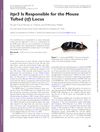 6 citations
,
October 2012 in “Journal of Heredity”
6 citations
,
October 2012 in “Journal of Heredity” This study identified the Itpr3 gene as responsible for the tufted hair loss phenotype in the BTBR mouse strain.
 2 citations
,
January 2017 in “Folia biologica”
2 citations
,
January 2017 in “Folia biologica” This study identified two single-nucleotide polymorphisms and three haplotypes in the KRTAP7-1 gene across yak, taurine, and zebu cattle, with the BOVIN-KRTAP7-1*A haplotype most prevalent.
3 citations
,
October 2018 in “Journal of cosmetic dermatology” This study found that intralesional pentoxifylline injections were effective for localized alopecia areata, with the best results observed when combined with triamcinolone acetonide.
7 citations
,
August 2023 in “Frontiers in Immunology” This review discusses the role of transient receptor potential channels in pathological scarification and suggests these channels as potential targets for its prevention and treatment, although it reports no new clinical findings.
 December 2023 in “American journal of medical genetics. Part A”
 In this study, researchers identified compound heterozygous variants in the MBTPS1 gene associated with ectodermal dysplasia features in a 14-year-old female, broadening the known disorder spectrum linked to these genetic mutations.
 64 citations
,
July 1997 in “Journal of The American Academy of Dermatology”
64 citations
,
July 1997 in “Journal of The American Academy of Dermatology” This study found that eosinophils are a useful diagnostic feature for alopecia areata, especially when the typical "swarm of bees" lymphoid infiltrate is absent, helping differentiate it from trichotillomania.
11 citations
,
October 2002 in “Pharmacology Biochemistry and Behavior” This study found that formalin-induced pain in rats nearly eliminates testosterone in the brain and spinal cord by likely increasing 5α-reductase activity, but normalizes serum levels after 24 hours.
 6 citations
,
December 2020 in “Biological & Pharmaceutical Bulletin”
6 citations
,
December 2020 in “Biological & Pharmaceutical Bulletin” This study found that certain fatty acids and triterpenoid-glycosides from Eclipta prostrata L. leaves exhibit potent inhibitory effects on the protein tyrosine phosphatase 1B enzyme, suggesting potential anti-diabetic and anti-obesity benefits.
101 citations
,
October 2007 in “Journal of Biological Chemistry” This study indicates that reduced activity of the matriptase-prostasin proteolytic cascade is likely the cause of human autosomal recessive ichthyosis with hypotrichosis, as demonstrated using a novel mouse model.
80 citations
,
June 2002 in “Molecular Biology of the Cell” This study found that type II keratins in proliferating epithelial tissues are phosphorylated at a conserved motif during mitosis and stress, impacting keratin solubilization and reorganization.
9 citations
,
January 2024 in “International Journal of Dermatology” Tralokinumab may help improve symptoms of atopic dermatitis and alopecia areata.
 28 citations
,
January 2016 in “Vitamins and hormones”
28 citations
,
January 2016 in “Vitamins and hormones” This source reports that thymosin beta 4 accelerated dermal wound repair in phase 2 clinical trials for pressure ulcers, stasis ulcers, and epidermolysis bullosa wounds and was well tolerated.
54 citations
,
January 1984 in “Molecular and Cellular Biochemistry” 1 citations
,
June 2024 in “Access Microbiology” This study found that certain non-dermatophytic moulds, specifically *Absidia* sp., *Cladosporium tenuissimum*, and *Aspergillus welwitschiae*, can cause skin symptoms such as discoloration and lesions in albino mice, suggesting potential virulence due to enzyme activity.
12 citations
,
March 2021 in “Journal of Investigative Dermatology” TRPM5 is crucial for maintaining hair growth.
22 citations
,
November 2014 in “Proteins Structure Function and Bioinformatics” In this study, researchers mapped cysteine accessibility in wool keratins and KAPs, revealing that certain cysteines in keratin end domains and Types I and II rod domains are accessible and likely involved in forming disulfide bonds.
79 citations
,
October 2003 in “PubMed” In this study, PKCepsilon transgenic mice showed increased TNFalpha shedding during skin tumor promotion, which may contribute to the development of metastatic squamous cell carcinoma.
 13 citations
,
June 2012 in “Journal of Dermatological Case Reports”
13 citations
,
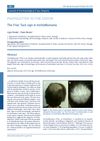
June 2012 in “Journal of Dermatological Case Reports” This report describes an 8-year-old male with trichotillomania, confirmed by trichoscopy showing characteristic hair damage and patterns.