 17 citations
,
January 2012 in “IOSR Journal of Environmental Science Toxicology and Food Technology”
17 citations
,
January 2012 in “IOSR Journal of Environmental Science Toxicology and Food Technology” This study found that high doses of ethyl acetate extract from Tridax procumbens can have specific toxic effects in rats, including organ damage and significant changes in some serum biochemical parameters.
11 citations
,
January 1989 This case report describes two patients with trichothiodystrophy who exhibited a different pattern of hair protein composition changes, suggesting a subgroup of TTD characterized by partial loss of high-sulfur proteins without significant alteration in their amino acid composition.
10 citations
,
May 2024 in “BioEssays” This review examined the role of the ion channel TRPV3 in warmth sensation and skin physiology, discussing controversies around its direct contribution to temperature perception, its involvement in skin health, and its potential as a therapeutic target for skin diseases.
19 citations
,
July 1997 in “British Journal of Dermatology” This study successfully developed and characterized a monospecific monoclonal antibody, LHTric-1, that specifically localizes to the pre-cortical region of the hair follicle and can aid research on hair and nail formation.
29 citations
,
October 2020 in “Environmental health perspectives” This study found that several preservatives, including triclocarban and triclosan, showed potential endocrine-disrupting effects on various nuclear receptors in both in silico and in vitro models.
 October 2024 in “Scientific Reports”
 This research observed that oxytocin receptor agonists WAY267464 and LIT001 increased hair growth-related gene expression in human dermal papilla cells and significantly promoted hair follicle sprouting in vitro, suggesting their potential as hair growth agents targeting OXTR for alopecia treatment.
25 citations
,
September 1973 in “Archives of dermatology” In this study, a daily topical application of a 0.05% tretinoin solution effectively removed dark plugs and resolved symptoms of trichostasis spinulosa.
March 2026 in “Journal of Enzyme Inhibition and Medicinal Chemistry” This review examines the development and challenges of using PROTACs, a targeted protein degradation strategy, to treat cancer by degrading specific proteins like PARPs and GPX4, highlighting issues such as target diversification and bioavailability.
 December 2023 in “American journal of medical genetics. Part A”
 In this study, researchers identified compound heterozygous variants in the MBTPS1 gene associated with ectodermal dysplasia features in a 14-year-old female, broadening the known disorder spectrum linked to these genetic mutations.
 2 citations
,
June 2026 in “Frontiers in Science”
2 citations
,
June 2026 in “Frontiers in Science” This review examines the potential of regulatory T cell-based therapies to transform treatment across various medical specialties by promoting immune tolerance and tissue repair, but it reports no new clinical results.
 3 citations
,
August 2023 in “Drug safety”
3 citations
,
August 2023 in “Drug safety” This source reports that trastuzumab deruxtecan improves outcomes in HER2-positive and HER2-low metastatic breast cancer, emphasizing the need for careful adverse event monitoring, particularly for interstitial lung disease, and managing emetic risk to maximize benefits.
 18 citations
,
February 2019 in “Scientific Reports”
18 citations
,
February 2019 in “Scientific Reports” This study found that TSA restored the hair-inductive capacity of skin-derived precursors in mice by enhancing BMP gene expression and signaling through histone acetylation.
September 2022 in “Dermatologic Therapy” This article is a correspondence that discusses platelet-rich plasma application methods for androgenic alopecia but reports no new clinical results.
April 2019 in “The journal of investigative dermatology/Journal of investigative dermatology” In this study, the researchers introduced a mutation in mice to mimic Olmsted syndrome and found that the mutation caused hair loss due to impaired keratinocyte differentiation and depletion of hair follicle stem cells.
This study found that 54% of participants with androgenetic alopecia using Ricapil® showed clinical signs of hair follicle reactivation and initial hair regrowth over three months.
October 1995 in “Pediatric Research” 8 citations
,
November 2011 in “Journal of Medical Case Reports” This case report describes a 23-year-old Asian woman with fluoxetine non-responsive trichotillomania who showed significant improvement with bupropion and cognitive behavior therapy, though confirmation in larger trials is needed.
 July 2014 in “Journal of the Portuguese Society of Dermatology and Venereology”
 This review covers current knowledge of tricoscopy's applications in diagnosing and monitoring scalp and hair disorders but presents no new clinical results.
This study identified a high proportion of dual TCR Treg cells in both lymphoid and non-lymphoid tissues of mice, revealing their tissue specificity, TCR repertoire characteristics, and functional phenotypes.
June 2020 in “Zenodo (CERN European Organization for Nuclear Research)” This review discusses Robertsonian chromosomal translocations and their prevalence in the population, highlighting their association with infertility, and reports no new clinical results.
 13 citations
,
June 2012 in “Journal of Dermatological Case Reports”
13 citations
,
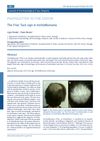
June 2012 in “Journal of Dermatological Case Reports” This report describes an 8-year-old male with trichotillomania, confirmed by trichoscopy showing characteristic hair damage and patterns.
 17 citations
,
August 2019 in “Archives of Cardiovascular Diseases”
17 citations
,
August 2019 in “Archives of Cardiovascular Diseases” In this study, the authors observed that testosterone therapy shortened the QTc interval and normalized T-wave morphology in men with acquired LQTS or TdP linked to hypogonadism, suggesting testosterone may be helpful in treatment.
 February 2024 in “Journal of cutaneous and aesthetic surgery”
 This study reported that platelet-rich plasma therapy combined with intralesional triamcinolone acetonide was beneficial for patients with alopecia totalis, helping them reduce reliance on oral immunosuppressants.
71 citations
,
January 2011 in “Journal of cutaneous pathology” This case report describes the first confirmed instance of trichodysplasia spinulosa in a child with Down syndrome and leukemia, linking it to the TS-associated polyomavirus.
 8 citations
,
January 2009 in “Journal of pediatric endocrinology & metabolism/Journal of pediatric endocrinology and metabolism”
8 citations
,
January 2009 in “Journal of pediatric endocrinology & metabolism/Journal of pediatric endocrinology and metabolism” This study reports a novel TRbeta gene mutation associated with resistance to thyroid hormone syndrome, which may contribute to various forms of alopecia in the affected family members.
December 2021 in “Faculty Opinions – Post-Publication Peer Review of the Biomedical Literature”  1 citations
,
January 2024 in “Journal of the American Pharmacists Association”
1 citations
,
January 2024 in “Journal of the American Pharmacists Association” In this study of transgender and gender-diverse adults, the researchers observed that one-third of those on psychotropic medications within two years of starting hormone therapy experienced psychotropic polypharmacy, with a significantly higher likelihood of potential drug-hormone interactions in this group.
1 citations
,
January 2024 in “International journal of molecular sciences” This review article addresses how the TRPV4 ion channel helps cells respond to mechanical and environmental stimuli, discussing its role in calcium signaling crucial for tissue repair and fibrosis across various organ systems, and highlighting potential therapeutic targets from animal and disease models.
July 2025 in “International Journal of Trichology” This study reported six pediatric cases of temporal triangular alopecia and highlighted the use of trichoscopy to distinguish it by detecting a distinctive carpet of vellus hair, helping to differentiate TTA from other hair loss conditions.
143 citations
,
May 2002 in “PubMed” This study found that the retinoid LGD1069 suppressed mammary tumorigenesis in a mouse model without observable toxicity, while TTNPB showed modest effects but was associated with significant toxicity.