 September 2020 in “Adnan Menderes Üniversitesi Sağlık Bilimleri Fakültesi Dergisi”
 This review investigates the relationship between certain gene polymorphisms associated with obesity (FTO and MC4R) and Polycystic Ovarian Syndrome, reporting no new results but suggesting a potential genetic link.
 192 citations
,
March 2017 in “Cell host & microbe”
192 citations
,
March 2017 in “Cell host & microbe” The researchers reported that hair follicle development and commensal microbe colonization promote the accumulation of regulatory T cells in neonatal skin, with the Ccl20-Ccr6 pathway playing a key role in this process.
July 2024 in “Journal of Investigative Dermatology” Targeting TCR-Vβ2 in cutaneous T cell lymphoma shows promise for safer, more specific treatment.
 February 2024 in “bioRxiv (Cold Spring Harbor Laboratory)”
 This study found that certain tandem repeats predict darker hair color across diverse ancestry groups and can contribute to a polygenic score for hair color, independent of SNP variation.
88 citations
,
April 2012 in “Journal of Investigative Dermatology” This study suggests that TRPV3 may play a key role in dry skin-related itch, indicating potential for TRPV3 antagonists in treating pruritus resistant to histamine H1R antagonists.
 10 citations
,
June 2011 in “Movement Disorders”
10 citations
,
June 2011 in “Movement Disorders” THAP1 gene changes do not affect DYT1 dystonia; finasteride may help reduce tics and OCD in Tourette syndrome.
 1 citations
,
July 2023 in “Nature communications”
1 citations
,
July 2023 in “Nature communications” This study found that deleting the Mof gene in mouse skin leads to severe defects in skin cell self-renewal, differentiation, and hair follicle growth, indicating that MOF is crucial for mitochondrial and ciliary gene expression and essential for skin development.
February 2009 in “RePub (Erasmus University Rotterdam)” This thesis investigates the role of phosphorylation and the mutation F826L in modulating androgen receptor activity, but concludes that the precise effects are not yet fully clear.
70 citations
,
December 2008 in “Cancer Research” This study found that activating CXCR2 on ras-transformed keratinocytes promotes migration and tumor development in a mouse skin model.
42 citations
,
July 2017 in “Molecular therapy” This study found that applying a tocotrienol-rich phytochemical topically induced hair follicle development in adult mice, revealing a new epidermal pathway involving E-cadherin and β-catenin.
 February 2020 in “Definitions”
 This article discusses the human KRT72 wild-type allele's role in hair formation and reports no new research findings.
10 citations
,
May 2024 in “BioEssays” This review examined the role of the ion channel TRPV3 in warmth sensation and skin physiology, discussing controversies around its direct contribution to temperature perception, its involvement in skin health, and its potential as a therapeutic target for skin diseases.
 July 2025 in “The Journal of Dermatology”
 This study identified common and unexpected adverse events associated with ritlecitinib in real-world use, providing insights into its safety profile for treating severe alopecia areata.
 24 citations
,
September 2005 in “Journal of Cellular Biochemistry”
24 citations
,
September 2005 in “Journal of Cellular Biochemistry” This study found that all-trans and 9-cis retinoic acids increase steroid sulfatase activity in HL60 cells through mechanisms involving RARα/RXR heterodimers and multiple signaling pathways.
 128 citations
,
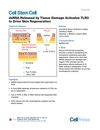
August 2015 in “Cell Stem Cell”
128 citations
,
August 2015 in “Cell Stem Cell” The researchers reported that dsRNA from damaged skin activates TLR3, promoting hair follicle regeneration, while TLR3-deficient animals fail to initiate this process, suggesting potential therapeutic approaches for hair neogenesis.
 April 2012 in “Informa Healthcare eBooks”
 Temporal triangular alopecia is a lifelong condition with hairless patches on the side of the head that may be present from birth.
November 2022 in “Journal of Investigative Dermatology” This study generated a transcriptomic map of human hair follicle compartments, providing a database for identifying compartment-specific gene expression which may aid in developing targeted treatments for hair follicle disorders.
 103 citations
,
January 2011 in “Blood”
103 citations
,
January 2011 in “Blood” This study found that thymus transplantation in infants with FOXN1 deficiency led to T-cell reconstitution and functional immunity, resolving serious infections and cytopenias.
 4 citations
,
March 2018 in “Journal of labelled compounds & radiopharmaceuticals”
4 citations
,
March 2018 in “Journal of labelled compounds & radiopharmaceuticals” In this study, researchers developed a new prostate cancer imaging agent, a [99m Tc]tricarbonyl complex derived from finasteride, which demonstrated high radiochemical purity and significant uptake in the prostate of a rat model, suggesting its potential for noninvasive prostate cancer imaging.
8 citations
,
December 2016 in “Hormone Research in Paediatrics” This study reported a series of eight children with hereditary vitamin D-resistant rickets in Tunisia, identifying both common and novel mutations in the vitamin D receptor gene, and noting significant improvement with intravenous calcium treatment in most patients.
 January 2023 in “European journal of gynaecological oncology”
 This study found that depletion of KRT17 in endometrial cancer reduced cell growth, motility, and angiogenesis, suggesting KRT17 as a potential therapeutic target.
 11 citations
,
May 1996 in “The Journal of clinical endocrinology and metabolism/Journal of clinical endocrinology & metabolism”
11 citations
,
May 1996 in “The Journal of clinical endocrinology and metabolism/Journal of clinical endocrinology & metabolism” This study reported that 5 alpha-reductase type 2 is the predominant enzyme in pubic skin fibroblasts across normal men, women, and hirsute patients, suggesting potential treatment options for idiopathic hirsutism.
50 citations
,
December 2005 in “European Journal of Immunology” This study found that a specific mutation in the mouse RXRalpha gene significantly impacts immune responses and causes hair loss and skin cysts.
128 citations
,
January 2023 in “Frontiers in Endocrinology” This review discusses recurrent implantation failure (RIF) in IVF, noting the lack of standard definitions or treatment protocols, and emphasizes the need for individualized treatment and further research.
In this study, researchers observed that oncogenic HrasG12V in single murine epidermal cells leads to an initial increase in progenitor cell renewal, but ultimately results in balanced cell fate choices that limit clone growth.
 July 2022 in “The journal of investigative dermatology/Journal of investigative dermatology”
 In this study, researchers found that TSPyV T antigens can disrupt normal cell differentiation and proliferation in hair follicles and interfollicular epidermis, possibly contributing to trichodysplasia spinulosa pathology.
 January 2025 in “Turkish Journal of Cerebrovascular Diseases”
 This case report details two consanguineous patients with cerebral autosomal recessive arteriopathy, both having the same HTRA1 gene mutation, but exhibiting different clinical presentations, including one with epileptic seizures and lobar hemorrhages—previously undocumented in this condition.
14 citations
,
July 2021 in “Bioscience Reports” In this study, activation of Tgr5 was found to improve alopecia areata and bone microstructure in mice by down-regulating the JAK1-STAT3 signaling pathway.
 November 2022 in “Journal of Investigative Dermatology”
 This study identified a novel LZTR1 mutation associated with hybrid schwannoma and neurofibroma in a patient with schwannomatosis, but not all cases of hybrid tumors are linked to this condition.
September 2017 in “The journal of investigative dermatology/Journal of investigative dermatology” This study found that while 450nm blue light can inhibit collagen and induce oxidative stress in dermal fibroblasts, 850nm near-infrared light may enhance metabolic activity without causing oxidative damage, suggesting potential for tailored light therapies in skin treatments.