 68 citations
,
July 2016 in “Dermatology and Therapy”
68 citations
,
July 2016 in “Dermatology and Therapy” This review highlights that light and laser therapies, such as the 1064-nm Nd:YAG and 810-nm diode lasers, may offer significant improvement for acne keloidalis nuchae with minimal side effects, though larger trials are needed.
67 citations
,
March 2018 in “The Journal of Clinical Endocrinology & Metabolism” This study reported that estrogen-progestin oral contraceptives, antiandrogens, and insulin sensitizers are more effective than placebo in treating hirsutism in women, with combination therapies generally proving superior to monotherapy.
 64 citations
,
July 2011 in “Dermatologic Therapy”
64 citations
,
July 2011 in “Dermatologic Therapy” This review discusses treatments for chemotherapy-induced alopecia, highlighting scalp cooling for hair loss prevention and 2% topical minoxidil for regrowth acceleration as effective options, but reports a need for more rigorous trials to validate promising new therapies.
 64 citations
,
June 2009 in “Journal of The American Academy of Dermatology”
64 citations
,
June 2009 in “Journal of The American Academy of Dermatology” This article discusses frontal fibrosing alopecia, noting potential connections to lichen planopilaris, but reports no new clinical findings.
 63 citations
,
December 2002 in “Archives of Dermatology”
63 citations
,
December 2002 in “Archives of Dermatology” This abstract contains no research results; it provides information about the JAMA Dermatology journal and its access options.
62 citations
,
July 2022 in “Science Immunology” This study discovered that TREM2 macrophages influenced by squalene play a role in acne's development by hindering the killing of Cutibacterium acnes, helping explain why benzoyl peroxide is effective in treatment.
 61 citations
,
June 2014 in “Scientific Reports”
61 citations
,
June 2014 in “Scientific Reports” This study found that overexpression of Wnt1a in bone marrow mesenchymal stem cells enhanced mouse hair follicle regeneration and promoted hair cycling.
 60 citations
,
September 2015 in “Expert Review of Clinical Immunology”
60 citations
,
September 2015 in “Expert Review of Clinical Immunology” This study suggests that CD8+ cytotoxic T lymphocytes play a crucial role in the development of alopecia areata, based on observations in rodent models that mimic human autoimmune disease.
60 citations
,
October 2009 in “PubMed” This study reports that intralesional triamcinolone acetonide was effective and well-tolerated for treating extensive alopecia areata in patients who often showed specific initial hair characteristics.
 57 citations
,
October 2018 in “Journal of The American Academy of Dermatology”
57 citations
,
October 2018 in “Journal of The American Academy of Dermatology” This study found that platelet-rich plasma significantly increased hair count, density, and the percentage of anagen hairs in patients with androgenetic alopecia, but these improvements did not correlate with platelet or growth factor levels.
 57 citations
,
July 2009 in “Urology”
57 citations
,
July 2009 in “Urology” This study found that finasteride may decrease and control the frequency of priapism episodes in patients with sickle cell anemia, with fewer side effects compared to other treatments.
55 citations
,
December 1983 in “Acta Neurologica Scandinavica” This review discusses the side effects of carbamazepine, valproate, and clonazepam, noting that these are rare with long-term use but more common, transient, and generally mild during early treatment.
54 citations
,
June 2006 in “Baillière's best practice and research in clinical endocrinology and metabolism/Baillière's best practice & research. Clinical endocrinology & metabolism” This review discusses the management of hirsutism and acne in women with polycystic ovary syndrome, highlighting the partial effectiveness of current treatments and suggesting a combined approach of medication and hair removal.
 54 citations
,
August 2005 in “Alcohol”
54 citations
,
August 2005 in “Alcohol” This study found that acute finasteride treatment decreased ethanol intake in male C57BL/6J mice, whereas chronic treatment showed diminished effects, implying compensatory changes in neurosteroid modulation.
54 citations
,
December 2004 in “PubMed” This study suggests that topical Cyclosporin A formulations, with or without a penetration enhancer, effectively stimulated hair regrowth in a rat model of alopecia areata.
 53 citations
,
August 2019 in “American journal of human genetics”
53 citations
,
August 2019 in “American journal of human genetics” This study found that FOXN1 haploinsufficiency is a significant genetic factor causing T cell lymphopenia at birth, linked to reduced thymic function in both humans and mice.
53 citations
,
October 2012 in “Journal of dermatological treatment” This study found that low-fluence 1064 nm Q-switched Nd:YAG laser treatment effectively improved melasma in Asian patients without serious side effects, achieving an average improvement rate of 50-74%.
 52 citations
,
February 2006 in “Archives of Dermatology”
52 citations
,
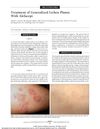
February 2006 in “Archives of Dermatology” This case report describes a 25-year-old woman with widespread lichen planus who did not respond to multiple systemic treatments, including antihistamines, hydroxychloroquine sulfate, and corticosteroids.
 51 citations
,
April 1982 in “Lancet”
51 citations
,
April 1982 in “Lancet” This study found that multiple treatment regimens for refractory hypertension were effective in controlling blood pressure in most patients, with diazoxide being the most effective but least tolerable option.
 50 citations
,
November 2010 in “Plastic and Reconstructive Surgery”
50 citations
,
November 2010 in “Plastic and Reconstructive Surgery” This study suggests that Botox injections may increase hair count and reduce hair loss in men with androgenetic alopecia, potentially through increased blood flow and oxygen to the scalp.
50 citations
,
January 2008 in “International Journal of Antimicrobial Agents” This review discusses various treatment recommendations for Chronic Prostatitis/Chronic Pelvic Pain Syndrome, noting the need for further trials on herbal therapies and specific indications for surgical intervention, but reports no new clinical results.
 49 citations
,
August 2018 in “International Journal of Dermatology”
49 citations
,
August 2018 in “International Journal of Dermatology” In this phase I study, partial hair regrowth was observed in patients with alopecia universalis using topical JAK inhibitors, though more research is needed to confirm potential as a treatment alternative to clobetasol.
48 citations
,
April 2021 in “Journal of the American Academy of Dermatology” This study found that topical corticosteroids are the most supported first-line treatment for pediatric alopecia areata, with contact immunotherapy as the next best option.
48 citations
,
May 2012 in “Journal of cosmetic and laser therapy” This study found that fractional bipolar RF energy significantly reduced acne scar severity and improved skin texture, with high subject satisfaction and limited side effects.
48 citations
,
July 1998 in “Pediatric Dermatology” This study found that pulsed doses of prednisolone led to excellent hair growth in 60% of young patients with widespread alopecia areata, with minimal side effects.
 48 citations
,
October 1996 in “Dermatologic clinics”
48 citations
,
October 1996 in “Dermatologic clinics” This review discusses the variability and limitations of treatments for severe alopecia areata, noting some patients may achieve cosmetic hair regrowth with treatment, while others experience persistent hair loss or relapse.
47 citations
,
November 2000 in “Archives of dermatology” In this observational study, the effectiveness of a diode laser was evaluated for treating pseudofolliculitis barbae at the Laser and Skin Surgery Center of New York, but it reports no new clinical results.
46 citations
,
June 1990 in “Archives of dermatology” In this study, combination therapy with 5% minoxidil and 0.5% anthralin showed some cosmetic improvement in 11% of patients with severe treatment-resistant alopecia areata, with hair regrowth starting by week 12.
45 citations
,
July 2008 in “International Journal of Dermatology” This study found that oral sulfasalazine led to varying hair regrowth outcomes in patients with persistent alopecia areata, with 56.3% showing moderate to good responses.
 43 citations
,
January 2007 in “American Journal of Clinical Dermatology”
43 citations
,
January 2007 in “American Journal of Clinical Dermatology” This study concluded that a combined once-daily solution of 5% minoxidil and 0.01% tretinoin is as effective and safe as the conventional twice-daily 5% minoxidil application for treating androgenetic alopecia in men.