
In this case report, the authors observed that onabotulinum toxin A therapy, extended to areas around traumatic excoriations and alopecia, resulted in notable healing and hair regrowth in a patient with trigeminal trophic syndrome and trichotillomania.

This study observed that combining PRP and Tressfix Serum significantly improved hair regrowth and reduced microRNA expression linked to Chronic Telogen Effluvium compared to using either treatment alone.
 29 citations
,
January 2021 in “Translational Psychiatry”
29 citations
,
January 2021 in “Translational Psychiatry” This study found that certain gene sets, including those involved in ligand-gated ion channel signaling and cell adhesion, are associated with Tourette syndrome, suggesting a potential neurobiological basis for the disorder.
 60 citations
,
April 2018 in “Clinical, cosmetic and investigational dermatology”
60 citations
,
April 2018 in “Clinical, cosmetic and investigational dermatology” This review discusses the causes and diagnosis of traction alopecia, emphasizing education for high-risk populations as there is currently no cure, and presents no new clinical findings.
5 citations
,
October 2018 in “Journal of Cosmetic Dermatology” This study found that oral pulse steroids significantly reduced serum and tissue levels of TNF-α in patients with alopecia areata, correlating with clinical improvement.
 January 2015 in “Turkiye Klinikleri Journal of Endocrinology”
 This study found that DHEAS levels were lower in anti-TPO Ab positive PCOS patients compared to those who were negative, indicating a possible link between autoimmunity and reduced DHEAS in these patients.
 November 2021 in “Research Outreach”
 Low testosterone levels may lead to more severe COVID-19 outcomes.

This study suggests that skin tumor cells in tuberous sclerosis complex may promote hamartoma morphogenesis by expressing and releasing higher levels of cathepsin B.
 6 citations
,
January 2017 in “Dermato-endocrinology”
6 citations
,
January 2017 in “Dermato-endocrinology” This study found that androsterone glucuronate (ADT-G) was the only androgenic metabolite sensitive to detecting differences between adult women with acne and controls, and its levels decreased with systemic treatment.
March 2026 in “Journal of Investigative Dermatology” This study found that GPT-4o demonstrated high concordance with in-person and image-based provider assessments in generating SALT scores for alopecia areata, suggesting its potential as an adjunct tool in clinical practice for automating these assessments.
 13 citations
,
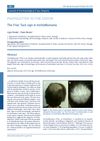
June 2012 in “Journal of Dermatological Case Reports”
13 citations
,
June 2012 in “Journal of Dermatological Case Reports” This report describes an 8-year-old male with trichotillomania, confirmed by trichoscopy showing characteristic hair damage and patterns.
This study found that expressions of TLR-3, TLR-7, TLR-8, and TLR-9 were significantly higher in alopecia areata patients compared to healthy controls, indicating a potential role in disease autoimmunity.
October 2025 in “European Journal of Translational and Clinical Medicine” This study found that women with polycystic ovary syndrome had significantly higher serum dihydrotestosterone levels than healthy controls, supporting its use as a reliable biomarker for early detection of the condition.
 14 citations
,
May 2013 in “Experimental Dermatology”
14 citations
,
May 2013 in “Experimental Dermatology” This study found that the modified wash test was generally more effective than TrichoScan® for diagnosing hair loss, particularly telogen effluvium, though both methods showed only fair concordance with clinical diagnosis.
 February 2026 in “Molecules”
 This study developed a sensitive method for analyzing nine biomarkers in hair, revealing an association between chronic tobacco smoke exposure and stress, highlighting its potential use in understanding the relationship between long-term tobacco exposure and chronic stress.
 59 citations
,
March 2013 in “European Journal of Obstetrics & Gynecology and Reproductive Biology”
59 citations
,
March 2013 in “European Journal of Obstetrics & Gynecology and Reproductive Biology” This study found that the prevalence of autoimmune thyroiditis was significantly higher in Italian patients with polycystic ovary syndrome compared to controls, suggesting that these patients should be screened for the condition.
 13 citations
,
December 2012 in “Canadian Urological Association Journal”
13 citations
,
December 2012 in “Canadian Urological Association Journal” This report from a consensus meeting concluded that while 5-alpha reductase inhibitors are beneficial for BPH treatment and prostate cancer risk reduction, their role in clinical practice should be more widely integrated into prostate management guidelines.
January 2022 in “Clinical Cases in Dermatology” This review discusses prevention, diagnosis, and treatment strategies for traction alopecia but presents no new clinical findings; the authors emphasize early intervention to prevent permanent hair loss.
 9 citations
,
January 2017 in “Annals of Dermatology”
9 citations
,
January 2017 in “Annals of Dermatology” In this study of a TRPS type I patient, many genes related to keratin and hair development were down-regulated in balding scalp areas, providing new insights into TRPS and hair morphogenesis.
13 citations
,
September 2013 in “Steroids” This study found that a commonly-used DHT enzyme immunoassay shows significant cross-reactivity with testosterone, leading to inaccurate DHT measurements compared to a gold-standard LC–MS/MS method.
 37 citations
,
March 1990 in “The Journal of Pediatrics”
37 citations
,
March 1990 in “The Journal of Pediatrics” Toxic shock syndrome is caused by a complex interaction of bacterial toxins and the immune system, and understanding this can help improve diagnosis and treatment.
 March 2013 in “The Journal of Urology”
 This study found that patients with androgenetic alopecia frequently had higher PSA levels and more significant urinary symptoms, likely due to older age, though prostate weight did not differ.
December 2023 in “Bulletin of Pharmaceutical Sciences Assiut” In this study, GC/MS analysis revealed variability in the quality of Syrian herbal formulations for BPH, with variations in tocopherol content, presence of parabens, and shortages of certain phytosterols.
This study found that intrathyroidal injection of autologous platelet-rich plasma improved thyroid function and symptoms in hypothyroidism patients, without adverse events over one year.
 August 2008 in “Current Opinion in Internal Medicine”
 This review discusses significant developments in prostate cancer risk assessment, diagnosis, and treatment, but reports no new clinical results; the authors emphasize the evolving importance of prognostic factors and treatment implications.
 37 citations
,
September 2018 in “The Journal of Clinical Endocrinology and Metabolism”
37 citations
,
September 2018 in “The Journal of Clinical Endocrinology and Metabolism” This study found that intravaginal testosterone significantly improved sexual satisfaction and reduced dyspareunia in postmenopausal women using aromatase inhibitors, with no effect on urinary incontinence.
January 2023 in “ALEXMED ePosters (Online)” This study observed that alopecia areata patients had higher levels of cardiac Troponin I compared to individuals with androgenic alopecia and healthy controls, suggesting potential cardiac health implications.
January 2015 in “INDONESIAN JOURNAL OF PHARMACY” This study developed a simple HPLC method for accurately estimating tamsulosin and finasteride in pharmaceutical forms, demonstrating good precision and potential application in combined dosage analysis.
26 citations
,
January 1992 in “Carcinogenesis” This study suggests that chronic treatment with TPA in mouse skin selectively expands a keratinocyte subpopulation hyperinducible for ODC, which may be a key target for neoplastic transformation.
 June 2024 in “Archives of dermatological research”
 Targeted testing for telogen effluvium patients can save healthcare costs.