 10 citations
,
January 2010 in “PubMed”
10 citations
,
January 2010 in “PubMed” This article reviews current hair loss treatments, proposing a hypothesis that a combination of drugs, supplements, and therapies may effectively manage hair loss, but presents no new clinical results.
 24 citations
,
August 2018 in “Journal of Ayurvedic and herbal medicine”
24 citations
,
August 2018 in “Journal of Ayurvedic and herbal medicine” In this review, the authors summarize the phytochemistry, pharmacology, and medicinal uses of Hibiscus rosa sinensis, highlighting its various benefits such as hypotensive and anti-inflammatory effects, while noting the need for more research on its specific mechanisms and potential toxicities.
 September 2013 in “Science”
 Certain astrocytes can protect the brain and improve recovery after a stroke, and a hair loss drug might reduce cancer spread.
 July 2025 in “Journal of Cosmetic Dermatology”
 This study analyzed global research on female pattern hair loss from 1957 to 2024, reporting trends in publication output and hotspots in topics like treatment mechanisms and safety, with the USA leading in contributions and citations.
 September 2020 in “British Journal of Dermatology”
 This article provides issue information for the September 2020 edition of the British Journal of Dermatology and contains no new research findings.
 7 citations
,
January 1987 in “Archives of Dermatology”
7 citations
,
January 1987 in “Archives of Dermatology” This study reports that over 70% of responding dermatologists prescribed topical minoxidil, but a small percentage accounted for most prescriptions and few reported complications beyond local irritation.
 16 citations
,
January 1986 in “Dermatology”
16 citations
,
January 1986 in “Dermatology” In this study, 1% minoxidil lotion led to good results in 18% of male patients with androgenetic alopecia, but only 6% maintained regrowth one year after stopping treatment.
 12 citations
,
March 2018 in “Australasian Journal of Dermatology”
12 citations
,
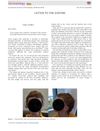
March 2018 in “Australasian Journal of Dermatology” This letter to the editor discusses the use of systemic minoxidil for loose anagen hair syndrome, noting a significant change in hair color, but reports no new study results.
 8 citations
,
January 2020 in “Journal of Cutaneous Medicine and Surgery”
8 citations
,
January 2020 in “Journal of Cutaneous Medicine and Surgery” Oral minoxidil may improve hair loss in men and women, but has some side effects.
In this descriptive retrospective study, researchers reported that low-dose oral minoxidil (0.25-5mg/day) for androgenic alopecia demonstrated a good safety profile, with 84.4% of 641 patients experiencing no adverse effects and only 1.4% discontinuing due to side effects that resolved with dose reduction or withdrawal.
 80 citations
,
October 1983 in “BMJ”
80 citations
,
October 1983 in “BMJ” This study found that 1% topical minoxidil induced significant hair regrowth in patients with alopecia areata, though it was less effective for those with extensive hair loss such as alopecia totalis and universalis.
 March 1988 in “Archives of Dermatology”
 This abstract provides no research findings or scientific content; it appears to be a website cookie policy and terms of use statement.
 19 citations
,
September 2014 in “British Journal of Dermatology”
19 citations
,
September 2014 in “British Journal of Dermatology” This study found that topical minoxidil 5% foam was effective in promoting hair growth in both the frontal and vertex scalp for men with androgenetic alopecia.
 1 citations
,
July 2017 in “Pediatric emergency care”
1 citations
,
July 2017 in “Pediatric emergency care” This study suggests that most pediatric minoxidil exposures reported to Texas poison centers were unintentional, typically non-serious, and often manageable at home, despite concerns about serious adverse effects.
 June 2026 in “Revista Ibero-Americana de Humanidades, Ciências e Educação”
 This study concluded that 5% topical Minoxidil remains a first-line treatment for female androgenetic alopecia by increasing hair density and thickness, while low-dose oral Minoxidil and combination therapies may also be effective.
In this integrative review, researchers assessed the efficacy of oral minoxidil for treating alopecia, finding that it appears effective, especially for female androgenetic alopecia, though evidence quality is very low and side effects limit its use compared to topical forms.
 20 citations
,
January 2013 in “Annals of Dermatology”
20 citations
,
January 2013 in “Annals of Dermatology” Topical minoxidil successfully treated temporal triangular alopecia.
 11 citations
,
January 1987 in “Dermatology”
11 citations
,
January 1987 in “Dermatology” In this study, 56% of men meeting specific criteria for hair loss experienced cosmetically acceptable hair growth with 2% topical minoxidil after one year, while frontotemporal hair loss did not improve.
 5 citations
,
March 2016 in “Acute medicine & surgery”
5 citations
,
March 2016 in “Acute medicine & surgery” This case report describes a man who ingested a large amount of topical minoxidil solution and experienced serious and prolonged cardiovascular effects despite rapidly decreasing serum concentration levels.
 2 citations
,
March 2021 in “Journal of Cosmetic Dermatology”
2 citations
,
March 2021 in “Journal of Cosmetic Dermatology” This pilot study found that among male androgenetic alopecia patients, 2.5 mg oral minoxidil with platelet-rich plasma led to higher patient satisfaction than 1.25 mg, though hair count improvements were not statistically significant.
 1 citations
,
August 2019 in “Pediatric dermatology”
1 citations
,
August 2019 in “Pediatric dermatology” This study reports that topical minoxidil 5% foam may effectively promote hair growth in congenital alopecia and hypotrichosis linked to desmoplakin mutations, as demonstrated by significant hair growth in an 8-year-old boy.
 January 2026 in “Dermatology Online Journal”
 Female-marketed minoxidil foam is more expensive than male-marketed, but generic and bulk options can reduce this gap.
Low-dose oral minoxidil is effective and generally safe for treating hair loss in women.
 July 2015 in “Actas Dermo-Sifiliográficas”
 A woman experienced excessive hair growth after using a hair loss treatment with minoxidil.
 1 citations
,
December 2022 in “Indian pediatrics/Indian Pediatrics”
1 citations
,
December 2022 in “Indian pediatrics/Indian Pediatrics” A toddler who accidentally swallowed hair growth medicine experienced serious heart-related side effects but recovered after hospital treatment.
 137 citations
,
May 1984 in “Journal of Investigative Dermatology”
137 citations
,
May 1984 in “Journal of Investigative Dermatology” Minoxidil increases blood flow in balding scalps, possibly reversing hair loss.
 26 citations
,
March 1985 in “International Journal of Dermatology”
26 citations
,
March 1985 in “International Journal of Dermatology” Minoxidil helps hair growth, but results vary.
 22 citations
,
January 1985 in “Annals of Internal Medicine”
22 citations
,
January 1985 in “Annals of Internal Medicine” Minoxidil in breast milk may harm nursing infants.
 20 citations
,
November 1987 in “Archives of Dermatology”
20 citations
,
November 1987 in “Archives of Dermatology” This study observed that long-term use of 3% topical minoxidil for androgenetic alopecia resulted in sustained hair regrowth for most patients, although hair counts declined between 12 and 30 months.
 13 citations
,
November 2014 in “Pediatric emergency care”
13 citations
,
November 2014 in “Pediatric emergency care” This study reports that the ingestion of a small amount of topical minoxidil by a child resulted in significant intoxication, suggesting the need for enhanced child-resistant packaging.