January 2024 in “Dermatologic Therapy” This retrospective study found that oral tofacitinib significantly reduced the severity of alopecia areata in children, achieving over a 50% reduction in hair loss severity, though relapse occurred during treatment tapering, and mild adverse effects were noted.
 14 citations
,
November 2016 in “Annals of Internal Medicine”
14 citations
,
November 2016 in “Annals of Internal Medicine” Tofacitinib, an arthritis drug, helped hair growth in alopecia universalis but long-term safety needs more research.
 March 2023 in “PARIPEX INDIAN JOURNAL OF RESEARCH”
 This study found that prolonged tofacitinib treatment in adult Indian patients with moderate-to-severe alopecia areata was associated with a high regrowth rate, which varied with factors like age at disease onset and treatment duration.
 May 2026 in “Indian Journal of Dermatology”
 In this study, oral tofacitinib was associated with significant hair regrowth in patients with alopecia areata, achieving over 50% reduction in Severity of Alopecia Tool scores, with mild side effects.
 28 citations
,
December 2017 in “Journal of Investigative Dermatology Symposium Proceedings”
28 citations
,
December 2017 in “Journal of Investigative Dermatology Symposium Proceedings” This review summarizes findings on the long-term use of tofacitinib for severe alopecia areata, reporting its potential as a promising treatment option.
 December 2022 in “Pakistan Journal of Medical and Health Sciences”
 This study found that Tofacitinib effectively improved hair regrowth in patients with Alopecia Areata, with most participants showing a significant change in their Severity of Alopecia Tool scores.
 78 citations
,
March 2017 in “JAMA Dermatology”
78 citations
,
March 2017 in “JAMA Dermatology” Tofacitinib helped regrow hair in people with severe alopecia, but side effects occurred and benefits stopped after treatment ended.
 October 2021 in “Dermatology Reports”
 This study describes a case where a patient with alopecia totalis treated with the JAK inhibitor tofacitinib showed hair regrowth but experienced worsened facial acne.
 2 citations
,
September 2021 in “Curēus”
2 citations
,
September 2021 in “Curēus” In this study, two patients with alopecia universalis continued using tofacitinib during active COVID-19 infection and showed no worsening of their illness, despite potential concerns about immunosuppression.
 1 citations
,
July 2022 in “The journal of investigative dermatology/Journal of investigative dermatology”
1 citations
,
July 2022 in “The journal of investigative dermatology/Journal of investigative dermatology” In this open-label trial, Tofacitinib was well tolerated and improved IFN and cytokine scores, as well as overall skin pathology, in individuals with Down syndrome and immune skin conditions.
4 citations
,
November 2020 in “Acta Dermato Venereologica” In this study, patients with specific skin and scalp conditions, including eczematous lesions, showed significant improvement after two weeks of oral tofacitinib treatment, as evidenced by changes in the trunk lesions.
 5 citations
,
August 2018 in “PubMed”
5 citations
,
August 2018 in “PubMed” This case report documented successful full hair regrowth in an 8-year-old with alopecia universalis after oral tofacitinib treatment, but mild headaches led to discontinuation.
 37 citations
,
January 2016 in “Drug design, development and therapy”
37 citations
,
January 2016 in “Drug design, development and therapy” This review discusses the use of tofacitinib as a treatment for plaque psoriasis, highlighting its efficacy and safety in clinical trials, but notes unresolved questions regarding long-term safety.
June 2025 in “British Journal of Dermatology” This study compared oral tofacitinib and methotrexate in treating moderate-to-severe alopecia areata, finding that tofacitinib was more effective at reducing SALT scores and improving scalp hair assessment PRO scores, though both treatments reduced psychological distress similarly without serious adverse effects.
 February 2025 in “International Journal of STD & AIDS”
 In this case report, a patient with HIV developed hirsutism after starting tofacitinib for alopecia areata, which resolved upon medication discontinuation and laser hair removal.
 June 2017 in “Journal of the American Academy of Dermatology”
 In this retrospective study, tofacitinib was found to be effective and well-tolerated for treating severe alopecia areata, with 77% of patients achieving a clinical response over 4-20 months, though results were more favorable for patients with less extensive hair loss.
 September 2023 in “Journal of the American Academy of Dermatology”
 Topical tofacitinib helped a man with severe scalp condition after other treatments failed.
 41 citations
,
December 2015 in “JAMA Dermatology”
41 citations
,
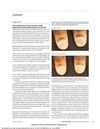
December 2015 in “JAMA Dermatology” Tofacitinib citrate improved nail dystrophy and pain in patients with alopecia universalis without causing side effects.
 August 2020 in “Ugeskrift for Læger”
 This case report describes a 43-year-old male with alopecia totalis who successfully regrew all his hair after six months of treatment with tofacitinib, with no relapse at one year.
 10 citations
,
August 2016 in “Oxford Medical Case Reports”
10 citations
,
August 2016 in “Oxford Medical Case Reports” This case report describes the development of halo naevi, vitiligo, and diffuse alopecia areata in a 33-year-old woman undergoing tocilizumab therapy, suggesting a link between these conditions and cellular and humoral immune factors.

In this case report, a female patient with Graham-Little-Piccardi-Lassueur Syndrome and hidradenitis suppurativa showed significant improvement in symptoms, including hair loss and lesions, after six months of treatment with tofacitinib, with no recurrence or adverse effects over a two-year follow-up.
 1 citations
,
August 2022 in “Journal of Dermatology and Dermatologic Surgery”
1 citations
,
August 2022 in “Journal of Dermatology and Dermatologic Surgery” In this case report, tofacitinib was initiated in a 20-year-old female with alopecia universalis resistant to topical treatments, but resulted in a mild peripheral neuropathy side effect.
May 2025 in “International Journal of Trichology” In this case report, a 7-year-old boy with alopecia totalis experienced significant hair regrowth after adding topical tofacitinib and mometasone to his treatment regimen, suggesting potential benefits of topical Janus kinase inhibitors for pediatric patients with this condition.
 September 2022 in “XXXIX Congresso Brasileiro de Reumatologia”
 In this case report, a 42-year-old woman with cutaneous dermatomyositis showed significant improvement, including reduction of erythema, pruritus, and scaling, after starting JAK inhibitor tofacitinib, especially when conventional systemic treatments failed and intravenous immune globulin wasn't viable.
17 citations
,
October 2012 in “European Journal of Pharmacology” This study found that inhaling toluene reduces core temperature in mice, with GABA receptors and neurosteroids involved at 4000 ppm, but different mechanisms contributing at 6000 ppm.
 4 citations
,
January 2022 in “Dermatologic Therapy”
4 citations
,
January 2022 in “Dermatologic Therapy” In this retrospective analysis, the authors reported that off-label tofacitinib treatment in 35 alopecia areata patients demonstrated safety, with no serious adverse events, and effectiveness, with 83.9% showing significant scalp regrowth and 32.3% achieving near total or total regrowth.
 5 citations
,
January 2022 in “Dermatology Reports”
5 citations
,
January 2022 in “Dermatology Reports” This report describes a case where the JAK inhibitor tofacitinib led to hair regrowth in a patient with alopecia totalis but also worsened facial acne, highlighting a unique adverse effect.
1 citations
,
February 2025 in “Pediatric Dermatology” This study found that oral tofacitinib achieved significant hair regrowth in children with moderate to severe alopecia areata, with 72.2% reaching a 75% improvement and 52.8% achieving complete regrowth, though some patients did not respond and further research is needed on the treatment's long-term effects.
In this study, introducing the rat OTC gene into spf-ash mice led to increased OTC activity and normalized hair growth and biochemical markers like urinary orotic acid and serum citrulline, partially correcting the symptoms of OTC deficiency.
October 2020 in “Der Hautarzt” This case study demonstrated that off-label tofacitinib treatment led to full regrowth of scalp hair after 18 months in a patient with alopecia areata universalis, following unsuccessful therapies.