 January 1997 in “Hair transplant forum international”
 This paper outlines the agenda for the 5th Annual Meeting of the International Society of Hair Restoration Surgery, highlighting an international session with discussions from leading practitioners.
 13 citations
,
August 2007 in “Bioorganic & medicinal chemistry letters”
13 citations
,
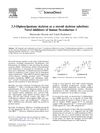
August 2007 in “Bioorganic & medicinal chemistry letters” This study developed a new competitive 5alpha-reductase inhibitor with an IC(50) of 0.84 microM using a novel chemical structure.

In this phase 2 trial, STS01 1% significantly improved hair regrowth in patients with mild to moderate patchy alopecia areata compared to placebo, with a manageable skin irritation side effect profile.
 April 2023 in “The journal of investigative dermatology/Journal of investigative dermatology”
 This study found that local PGE2 injection may prevent radiotherapy-induced hair loss by protecting hair follicle cells and promoting hair follicle self-repair.
 13 citations
,
June 2010 in “Journal of dermatological treatment”
13 citations
,
June 2010 in “Journal of dermatological treatment” This study found that diphencyprone showed a significant clinical response for treating alopecia areata, while tacrolimus was not effective.

This abstract introduces TrichoFoam™, a new foaming vehicle for compounding pharmacies, designed to be a gentle, non-irritating option for alopecia treatment, acknowledging that current topical treatments are limited and oral products may cause adverse effects.
69 citations
,
August 2006 in “Behavior Therapy” This study found that group behavior therapy for trichotillomania led to greater short-term symptom improvement compared to supportive therapy, but did not achieve clinically significant changes or prevent relapse over six months.
 22 citations
,
January 2009 in “Medical mycology”
22 citations
,
January 2009 in “Medical mycology” In this case report, researchers identified Arthroderma vanbreuseghemii as the cause of a familial fungal infection, which was successfully treated with itraconazole and topical terbinafine cream.
92 citations
,
May 2004 in “Journal of Investigative Dermatology”  1 citations
,
January 2020 in “bioRxiv (Cold Spring Harbor Laboratory)”
1 citations
,
January 2020 in “bioRxiv (Cold Spring Harbor Laboratory)” This study suggests that Dicer, but not Tarbp2, plays a crucial role in regulating the growth phase of hair follicles in bulge stem cells during post-natal development in mice.
 January 2020 in “SCIENCE, ENGINEERING AND TECHNOLOGY: GLOBAL TRENDS, PROBLEMS AND SOLUTIONS”
 This conference proceedings compilation from Prague covers global trends, problems, and solutions in science, engineering, and technology, but reports no new clinical results.
35 citations
,
July 2010 in “The FEBS journal” In this study, researchers identified a highly reactive, isozyme-specific sequence for TGase 3, contributing to understanding its distinct functional role and activity distribution in the mouse epidermis.
124 citations
,
April 2000 in “Nature biotechnology”  1 citations
,
September 2023 in “eLife”
1 citations
,
September 2023 in “eLife” This study found that TLR2 expression in hair follicle stem cells is crucial for hair follicle maintenance and regeneration, with TLR2-dependent activation potentially offering new therapeutic approaches for hair loss prevention through mechanisms involving immune pathways and CEP administration.
19 citations
,
December 2006 in “Journal of Structural Biology” Type I and Type II keratin chains can form heterodimers despite sequence differences.
July 2026 in “Pathology - Research and Practice” 
This observational study reviewed thyroid eye disease patients treated with teprotumumab at one center, reporting common side effects like fatigue and dry eye symptoms, with serious adverse events including two cases of blood clots and one pulmonary embolism.
 October 2023 in “Journal of dermatological science”
 This study highlights that mutations in the MBTPS2 gene can lead to dermatological disorders like IFAP syndrome and severe bone diseases such as X-Linked Osteogenesis Imperfecta, emphasizing the significance of understanding these genetic variants for disease mechanisms and associations.
6 citations
,
March 2017 in “Journal of the European Academy of Dermatology and Venereology” This article reviews genetic mutations linked to monilethrix, a hereditary hair disorder, and reports no new clinical findings on the condition's variability in symptoms and severity.
2 citations
,
February 2024 in “Indian Dermatology Online Journal” This study reports that tofacitinib, a JAK 1/3 inhibitor, showed significant improvement in a patient with co-occurring severe alopecia totalis and lichen planus hypertrophicus, conditions that are typically resistant to treatment.
 3 citations
,
May 2023 in “International Journal of Molecular Sciences”
3 citations
,
May 2023 in “International Journal of Molecular Sciences” In this study, researchers observed that phospholipid-calcium carbonate hybrid nanoparticles effectively delivered Tofacitinib citrate topically, which significantly inhibited hair follicle apoptosis and promoted hair growth in a mouse model of chemotherapy-induced alopecia, compared to a traditional Tofacitinib solution.
32 citations
,
August 2016 in “Science Signaling” This study developed PiSCES biosignatures that distinguished alopecia areata patients from controls, revealing enhanced basal TCR signaling and a potential disease-specific signaling network signature.
148 citations
,
October 1997 in “Journal of Investigative Dermatology” TGF-β receptors are crucial for hair follicle development.
3 citations
,
February 2019 in “Molecular genetics and metabolism” This study found that coadministration of tadalafil and finasteride improved lower urinary tract symptoms and erectile function in men with benign prostatic hyperplasia better than finasteride alone over 26 weeks.
 20 citations
,
June 2022 in “Molecules”
20 citations
,
June 2022 in “Molecules” This review discusses three classes of thiazole-bearing compounds in drug development and presents preclinical findings but reports no new experimental results, highlighting the need for further drug discovery.
 February 2010 in “Journal of The American Academy of Dermatology”
 This study found that the novel antifungal emulsion NB-002 demonstrated significant antifungal activity and nail clearing in patients with distal subungual onychomycosis involving ≤50% of the nail.
 December 2025 in “TURKDERM”
 This article discusses Trikostazis spinuloza (TS), a dermatological condition often misdiagnosed, and reviews its demographic, clinical, and dermoscopic features, but reports no new clinical results.
 20 citations
,
February 2016 in “American Journal of Pathology”
20 citations
,
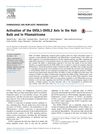
February 2016 in “American Journal of Pathology” This study indicates that the OVOL1-OVOL2 axis may play a significant role in hair follicle differentiation and growth, potentially serving as therapeutic targets for hair disorders like alopecia and in the tumorigenesis of pilomatricoma.
 January 2024 in “Wiadomości Lekarskie”
 This paper reviews current cell therapies in medicine, highlighting hematopoietic stem cell transplants as a foundational success and the growing application of genetically modified cells like CAR-T and mesenchymal stem cells for various diseases, including blood disorders and autoimmune conditions.
January 1996 in “Studia iuridica” This study identified two novel point mutations in the hHb6 gene associated with monilethrix, suggesting these mutations could serve as diagnostic markers for this genetic hair disorder.