February 2022 in “Fibers” This study found that a sucrose-based crosslinker can effectively straighten hair and maintain durability in high humidity and through repeated washings without affecting the hair's tensile properties or causing surface damage.
 January 2025 in “Journal of Medical Biochemistry”
 This review explores the roles of superoxide dismutases in cellular processes and cancer, highlighting the potential of SOD mimetics in enhancing cancer treatment strategies, but it reports no new clinical findings.
 5 citations
,
January 2018
5 citations
,
January 2018 This study optimized a screening assay to identify molecules that inhibit or enhance TRPM5 ion channel activity, which may have implications for treating dysfunctions linked to cardiac arrhythmias and diabetes.
January 2004 in “Chinese Journal of Aesthetic Medicine” This study found that sodium fluoride concentrations inhibited the growth of human hair follicles in vitro, while sodium selenite at a specific concentration mitigated its toxicity.
 3 citations
,
January 2019 in “International Journal of Trichology”
3 citations
,
January 2019 in “International Journal of Trichology” This study found no statistical difference in thiol-disulfide balance between telogen effluvium patients and controls, suggesting oxidative stress may not affect telogen effluvium through this mechanism.
9 citations
,
March 1993 in “Biochemical Pharmacology” This study suggests that rat skin may synthesize minoxidil sulphate independently, implying the skin could contribute to minoxidil's hair growth promotion without help from the liver or other organs.
 April 2025 in “BMC Chemistry”
 This study developed an organic hair conditioner using chitosan-thiadiazole conjugates that showed improved hair detangling, moisture retention, and protection without causing irritation, promising an environmentally sustainable approach to hair care.
30 citations
,
August 1984 in “Journal of the American Academy of Dermatology” This case report identified UVB photosensitivity and testicular failure as previously unreported components of low-sulfur hair syndrome in a 16-year-old male.
4 citations
,
January 2024 in “Environmental Research” In this study, the authors reported that Sargassum wightii seaweed-based biostimulants improved soil quality and enhanced rice plant growth and yield by ameliorating acid soil effects, boosting antioxidant enzyme activity, and facilitating nitrogen uptake, photosynthesis, and water use efficiency.
1 citations
,
May 2025 in “Analytical Science Advances” This study presented a new method for accurately measuring Fe3+ in small serum samples, achieving high recovery rates and agreement with established testing methods, while offering advantages such as cost-effectiveness, simplicity, and enhanced sensitivity.
 1 citations
,
January 2007 in “The Kitakanto Medical Journal”
1 citations
,
January 2007 in “The Kitakanto Medical Journal” This report documents a case where a man survived sub-acute toxicity from an overdose of the anticancer drug UFT due to effective treatment with antibiotics and granulocyte colony-stimulating factor.
17 citations
,
September 1953 in “Journal of Cell Science” This study found that the tetrazolium salt INT is the most effective for revealing dehydrogenase activity and certain histological structures in sheep and other mammals' skin.
August 2015 in “대한피부미용학회지” This study observed that zinc sulfate improved hair growth in a mouse model of alopecia, suggesting potential as a therapeutic agent, though less effective than minoxidil.
48 citations
,
January 2008 in “European Neurology” This study demonstrated that acute thallium poisoning primarily manifests with gastrointestinal issues, polyneuropathy, and dermatological changes, and treatments like hemoperfusion and hemodialysis may improve symptoms.
 August 1978 in “Dicp-The annals of pharmacotherapy”
 Mannitol diuresis allows higher doses of cis-platinum for testicular cancer treatment without increasing kidney damage.
 May 2026 in “Sudovo-medična ekspertiza”
 This study documented three cases of acute thallium poisoning—one involving accidental overdose and two linked to intentional homicide—characterized by neurological and systemic symptoms, and in severe instances, death, underscoring thallium compounds' significant toxicity.
May 1985 in “The Pediatric Infectious Disease Journal” This report describes a case of a patient with Sjogren's syndrome who experienced multiple episodes of aseptic meningitis linked to taking trimethoprim-sulfamethoxazole and trimethoprim alone.
 May 2025 in “Journal of Dermatological Treatment”
 This study found that a medicated shampoo containing selenium sulfide and salicylic acid effectively reduced symptoms of seborrheic dermatitis in Chinese patients, but females experienced significantly lower rates of good effectiveness and tolerance compared to males.
1 citations
,
April 2022 in “The Journal of Urology” This study observed that discontinuation rates due to side effects were similar for penicillamine and tiopronin among cystinuria patients, and switching to the alternative agent was beneficial for half of those experiencing issues.
 February 2026 in “Zenodo (CERN European Organization for Nuclear Research)”
 This theoretical paper proposes that a subset of Post-Finasteride Syndrome cases may be driven by a gut-derived toxic process involving hydrogen sulphide-producing bacteria, suggesting that the small intestinal microbiome could be a potential target for treating this condition.
In this phase 2 trial, STS01 1% significantly improved hair regrowth in patients with mild to moderate patchy alopecia areata compared to placebo, with a manageable skin irritation side effect profile.
 1 citations
,
January 2009 in “Journal of S C C J”
1 citations
,
January 2009 in “Journal of S C C J” This study investigated the effect of peracetic acid treatment on hair fiber structure and found that disulfide bond oxidation altered thermal properties while preserving the α-crystal structure, suggesting different stabilizing interactions in hair fibers.
 8 citations
,
December 2021 in “BMJ neurology open”
8 citations
,
December 2021 in “BMJ neurology open” This study on Alzheimer's patients found that chronic sodium selenate treatment (up to 23 months) was safe and well-tolerated, with most adverse events being mild, and suggested potential slowing of cognitive decline, though confirmation requires further controlled studies.
January 2007 in “Chinese journal of plastic surgery” In this study, researchers observed that sodium selenite may counteract the pro-apoptotic effects of sodium fluoride on human scalp hair follicle cells in vitro.

This study reports that in a rat model of myocardial infarction, Zn-Cu ion sequential therapy improved cardiac function and cardiomyocyte metabolic activity by precisely regulating ion concentrations and maintaining elevated levels of the Per2 protein, important for cellular repair.
March 1990 in “Journal of Dermatological Science” 13 citations
,
March 1999 in “Biochemical Journal” In this study, transgenic mice overexpressing the SSAT gene were highly sensitive to polyamine analogues, leading to severe liver changes and high mortality rates after treatment.
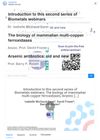
This research presentation explored the roles of mammalian multi-copper ferroxidases in iron homeostasis and highlighted new insights into their functions, including non-iron-related ones, while discussing arsenic's role in microbial warfare as a potential antibiotic.
 9 citations
,
November 2017 in “International Journal of Nanomedicine”
9 citations
,
November 2017 in “International Journal of Nanomedicine” This animal study found that intravenous administration of anionic squarticles, a lipid nanoemulsion, increased survival rates in rats with amitriptyline overdose by mitigating adverse effects and restoring normal blood pressure, highlighting its potential as a detoxifying antidote.