 29 citations
,
July 2014 in “PloS one”
29 citations
,
July 2014 in “PloS one” In this study, Meis1 was found to regulate epidermal homeostasis and act as a proto-oncogenic factor in skin tissues, with differences in expression patterns between normal and tumor cells.
92 citations
,
May 2004 in “Journal of Investigative Dermatology” 5 citations
,
August 2021 in “Experimental dermatology” This study suggests that Merkel cell polyomavirus T antigen-positive cells resembling Merkel cell carcinoma may originate from epithelial cells in human hair follicles, potentially informing future transgenic mouse models for this cancer.
 April 2018 in “Journal of Investigative Dermatology”
 This study found that TGFbeta is a key pathway causing age-related loss of dermal fat's antimicrobial function, suggesting that targeting TGFBR might help restore skin defense against infections in older age.
 November 2024 in “Malaysian Journal of Microbiology”
 In this study, researchers found varying levels of multiple autoantibody types among thyroid disorder patients, with 84.84% of those with immunological hypothyroidism reporting symptoms like weight gain and lethargy, whereas 81.81% of those with immune hyperthyroidism experienced hair loss.
 343 citations
,
March 2016 in “Nature Communications”
343 citations
,
March 2016 in “Nature Communications” This study found that IL-17A-producing γδ T cells play a key role in bone fracture healing by promoting bone formation, with deficiencies leading to impaired repair in mice.

In this case report, a female patient with Graham-Little-Piccardi-Lassueur Syndrome and hidradenitis suppurativa showed significant improvement in symptoms, including hair loss and lesions, after six months of treatment with tofacitinib, with no recurrence or adverse effects over a two-year follow-up.
 1 citations
,
April 2020 in “medRxiv (Cold Spring Harbor Laboratory)”
1 citations
,
April 2020 in “medRxiv (Cold Spring Harbor Laboratory)” This study identified gene sets associated with Tourette Syndrome, implicating Ligand-gated Ion Channel Signaling, Lymphocytic, and Cell Adhesion and Trans-synaptic Signaling processes in the disorder's neurobiology.
April 2019 in “The journal of investigative dermatology/Journal of investigative dermatology” This study in mice suggests that defects in hair follicles with mesenchymal TSC2 disruption may result from an impaired TGFβ1 response, indicating a potential novel treatment approach for tuberous sclerosis complex.
1 citations
,
January 2024 in “Pharmaceuticals” The researchers reported that dPGS-PCL as a carrier improved the penetration of tofacitinib in an ex-vivo human skin model compared to free tofacitinib, but did not show significant differences in inhibiting IL-6 and IL-8 during short incubation.
118 citations
,
December 2003 in “Mechanisms of Ageing and Development” Thymosin β4 helps heal wounds, grow hair, and improve blood vessel formation.
 August 2023 in “International Journal of Nanomedicine”
 This study found that a graphene-barium titanate nanosystem can accelerate wound healing by killing bacteria and promoting fibroblast proliferation, demonstrating effectiveness in both Gram-negative and Gram-positive bacteria-infected wounds in mice.

This study found that γδTregs can prevent and treat alopecia areata in a mouse model with human scalp transplants, suggesting potential for cell-based therapies in autoimmune diseases like alopecia.
21 citations
,
April 2008 in “Toxicologic Pathology” This study found that CI-1033 caused skin lesions in rats that resemble effects seen in humans receiving EGF receptor inhibitors, suggesting this animal model can help explore the mechanisms behind this cutaneous toxicity.
 34 citations
,
April 2018 in “EMBO journal”
34 citations
,
April 2018 in “EMBO journal” This study found that in mouse skin, the activation of stem/progenitor cells is synchronized across different niches during growth, with the glutamate transporter SLC1A3 playing a crucial role in this process.
 November 2025 in “Frontiers in Immunology”
 This study introduces stem cell activity as a key factor influencing the effects of IFN-γ and TGF-β1 on autoimmune disease dynamics, showing that varying cytokine levels can modulate stem cell activity and immune privilege, impacting tissue regeneration and disease flares.
 April 2023 in “The journal of investigative dermatology/Journal of investigative dermatology”
 This study suggests that targeting skin-infiltrated memory phenotype T cells could offer a new therapeutic approach to manage lymphopenia-related diseases like graft-versus-host disease and immune reconstitution inflammatory syndrome.
September 2025 in “The Open Dermatology Journal” In this study, the Tibot AI application showed high diagnostic accuracy for adnexal and pigmentary disorders and cutaneous tumors in dermatology, but was less effective for immunological disorders and infestations, suggesting the need for further dataset refinement.
65 citations
,
December 2010 in “Current Pharmaceutical Biotechnology” This review explores the diverse roles of TRPV1, emphasizing its involvement in both pain and non-pain-related functions, but reports no new clinical results.
3 citations
,
July 2022 in “Brain and Behavior” This study observed that a CARASIL mouse model demonstrated abnormal behavior, vascular and cellular changes, and upregulation of the TGF-β/Smad signaling pathway, indicating its potential involvement in CARASIL pathogenesis.
155 citations
,
December 2002 in “Journal of Investigative Dermatology” This study found that thyroid-stimulating hormone receptors are functionally expressed in various skin cells, implying potential physiological and pathological roles in skin, especially in conditions like autoimmune diseases.
38 citations
,
March 1997 in “Journal of interferon & cytokine research” This study suggests that IL-1β produced by dermal papilla cells, regulated by protein kinase C, may inhibit human hair follicle growth through paracrine signaling.
 30 citations
,
February 2017 in “Histochemistry and Cell Biology”
30 citations
,
February 2017 in “Histochemistry and Cell Biology” This study found that applying TPA to mice accelerated hair follicle regeneration by activating Akt and Wnt/ß-catenin signaling pathways, involving hair follicle stem cell proliferation.
 April 2024 in “Cellular signalling”
 This study on mice found that activating TRPML channels with MLSA1 promoted hair regeneration, accelerated hair cycle transition, and influenced human dermal papilla cells to secrete hair growth promoting factors while reducing hair growth inhibitors and oxidative damage.
 April 2023 in “Journal of Investigative Dermatology”
 This study found that the dermal sheath smooth muscle regulates hair follicle progenitor cell death during hair regression through mechanical signaling of the TGF-β pathway.
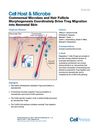 192 citations
,
March 2017 in “Cell host & microbe”
192 citations
,
March 2017 in “Cell host & microbe” The researchers reported that hair follicle development and commensal microbe colonization promote the accumulation of regulatory T cells in neonatal skin, with the Ccl20-Ccr6 pathway playing a key role in this process.
July 1995 in “Journal of Dermatological Science”  11 citations
,
March 2024 in “Cell and Tissue Research”
11 citations
,
March 2024 in “Cell and Tissue Research” In this review, researchers summarize the methods for characterizing telocytes, outline their physiological roles and implications in diseases, and discuss potential future studies including precise markers and targeted therapies.
 September 2013 in “Regenerative Medicine”
 This summary reports that γδ T cells play a role in regulating hair follicle formation during wound healing in adult skin.
39 citations
,
March 2009 in “Dermatology Online Journal” This review observes that trichomegaly, a newly described side effect of EGFR inhibitors causing excessive eyelash and scalp hair growth, persists in some patients whose tumors respond positively to the therapy.