 12 citations
,
February 2014 in “PLoS ONE”
12 citations
,
February 2014 in “PLoS ONE” This study observed high expression of mTOR pathway effectors in fibrous papules and TSC-associated angiofibromas, suggesting that topical rapamycin might be an effective treatment for fibrous papules.
34 citations
,
January 2004 in “Genomics” In this study, researchers identified a cluster of hair-specific keratin-associated protein genes within the 21q22.3 region, revealing a novel transcription mechanism involving TSPEAR/C21orf29 that may bypass typical transcriptional termination sites.
 15 citations
,
February 2021 in “Scientific Reports”
15 citations
,
February 2021 in “Scientific Reports” This study found that novel RNA aptamers specifically inhibited FGF5-induced cell proliferation, suggesting their potential as candidates for treating FGF5-related diseases or hair disorders.
 13 citations
,
January 2019 in “Skin appendage disorders”
13 citations
,
January 2019 in “Skin appendage disorders” This study reported that fibrosing alopecia in a pattern distribution can occur in patients of color, with clinical and histopathological features allowing for an accurate differential diagnosis.
 9 citations
,
October 2019 in “Dermatologic Therapy”
9 citations
,
October 2019 in “Dermatologic Therapy” This study observed that oral tofacitinib was reasonably well-tolerated but had limited efficacy in treating alopecia areata, with a clinical response seen in 41.4% of patients over six months.
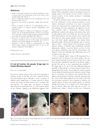
August 2024 in “Skin Research and Technology” This report describes the diagnosis and treatment of traumatic anserine folliculosis in children, highlighting its distinct skin features and suggesting tretinoin cream as an effective remedy.
 24 citations
,
July 1994 in “Molecular Endocrinology”
24 citations
,
July 1994 in “Molecular Endocrinology” Researchers found an RNA transcript that might help control a growth factor linked to tumor development.
 12 citations
,
August 2018 in “Journal of Dermatological Science”
12 citations
,
August 2018 in “Journal of Dermatological Science” This study observed that adipose-derived stem cells modified with trichogenic factors have similar properties to dermal papilla cells and show enhanced hair regeneration potential compared to unmodified adipose-derived stem cells.
 39 citations
,
July 2015 in “British Journal of Dermatology”
39 citations
,
July 2015 in “British Journal of Dermatology” This article discusses the pseudo 'fringe sign' in frontal fibrosing alopecia, highlighting that it is not solely related to traction, and it reports no new clinical results.
71 citations
,
January 2011 in “Orphanet Journal of Rare Diseases” This article reviews IFAP syndrome, an X-linked genetic disorder characterized by ichthyosis follicularis, alopecia, and photophobia, and reports no new clinical findings.
52 citations
,
April 2012 in “Journal of Investigative Dermatology” This study found that KRTAP2 proteins predominantly express in the hair shaft cortex of humans, interact with hair keratins, and play crucial roles in hair shaft keratinization.
 July 2026 in “bioRxiv (Cold Spring Harbor Laboratory)”
 This study identified a new FAK isoform, FAKΔe4, which is regulated by ECM stiffness and affects cell migration, invasion, and mechanosensing in human-derived data and engineered models.
 72 citations
,
January 2003 in “American Journal of Pathology”
72 citations
,
January 2003 in “American Journal of Pathology” This study found that the co-activator CBP enhances the agonistic action of hydroxyflutamide on androgen receptors, suggesting a mechanism for therapy resistance in prostate cancer.
September 2025 in “Stem Cell Research & Therapy” This study found that TAZ promotes adipogenesis in goat adipose-derived mesenchymal stem cells by enhancing PI3K/AKT pathway activity, with overexpression boosting adipocyte formation and knockdown inhibiting it.
 1 citations
,
September 2021 in “CRC Press eBooks”
1 citations
,
September 2021 in “CRC Press eBooks” This chapter reviews trichoscopic-pathologic correlations in Frontal Fibrosing Alopecia and reports no new clinical results; the authors discuss genetics, clinical patterns, and unusual variants associated with this condition.
 January 1999 in “American Journal of Medical Genetics Part A”
 This case report describes a rare occurrence of ectodermal dysplasia features in a 14-year-old with MBTPS1 gene variants, expanding the known spectrum of related disorders.
1 citations
,
December 2021 in “Development & Reproduction” This study found that FPR2 knockout mice experienced excessive hair loss and abnormal hair follicle structures, suggesting FPR2's protective role in hair regeneration through stem cell activity regulation.
 January 2025 in “Journal of Food Biochemistry”
 In this study, 2′‐Fucosyllactose (2′‐FL) administration significantly reduced hair loss and increased hair length and thickness in a testosterone-induced androgenic alopecia mouse model, suggesting potential as a therapeutic agent for AGA.
February 2007 in “Journal of Clinical Dermatology” 14 citations
,
October 2002 in “Journal of cutaneous pathology” This study found that MAP-2 is intensely expressed in the companion layer of the hair follicle, suggesting its potential importance to follicle integrity and possible involvement in some types of alopecia.
 9 citations
,
January 2018 in “Journal of the European Academy of Dermatology and Venereology”
9 citations
,
January 2018 in “Journal of the European Academy of Dermatology and Venereology” A male patient developed frontal fibrosing alopecia after antiandrogen therapy for prostate cancer.
 1 citations
,
May 2023 in “Frontiers in endocrinology”
1 citations
,
May 2023 in “Frontiers in endocrinology” The researchers reported that the novel MBTPS2 variant p.Glu172Asp found in a male proband is likely pathogenic, consistent with osteogenesis imperfecta symptoms and molecular signatures, including disrupted fatty acid metabolism and collagen production.
 June 2025 in “International Journal of Computational Intelligence Systems”
 This study introduces a novel computational model using fuzzy logic and multi-criteria decision-making techniques to create a triage system for androgenetic alopecia management, stratifying patients into seven severity levels and aiding in resource allocation and treatment planning.
October 2006 in “Urology” The study found that different criteria led to different patient groups in the CombAT study compared to the MTOPS study.
7 citations
,
September 1991 in “Journal of Andrology” In this study, 4‐MAPC treatment reduced ventral prostate weight in rats primarily through decreased synthetic activity, with testosterone propionate increasing prostate weight and activity at pharmacologic doses.
February 2026 in “Chemical Engineering Journal” This study found that a novel nano-engineered platform, PCA, significantly promoted hair regeneration in an androgenetic alopecia mouse model by enhancing angiogenesis and hair follicle stem cell proliferation, showing promise for future hair regrowth treatments.
 April 2017 in “The journal of investigative dermatology/Journal of investigative dermatology”
 This study identified intramembrane proteolysis as a key feature of Astrotactin2 maturation, providing insights into its role in planar cell polarity hair patterning.
 32 citations
,
April 2006 in “The Journal of Urology”
32 citations
,
April 2006 in “The Journal of Urology” Using finasteride with TIP extends time off period for prostate cancer patients.
 10 citations
,
January 2008 in “Biological and Pharmaceutical Bulletin”
10 citations
,
January 2008 in “Biological and Pharmaceutical Bulletin” This study found that trans-3,4'-Dimethyl-3-hydroxyflavanone reduces active TGF-beta2 levels in human keratinocytes, suggesting it may enhance hair growth by suppressing the TGF-beta2 activation pathway.
4 citations
,
August 2025 in “Journal of Food Science” This review highlights that Tremella fuciformis polysaccharide exhibits various bioactivities, such as antioxidant and immune-modulating effects, and explores its potential applications in food, pharmaceutical, and cosmetic industries.