 December 2025 in “Clinical Cosmetic and Investigational Dermatology”
 In this report, a unique female presentation of IFAP syndrome is described, featuring musculoskeletal contractures but no photophobia, highlighting the importance of early detection and multidisciplinary care to improve outcomes and prevent disability.
June 2026 in “Virtual and Physical Prototyping” This study introduced a high-viscosity epoxy photoresist to enhance the fabrication of complex microstructures with monolithic integration and mechanical stability, enabling advancements in two-photon 3D printing for creating functional micro-mechanical devices.
 August 2021 in “Case Reports”
 This report describes a case where a woman with frontal fibrosing alopecia initially presented with symptoms resembling rosacea, but further investigation led to a diagnosis of FFA, resulting in a treatment change to oral finasteride and hydroxychloroquine.
 12 citations
,
January 2005 in “Pediatric Dermatology”
12 citations
,
January 2005 in “Pediatric Dermatology” Fox Fordyce disease might be more common in prepubertal girls than thought and can be managed with treatment.
 3 citations
,
February 2022 in “Cureus”
3 citations
,
February 2022 in “Cureus” This study observed an alopecia syphilitica-like pattern of hair loss in a woman with frontal fibrosing alopecia, suggesting it may be another atypical presentation of the condition.
 January 2025 in “Indian Journal of Dermatology”
 This review discusses the various factors implicated in the etiology of frontal fibrosing alopecia and notes the need for effective treatments, reporting no new clinical findings.
 2 citations
,
September 2022 in “Dermatologic Therapy”
2 citations
,
September 2022 in “Dermatologic Therapy” In this study, tofacitinib showed a mixed response in treating refractory alopecia areata, with some patients experiencing complete or partial hair regrowth and others showing no response, particularly those with alopecia universalis.
 11 citations
,
January 2020 in “Dermatologica Sinica”
11 citations
,
January 2020 in “Dermatologica Sinica” This study found that tofacitinib effectively promoted hair regrowth in Asian patients with severe alopecia areata, with 74.3% showing a clinical response.
 130 citations
,
February 2018 in “Journal of Investigative Dermatology”
130 citations
,
February 2018 in “Journal of Investigative Dermatology” This study found that tofacitinib led to ≥50% hair regrowth in eight out of twelve patients with moderate to severe alopecia areata, suggesting a potential benefit for using JAK inhibitors in treating this condition.
 August 2019 in “Journal of Invertebrate Pathology”
 This study observed that different alkaline buffers had a significant impact on the volume of liquid consumed by fall armyworm larvae, emphasizing the importance of measuring imbibed volumes to reduce dose errors in bioassays.
3 citations
,
October 2024 in “Animals” This study identified three genes in the ovine KAP13 family on chromosome 1 and found that a specific allele of KRTAP13-2 is associated with improved wool fibre diameter uniformity in Chinese Tan sheep, suggesting its potential use as a marker for enhancing wool traits.
January 2016 in “프로그램북(구 초록집)” This study found that the revised BASP classification for pattern hair loss, which addresses certain limitations of the original, could serve as an alternative option despite a decrease in clinical accuracy and ease of use.
 31 citations
,
April 2010 in “British journal of dermatology/British journal of dermatology, Supplement”
31 citations
,
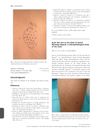
April 2010 in “British journal of dermatology/British journal of dermatology, Supplement” This report describes two patients with frontal fibrosing alopecia who developed acute hair loss on their limbs, revealing that the limb alopecia had similar histological features to scalp alopecia.
 May 2025 in “Journal of Pharmacy And Bioallied Sciences”
 In this study, oral tofacitinib significantly reduced alopecia severity in pediatric patients with moderate-to-severe alopecia areata over 24 weeks, with 42.2% achieving complete or near-complete hair regrowth, although further research is needed on long-term safety and relapse rates.
2 citations
,
July 2023 in “International Journal of Clinical and Experimental Medicine Research” This study found that for thyroid cancer patients who underwent radical mastectomy, the combination of CAF regimen and fufangbanmao capsule improved short-term clinical efficacy, enhanced immune function, reduced drug toxicity, and positively impacted quality of life compared to the CAF regimen alone.
March 2003 in “Rosa P: A digital library for transportation research (United States Department of Transportation)” This article presents a toolkit created by the FTA to help transit agencies manage employees' use of medications that could impact public safety, but it reports no new results.
 8 citations
,
October 2019 in “International Journal of Dermatology”
8 citations
,
October 2019 in “International Journal of Dermatology” This study examined 56 Thai patients with frontal fibrosing alopecia, finding frontotemporal hairline recession and eyebrow loss were common, and reported better disease stabilization with combination treatments of topical corticosteroids with hydroxychloroquine or finasteride.
The researchers reported that PEG-FGF2 conjugates, particularly Compound 6, significantly enhanced stability, proliferation, migration, and wound healing activity compared to native FGF2, despite some reduction in bioactivity near crucial binding domains.
April 2026 in “Future Medicinal Chemistry” This article discusses the impact of PROTACs technology in transforming drug discovery with its novel degradation mechanism, but it reports no new experimental findings.
52 citations
,
June 1991 in “Journal of Virology” In this study, researchers found that the ability of hamster polyomavirus to cause lymphoid tumors in Syrian hamsters may be linked to its association with the tyrosine kinase p59fyn.
 December 2015 in “Actas Dermo-Sifiliográficas”
 This review addresses the challenges in treating frontal fibrosing alopecia, highlighting the limited effectiveness of medical treatments and the demand for hair transplantation despite its risks, but it reports no new clinical results.
34 citations
,
June 2020 in “British journal of dermatology/British journal of dermatology, Supplement” In this study, researchers observed that follicular damage and stem cell loss in frontal fibrosing alopecia may be mediated by immune attacks at the bulge region, suggesting potential for JAK/STAT-targeting treatments to prevent progression.
 September 2022 in “Journal of the American Academy of Dermatology”
 This study observed that tofacitinib therapy over about 16 weeks had a positive effect in children with alopecia areata, reducing the SALT index significantly in some patients.
June 2025 in “Molecular Therapy — Nucleic Acids” In this study, researchers identified a specific DNA aptamer, Ap.OR2AT4.17, that effectively prolonged hair growth and increased hair shaft elongation in organ-cultured human hair follicles by targeting the olfactory receptor OR2AT4. This finding suggests the aptamer's potential as a novel therapy for hair loss disorders.
 11 citations
,
November 2019 in “Journal of the American Academy of Dermatology”
11 citations
,
November 2019 in “Journal of the American Academy of Dermatology” This study suggests that oral tofacitinib may be an effective treatment for beard regrowth in men with alopecia areata of the beard, with a strong correlation observed between beard and scalp hair regrowth.
55 citations
,
August 2024 in “Heliyon” This review article highlights recent progress and challenges in stem cell transplantation for regenerative medicine, emphasizing its potential in tissue repair for conditions like bone and cartilage injuries, neurological disorders, and blood diseases, while stressing the importance of overcoming current obstacles for future advancements.
December 2016 in “Asian Pacific journal of cancer biology” This paper discusses the importance of early diagnosis and treatment of polycystic ovarian syndrome to potentially reduce long-term complications like diabetes, hypertension, and heart disease, but reports no new clinical outcomes.
 September 2017 in “Journal of Investigative Dermatology”
 This study found that in AGA, the risk allele at locus 2q35 alters WNT10A expression through EBF1, suggesting a potential androgen-dependent regulatory mechanism.
July 2026 in “Journal of Investigative Dermatology” This study uncovered that bimatoprost, a prostaglandin analog, promotes hair growth by activating hair follicle progenitor cells through two pathways: the PTGFR-MAPK signaling axis and an unexpected IGF1R-PCAD-AKT signaling axis, suggesting new potential targets for treating hair disorders.
2 citations
,
May 2017 in “Journal of the American Academy of Dermatology” Tofacitinib helped a 19-year-old regrow hair after other treatments failed.