191 citations
,
November 2007 in “Journal of Biological Chemistry” This review discusses the acyl-CoA synthetase very-long-chain (ACSVL) enzyme family, including its biochemical characteristics, tissue expression, and involvement in lipid metabolism, but presents no new experimental results.
 10 citations
,
June 2011 in “Movement Disorders”
10 citations
,
June 2011 in “Movement Disorders” THAP1 gene changes do not affect DYT1 dystonia; finasteride may help reduce tics and OCD in Tourette syndrome.
1 citations
,
March 2012 in “Actas dermo-sifiliográficas/Actas dermo-sifiliográficas” Dermoscopy helps diagnose frontal fibrosing alopecia by identifying specific scalp features.
 339 citations
,
February 2014 in “Journal of The American Academy of Dermatology”
339 citations
,
February 2014 in “Journal of The American Academy of Dermatology” This study found that eyelash loss, facial papules, and body hair involvement were linked to severe frontal fibrosing alopecia, and antiandrogens were the most effective treatment.
 46 citations
,
December 2001 in “Journal of Endocrinology/Journal of endocrinology”
46 citations
,
December 2001 in “Journal of Endocrinology/Journal of endocrinology” This study found that mouse FLRG protein, a secreted glycoprotein, is expressed in certain tissues and plays a role distinct from follistatin during wound healing, suggesting different functions in vivo.
54 citations
,
November 2007 in “Actas Dermo-Sifiliográficas” Early diagnosis of frontal fibrosing alopecia is crucial to prevent permanent hair loss.

In this case report, a female patient with Graham-Little-Piccardi-Lassueur Syndrome and hidradenitis suppurativa showed significant improvement in symptoms, including hair loss and lesions, after six months of treatment with tofacitinib, with no recurrence or adverse effects over a two-year follow-up.

The researchers reported a case where treatment with tofacitinib improved both hair loss and skin lesions in a patient with Graham-Little-Piccardi-Lassueur Syndrome and hidradenitis suppurativa over six months, with no recurrence or adverse events during two-year follow-up.
 July 2015 in “Journal of the Dermatology Nurses’ Association”
 This review covers the clinical presentation and challenges in treating frontal fibrosing alopecia in postmenopausal women and concludes that more research is needed to understand its etiology and develop effective treatments.
January 1990 in “Medical Entomology and Zoology” This study developed a faster method for analyzing fatty acid ethyl esters in hair to help detect alcohol consumption levels, showing potential for applications in forensic and clinical settings.
14 citations
,
January 2014 in “Indian Journal of Dermatology Venereology and Leprology” Frontal fibrosing alopecia can affect men's beards and leads to permanent hair loss.
 9 citations
,
July 2020 in “Journal of Dermatology”
9 citations
,
July 2020 in “Journal of Dermatology” This study found that diffuse and pseudo-fringe sign patterns are common in Asian patients with frontal fibrosing alopecia, and that treatments combining antiandrogens or antimalarials with topical therapy are effective.
 92 citations
,
January 2012 in “International Journal of Biological Sciences”
92 citations
,
January 2012 in “International Journal of Biological Sciences” This article proposes an updated naming system for keratin-associated proteins and genes, aiming to improve data storage and retrieval by including species information and genetic variation.
 November 2022 in “Research Square (Research Square)”
 This meta-analysis suggests a significant association between the use of facial sunscreen and moisturizer and frontal fibrosing alopecia, while finding no significant relationship with hair products or treatments.
April 2018 in “Journal of Investigative Dermatology” Mutations in Far2 mice cause hair loss due to sebaceous gland issues.
January 2026 in “Endocrinology” 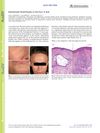 1 citations
,
January 2019 in “Acta dermato-venereologica”
1 citations
,
January 2019 in “Acta dermato-venereologica” The woman's skin and hair symptoms were confirmed as frontal fibrosing alopecia, and while facial papules are common in such cases, there's no effective local treatment, but systemic treatments can help.
 April 2018 in “Journal of Investigative Dermatology”
 In this study, injecting Fetuin A into embryonic mouse wounds led to scar formation, suggesting the protein may play a role in scar development by promoting collagen production.
16 citations
,
August 2021 in “Tumor Biology” This review discusses the dual role of the TMPRSS2 gene in coronaviral lung infection and prostate cancer, cautioning against TMPRSS2 inhibitors for early prostate cancer due to potential pro-inflammatory effects.
 2 citations
,
June 2019 in “International Journal of Dermatology”
2 citations
,
June 2019 in “International Journal of Dermatology” This study found that while a modified BASP classification for pattern hair loss could classify previously unrecognized types, it was less accurate and harder to use than the existing BASP classification.
31 citations
,
February 2007 in “Molecular Carcinogenesis” This study found that transgenic mice overexpressing human ATF3 showed hyperplastic and dysplastic changes in epithelial tissues, with a high incidence of oral cancer, suggesting potential oncogenic properties of ATF3.
April 2016 in “Journal of Investigative Dermatology” Mutations in the TSPEAR gene cause a new form of ectodermal dysplasia affecting hair and tooth development.
 May 2024 in “JAMA Dermatology”
 In this study, researchers identified genetic factors associated with frontal fibrosing alopecia, noting a protective effect of a specific CYP1B1 gene variant, which may offer insights into the disease's pathogenesis and future risk mitigation strategies.
1 citations
,
February 2023 in “Pharmaceutics” This article reviews cell proteomic footprinting technology and its application in improving the authentication and quality control of cell-based immunotherapeutics, without providing new clinical results.
 7 citations
,
September 2015 in “Actas Dermo-Sifiliográficas”
7 citations
,
September 2015 in “Actas Dermo-Sifiliográficas” This article reviews the challenges of treating frontal fibrosing alopecia and the potential role of hair transplantation, noting the lack of effective medical treatments and uncertainty surrounding transplant outcomes.
 February 2022 in “Research Square (Research Square)”
 This study found that high TSPEAR expression in colorectal cancer was associated with poor prognosis and correlated with various tumor and immune-related factors.
14 citations
,
February 1991 in “FEBS Letters” This study found that introducing rat ornithine transcarbamylase gene into spf-ash mice improved liver and intestinal enzyme activity and normalized some metabolic indicators.
15 citations
,
September 2018 in “Frontiers in Plant Science” This study identified that downregulation of the gene BcFLA1 decreases root hair length in Brassica carinata under phosphate-deficient conditions, highlighting its role in root hair elongation.
 June 2026 in “Indian Dermatology Online Journal”
 In this pilot study, both tofacitinib and methotrexate improved alopecia areata outcomes, but tofacitinib showed greater efficacy in achieving significant SALT score improvement after 6 months, although the difference was not statistically significant.
29 citations
,
January 2020 in “Frontiers in endocrinology” This paper considers fibrodysplasia ossificans progressiva as a segmental progeroid syndrome, which may help uncover mechanisms of normal aging and suggest targets for new treatments.