 18 citations
,
June 2017 in “Journal of The American Academy of Dermatology”
18 citations
,
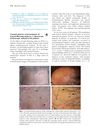
June 2017 in “Journal of The American Academy of Dermatology” In this study, trichoscopy consistently identified typical findings of frontal fibrosing alopecia, revealing three unusual clinical patterns in 18.4% of patients, which may aid in the differential diagnosis when clinical presentations are atypical.
 24 citations
,
June 2016 in “Acta dermato-venereologica”
24 citations
,
June 2016 in “Acta dermato-venereologica” In this case report, tofacitinib was associated with new hair growth on psoriasis lesions after three months of treatment.
January 2019 in “Florida International University Digital Commons (Florida International University)” This research describes using advanced mass spectrometry imaging techniques to analyze gunshot residue and map molecular components in biological samples, such as tumors and mosquito ovarian follicles, at unprecedented spatial resolution and specificity.
 24 citations
,
April 2017 in “Aesthetic plastic surgery”
24 citations
,
April 2017 in “Aesthetic plastic surgery” In this study, micro-autologous fat transplantation (MAFT) for frontal augmentation using the MAFT-GUN showed high patient satisfaction and no complications among 178 patients, suggesting it may be a reliable method for forehead contouring.
 December 2025 in “Cureus”
 This study reports a case of traumatic anserine folliculosis in a young male, where treatment with topical retinoids and keratolytics combined with avoiding friction significantly improved symptoms after nine months.
 10 citations
,
June 2011 in “Movement Disorders”
10 citations
,
June 2011 in “Movement Disorders” THAP1 gene changes do not affect DYT1 dystonia; finasteride may help reduce tics and OCD in Tourette syndrome.
January 2022 in “Clinical Cases in Dermatology” This case report describes a 47-year-old man diagnosed with fibrosing alopecia in a pattern distribution, treated with clobetasol propionate and oral minoxidil while advised to avoid hair transplantation.
November 2022 in “Journal of Investigative Dermatology” This study generated a transcriptomic map of human hair follicle compartments, providing a database for identifying compartment-specific gene expression which may aid in developing targeted treatments for hair follicle disorders.
 September 2023 in “Acta dermato-venereologica”
 This study observed that oral tofacitinib was effective and safe for treating alopecia areata in paediatric patients, with 82% of pre-adolescent participants experiencing hair regrowth and 64% showing significant improvement in their hair loss severity scores.
8 citations
,
August 2023 in “Lasers in Surgery and Medicine” This study observed that treating acne scars with fractional ablative laser concurrently with isotretinoin improved outcomes more effectively compared to applying the laser 6 months after isotretinoin treatment ended, as measured by the Quantitative Global Acne Scarring Grading System.
December 2022 in “Zenodo (CERN European Organization for Nuclear Research)” In this report, a 14-year-old female with stubborn alopecia areata was successfully treated with oral tofacitinib, indicating its potential effectiveness for severe cases.
July 2024 in “Clinical Case Reports” This study suggests that young females may experience a rare coexistence of Frontal Fibrosing Alopecia and ophiasis pattern Alopecia Areata, possibly sharing a common underlying pathophysiology.
 April 2018 in “Journal of Investigative Dermatology”
 In this study, injecting Fetuin A into embryonic mouse wounds led to scar formation, suggesting the protein may play a role in scar development by promoting collagen production.
55 citations
,
August 2024 in “Heliyon” This review article highlights recent progress and challenges in stem cell transplantation for regenerative medicine, emphasizing its potential in tissue repair for conditions like bone and cartilage injuries, neurological disorders, and blood diseases, while stressing the importance of overcoming current obstacles for future advancements.
This study used molecular dynamics simulations to illustrate the complex molecular behavior of the hair surface F-layer, highlighting how fatty acids interact with 18-MEA under different conditions.
36 citations
,
October 2009 in “Journal of biological chemistry/The Journal of biological chemistry” This study reports that TFM-4AS-1, a selective androgen receptor modulator, promoted bone and muscle growth with reduced effects on reproductive organs in ovariectomized rats.
5 citations
,
June 2022 in “Biophysical Journal” This study used a probabilistic Boolean network model to explore hair follicle cell fate regulation and predicted that varying TGF-β levels, in coordination with BMP and TNF, can influence either apoptosis or cell proliferation during different follicle growth stages.
June 2026 in “Virtual and Physical Prototyping” This study introduced a high-viscosity epoxy photoresist to enhance the fabrication of complex microstructures with monolithic integration and mechanical stability, enabling advancements in two-photon 3D printing for creating functional micro-mechanical devices.
 March 2024 in “Journal of cosmetic dermatology”
 This study found that oral isotretinoin significantly reduced symptoms in nearly 90% of patients with frontal fibrosing alopecia, affecting both facial papules and hair loss.
 11 citations
,
February 2021 in “Journal of Cosmetic Dermatology”
11 citations
,
February 2021 in “Journal of Cosmetic Dermatology” This retrospective pilot study found that oral tofacitinib was more effective in treating alopecia areata than alopecia universalis, but relapses were common after treatment cessation.
October 2021 in “Scholarworks (University of Massachusetts Amherst)” This dissertation demonstrates that FERONIA regulates essential plant functions such as RAC/ROP signaling, pollen tube reception, cell wall integrity, and sugar signaling as a cell surface receptor kinase.
 1 citations
,
October 2023 in “Clinical, cosmetic and investigational dermatology”
1 citations
,
October 2023 in “Clinical, cosmetic and investigational dermatology” In this report, a 35-year-old female with palmoplantar pustulosis undergoing secukinumab treatment developed alopecia areata, a rare side effect attributed to paradoxical reactions with IL-17 inhibitors; switching to tofacitinib improved both conditions.
 1 citations
,
July 2022 in “The journal of investigative dermatology/Journal of investigative dermatology”
1 citations
,
July 2022 in “The journal of investigative dermatology/Journal of investigative dermatology” In this open-label trial, Tofacitinib was well tolerated and improved IFN and cytokine scores, as well as overall skin pathology, in individuals with Down syndrome and immune skin conditions.
 March 2026 in “Journal of Pakistan Association of Dermatologists”
 In this quasi-experimental study, 24-week tofacitinib treatment significantly improved hair regrowth in South Asian patients with alopecia areata, but a high relapse rate post-withdrawal signals the need for continuous treatment strategies.
 December 2015 in “Actas Dermo-Sifiliográficas”
 This review addresses the challenges in treating frontal fibrosing alopecia, highlighting the limited effectiveness of medical treatments and the demand for hair transplantation despite its risks, but it reports no new clinical results.
37 citations
,
January 2010 in “Human Molecular Genetics” In this study using mice with specific gene knockouts, both farnesyltransferase and geranylgeranyltransferase-I were found to be essential for the proliferation and survival of skin keratinocytes.
75 citations
,
June 2007 in “Journal of Biological Chemistry” This study found that the combination of MT-DADMe-ImmA and MTA selectively induced apoptosis in head and neck squamous cell carcinoma cell lines FaDu and Cal27, but not in normal fibroblasts or MTAP-deficient breast cancer cells.
 5 citations
,
January 2021 in “Inflammatory Bowel Diseases”
5 citations
,
January 2021 in “Inflammatory Bowel Diseases” In this report, a female patient with ulcerative colitis, alopecia areata, and pyoderma gangrenosum showed improvement in all three conditions after being treated with tofacitinib.
 13 citations
,
November 2021 in “Pediatric Dermatology”
13 citations
,
November 2021 in “Pediatric Dermatology” This study found that oral tofacitinib was effective and well tolerated for treating alopecia areata in most pediatric patients, with nearly 73% experiencing hair regrowth.
August 2025 in “BMC Pharmacology and Toxicology” The LTF gene may help predict and manage nonspecific orbital inflammation.