 August 2023 in “British journal of dermatology/British journal of dermatology, Supplement”
 This paper reviews three cases of traumatic anserine folliculosis in children, showing the condition's association with postural habits and potential improvement through posture correction and topical treatments.
 9 citations
,
January 2018 in “Journal of the European Academy of Dermatology and Venereology”
9 citations
,
January 2018 in “Journal of the European Academy of Dermatology and Venereology” A male patient developed frontal fibrosing alopecia after antiandrogen therapy for prostate cancer.
January 2024 in “Pharmacoepidemiology” This study found that patients with rheumatoid arthritis taking tofacitinib had higher rates of serious adverse events compared to those with alopecia areata, highlighting the need for careful assessment when using it off-label for alopecia areata.
 26 citations
,
October 2020 in “Pediatric Dermatology”
26 citations
,
October 2020 in “Pediatric Dermatology” This study found that oral tofacitinib led to clinically significant improvement in alopecia areata severity scores among pre-adolescents, though results varied and further evaluation in clinical trials is needed.
4 citations
,
July 2023 in “Frontiers in Microbiology” HGF combined with ADA is highly accurate for diagnosing tuberculous pleural effusion, especially in younger females.
 1 citations
,
May 2024 in “Dermatology and Therapy”
1 citations
,
May 2024 in “Dermatology and Therapy” This review article examines the current understanding of frontal fibrosing alopecia, noting its prevalence in different demographics and the roles of genetic and environmental factors in its pathogenesis, while highlighting that treatment approaches remain varied and lack standardization.
 2 citations
,
July 2022 in “Frontiers in Medicine”
2 citations
,
July 2022 in “Frontiers in Medicine” This review discusses the current understanding of frontal fibrosing alopecia's pathogenesis, highlighting genetic susceptibility, immune response involvement, and possible links to steroid hormones, but reports no new clinical results.
1 citations
,
May 2020 in “bioRxiv (Cold Spring Harbor Laboratory)” In this study, researchers identified a temperature-sensitive mutation in the FERONIA gene of plants that prevents root hair formation at elevated temperatures, highlighting its role in maintaining root hair growth and response to plant hormones.
 60 citations
,
April 2018 in “Clinical, cosmetic and investigational dermatology”
60 citations
,
April 2018 in “Clinical, cosmetic and investigational dermatology” This review discusses the causes and diagnosis of traction alopecia, emphasizing education for high-risk populations as there is currently no cure, and presents no new clinical findings.
 46 citations
,
January 2015 in “Journal of The American Academy of Dermatology”
46 citations
,
January 2015 in “Journal of The American Academy of Dermatology” This study suggests that trichoscopic features, such as perifollicular erythema and cicatricial white patches, are independently associated with pruritus and the severity of frontal fibrosing alopecia.
 78 citations
,
March 2017 in “JAMA Dermatology”
78 citations
,
March 2017 in “JAMA Dermatology” Tofacitinib helped regrow hair in people with severe alopecia, but side effects occurred and benefits stopped after treatment ended.
 222 citations
,
September 2016 in “JCI insight”
222 citations
,
September 2016 in “JCI insight” This research overview highlights that although JAK inhibitors show promise as potential treatments for alopecia areata based on recent insights into the disease mechanism, their efficacy has not yet been thoroughly evaluated in a systematic manner.
1 citations
,
January 2012 in “Jounal of The Korean Society of cosmetology” Tremella fuciformis Berk helps protect hair from stress-related damage.
1 citations
,
December 2025 in “Journal of the American Academy of Dermatology”  January 2024 in “Skin Research and Technology”
 This case report found that oral tofacitinib treatment resulted in more than 90% hair regrowth in a 6-year-old with severe alopecia areata, with no relapse after dose reduction.
 20 citations
,
January 2016 in “Intractable & Rare Diseases Research”
20 citations
,
January 2016 in “Intractable & Rare Diseases Research” In this clinical experience, treating frontal fibrosing alopecia with oral finasteride, hydroxychloroquine, tacrolimus, and excimer laser was associated with optimal results in patients with active inflammation.
 January 2024 in “Dermatologic therapy”
 In this study, pediatric patients with alopecia areata treated with systemic tofacitinib showed significant improvement at 12 months, but the small sample size and retrospective design limit conclusions about its effectiveness.
 179 citations
,
December 2004 in “Journal of The American Academy of Dermatology”
179 citations
,
December 2004 in “Journal of The American Academy of Dermatology” This study observed that frontal fibrosing alopecia in postmenopausal women involves selective follicular inflammation, and finasteride treatment may slow disease progression, suggesting a potential androgen-related component.
January 2023 in “Indian Dermatology Online Journal” This case report identifies a 23-year-old man with congenital triangular alopecia, a non-scarring alopecia characterized by preserved follicles and vellus hair, for which unnecessary interventions should be avoided.
3 citations
,
May 2024 in “Indian Journal of Dermatology” In this case report, researchers identified a potential adverse skin reaction, called SDRIFE or Baboon syndrome, caused by the drug tofacitinib in a 19-year-old woman being treated for alopecia subtotalis, leading the authors to recommend discontinuation of the drug.
51 citations
,
August 2010 in “British journal of dermatology/British journal of dermatology, Supplement” In this study, intralesional triamcinolone acetonide was associated with eyebrow regrowth in some patients with frontal fibrosing alopecia.
 15 citations
,
November 2020 in “Pharmaceutics”
15 citations
,
November 2020 in “Pharmaceutics” In this ex vivo and mouse model study, Tofacitinib-loaded nanoparticles demonstrated enhanced delivery of the drug into hair follicles and reduced inflammatory effects compared to conventional forms, indicating potential for safer, topical use in treating alopecia areata.
 13 citations
,
June 2012 in “Journal of Dermatological Case Reports”
13 citations
,
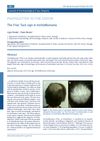
June 2012 in “Journal of Dermatological Case Reports” This report describes an 8-year-old male with trichotillomania, confirmed by trichoscopy showing characteristic hair damage and patterns.
In a proof-of-concept study at Xiangya Hospital, the researchers observed that combining tofacitinib with low-dose interleukin-2 helped maintain remission in refractory alopecia areata patients, with three out of four maintaining complete remission for 11–20 months post-treatment and no adverse events reported.
March 2023 in “Archives of Physical Medicine and Rehabilitation” This pilot study suggests that high-dose testosterone plus finasteride improved knee extensor strength and muscle size in men with impaired gait after chronic incomplete spinal cord injury.
May 2026 in “International Journal of Dermatology” This study investigated a unique frontal fibrosing alopecia-like presentation of alopecia areata, finding that patients experienced an insidious, chronic course with limited scalp hair regrowth, and showed a lower response to systemic corticosteroids compared to patchy alopecia areata.
 December 2023 in “Acta dermato-venereologica”
 This retrospective cohort study reported that oral tofacitinib was effective in treating alopecia areata, with 83.2% of patients showing improvement and 16.0% achieving complete remission. Earlier intervention and previous hair regrowth were linked to better outcomes, and no severe adverse events were observed.
 May 2024 in “Journal of cosmetic dermatology”
 In this retrospective study, oral tofacitinib treatment for at least 6 months improved scalp hair loss in 69.1% of alopecia areata patients, with patchy AA cases responding better compared to other subtypes, and no significant adverse effects were reported.
January 2025 in “International Journal of Pharmaceutics” In this study, gelatin-coated transferosomes were developed to deliver tofacitinib specifically to hair follicles, resulting in 80% hair regrowth in alopecia areata patients with recalcitrant lesions after 12 weeks of treatment.
 39 citations
,
May 2014 in “Frontiers in Pharmacology”
39 citations
,
May 2014 in “Frontiers in Pharmacology” In this study, CD4+CD25+FoxP3+ Regulatory T cells were found to reduce TGF-b1 induced lung fibrosis and fibrocyte accumulation in mice, partly by suppressing fibroblast growth factor 9.