 November 2022 in “Journal of the Endocrine Society”
 This case study highlights the complexity of managing PCOS and its symptoms in transmen, suggesting hormonal fluctuations may lead to symptomatic relief with low dose estradiol.
 April 2020 in “Journal of the Endocrine Society”
 This case report describes the first known instance of a testosterone-secreting steroid cell ovarian tumor causing pulmonary embolism and erythrocytosis in a postmenopausal woman, highlighting its potential role as a rare cause of hypercoagulable state.
 April 2020 in “Journal of the Endocrine Society”
 This case report highlights Leydig cell hyperplasia as a rare cause of increased testosterone and postmenopausal hirsutism, resolved after bilateral salpingo-oophorectomy in a 64-year-old woman.
 April 2020 in “Journal of the Endocrine Society”
 This study found that among transgender men undergoing long-term testosterone therapy, a severe pattern of androgenetic alopecia may indicate increased arterial stiffness, as measured by higher intima-media thickness of the carotid artery.
April 2019 in “Journal of the Endocrine Society” The researchers reported a case of falsely elevated testosterone in a teen, due to immunoassay interference, demonstrating that liquid chromatography tandem-mass spectrometry provides more accurate testosterone measurement, emphasizing the need for thorough analysis when clinical results are inconsistent.
April 2019 in “Journal of the Endocrine Society” In this case report, significantly elevated testosterone levels were documented in a young female with Type A Insulin Resistance Syndrome, marking a clinical finding beyond what is typically associated with the disorder's known mutations.
 February 2018 in “The Journal of Sexual Medicine”
 The researchers reported that using Natesto® testosterone gel improved erectile function and mood in hypogonadal men over a 90-day period.
April 2014 in “The FASEB Journal” This study suggests that testosterone may reduce knee joint range of motion by acting on relaxin receptors in rats, while flutamide and finasteride counteracted this effect and increased receptor expression.
 October 2024 in “Journal of the Endocrine Society”
 In this retrospective chart review, researchers observed that estrogen monotherapy effectively suppressed testosterone levels below 50ng/dL in all transfeminine patients studied, particularly those using injectable formulations, though the small sample size and ongoing data collection limit these findings.
 October 2024 in “Journal of the Endocrine Society”
 In this retrospective study, among transfeminine patients aged 19-81 receiving gender-affirming estrogen therapy, 100% achieved testosterone suppression without anti-androgens when serum estradiol exceeded 100pg/mL, predominantly using injectable estrogen.
 December 2016 in “The Journal of Sexual Medicine”
 This study reviewed the preferences and reasons for testosterone injection therapy among 53 Canadian men with hypogonadism, finding that most opted for injections due to efficacy, ease, and cost considerations.
 February 2017 in “The Journal of Sexual Medicine”
 In this controlled registry study, 8 years of testosterone therapy in hypogonadal men led to a significant decrease in waist circumference, weight, and BMI compared to those without the therapy.
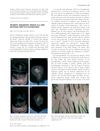 July 2011 in “British Journal of Dermatology”
 Hormone treatment caused hair loss, finasteride helped regrowth.
3 citations
,
August 2024 in “Middle East Fertility Society Journal” This study analyzed 19 articles and found that vitamin D significantly improved the hormonal profile in women with PCOS, with greater effects observed after 8-week interventions compared to 12-week ones.
September 2024 in “Journal of Clinical and Translational Endocrinology Case Reports” This study identified that biotin ingestion led to interference in immunoassay results, falsely indicating high testosterone and insulin levels in a 28-year-old female patient, thus complicating her clinical assessment and treatment planning until recognized and resolved.
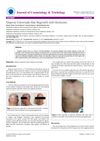 January 2017 in “Journal of cosmetology & trichology”
 This case study describes a man with long-standing alopecia universalis who experienced hair regrowth after taking testosterone, chorionic gonadotropin, and DHEA-S.
 90 citations
,
December 2007 in “Current Oncology”
90 citations
,
December 2007 in “Current Oncology” This review discusses management strategies for sexual side effects of aromatase inhibitors in postmenopausal breast cancer patients and reports no original clinical findings.
 48 citations
,
February 2008 in “Nutrition in Clinical Practice”
48 citations
,
February 2008 in “Nutrition in Clinical Practice” This article reviews dietary recommendations for managing polycystic ovary syndrome and provides evidence that diet changes can improve the androgen profile in affected women, but it reports no new clinical results.
 February 2025 in “Pharmaceuticals”
 This study found that supplementing myo-inositol with microlipodispersed magnesium significantly improved acne and hirsutism in women with PCOS by reducing BMI, testosterone, and DHEAS levels, also enhancing quality of life without side effects, over 6 months.
 September 2023 in “IP Journal of Nutrition, Metabolism and Health Science/IP Journal of Nutrition Metabolism and Health Science”
 This study observed that hirsutism, alopecia, and acne are the most common androgenic symptoms in women with PCOS, with treatments including biotin, minoxidil, and over-the-counter acne medications.
4 citations
,
January 2012 in “International Journal of Cardiology” Dihydrotestosterone (DHT) worsens heart enlargement, and blocking it may help prevent heart issues.
 October 2023 in “Frontiers in endocrinology”
 This review examines the role of androgens and androgen receptors in regulating glucose and lipid metabolism, focusing on their effects on mitochondrial content and function; it also discusses the sex-dimorphic influence of androgens and provides theoretical insights into their mechanisms.
 June 2007 in “Endocrinology and Metabolism Clinics of North America”
 This study reports that incomplete information in a reverse supply chain can lead to efficiency losses, but a two-part tariff contract for the remanufacturer may improve performance by eliciting private information from collectors.
33 citations
,
December 2017 in “Journal of neuroendocrinology” This study describes molecular mechanisms explaining how sex and stress steroids rapidly modulate dendritic spine formation in hippocampal neurons, suggesting recovery-like effects under steroid-depleted conditions compared to intact conditions.
 7 citations
,
May 1978 in “International Journal of Dermatology”
7 citations
,
May 1978 in “International Journal of Dermatology” Recent hair loss research shows some progress, especially in understanding male pattern baldness, but effective treatments for many types of hair loss are still lacking.
5 citations
,
October 2003 in “PubMed” This case report describes a 30-year-old male with a late diagnosis of Kallmann's syndrome, highlighting the necessity of hormonal therapy to reduce the risk of osteoporosis and bone fractures despite the patient's acceptance of his physical appearance.
2 citations
,
September 2024 in “Asian Journal of Andrology” In a retrospective cohort of patients with steroid 5 α-reductase 2 deficiency, this study identified seven novel genetic variants in the SRD5A2 gene, expanding the variant database and contributing to improved diagnostic and therapeutic approaches for the condition.
April 2023 in “Mayo Clinic Proceedings” Estrogen may help improve COVID-19 outcomes, especially in women.
October 2022 in “Zenodo (CERN European Organization for Nuclear Research)” This article discusses Truman Plus Male Enhancement, a testosterone booster, emphasizing its potential benefits for sexual health and energy, but does not report any new clinical results.
October 2015 in “Journal of the East Asian Society of Dietary Life” This study found that oral administration of Curcuma longa L. extract in castrated rats with benign prostate hyperplasia reduced pro-inflammatory cytokine expression, suggesting a potential anti-inflammatory effect.