 April 2023 in “The journal of investigative dermatology/Journal of investigative dermatology”
 This study suggests that tissue transglutaminase (TG2) may play a role in sebum production by regulating autophagy in sebaceous glands, offering potential targets for dermatological interventions.
3 citations
,
May 2024 in “Indian Journal of Dermatology” In this case report, researchers identified a potential adverse skin reaction, called SDRIFE or Baboon syndrome, caused by the drug tofacitinib in a 19-year-old woman being treated for alopecia subtotalis, leading the authors to recommend discontinuation of the drug.
1 citations
,
October 2025 in “Ophthalmology Science” In this experimental study, researchers found that intravitreal injections of up to 100μg of topotecan in rabbits caused no systemic or ocular toxicity, while 200μg doses resulted in localized retinal changes and decreased electroretinography amplitudes near the injection site.
 2 citations
,
January 2025 in “Сибирский научный медицинский журнал”
2 citations
,
January 2025 in “Сибирский научный медицинский журнал” In this study using a mouse model, the authors reported that the synthetic antioxidant TS-13 effectively inhibited tumor growth comparably to doxorubicin and reduced chemotherapy side effects, such as weight loss, splenotoxicity, and alopecia, more effectively when combined with the cytostatic treatment.
August 2025 in “Journal of the American Academy of Dermatology” 18 citations
,
November 2016 in “Transgenic research” This study found that transgenic cashmere goats overexpressing thymosin beta-4 have a higher secondary to primary hair follicle ratio, suggesting potential for increased cashmere yield.
January 2026 in “Biochemical Pharmacology”  November 2025 in “Mendeley Data”
 In this study, tofacitinib and baricitinib showed comparable efficacy and tolerability under unorthodox weight-stratified dosing in pediatric patients with moderate-to-severe alopecia areata over 24 weeks; however, the unorthodox baricitinib regimen yielded a lower effectiveness in severe cases, emphasizing the importance of adherence to guideline-recommended dosing.
 November 2020 in “Dubai medical journal”
 This case report described a 24-year-old with alopecia totalis who saw full scalp hair regrowth by the 9th month while using oral tofacitinib, which was well-tolerated and did not show serious adverse effects. Longer-term studies are needed to confirm its overall effectiveness for alopecia totalis.
 58 citations
,
March 2020 in “Scientific Reports”
58 citations
,
March 2020 in “Scientific Reports” This study mapped the safety profile of EGFR-TKIs by analyzing FDA adverse event reports, highlighting unexpected reactions like intestinal obstruction and hypokalaemia with gefitinib and erlotinib.
 January 2018 in “Journal of Clinical Dermatology”
 This study found that women with telogen effluvium had significantly lower levels of zinc and iron in their hair compared to healthy women.
21 citations
,
May 2014 in “Toxicological Sciences” This study found that skin exposure to toluene diisocyanate in mice creates immune-recognition reservoirs in the skin's stratum corneum and hair follicles, potentially leading to sensitization and allergic reactions.
 3 citations
,
July 2013 in “Bioscience, Biotechnology, and Biochemistry”
3 citations
,
July 2013 in “Bioscience, Biotechnology, and Biochemistry” This study found that topically applied Chinese black tea extract, when fermented and combined with capsaicin, significantly promoted hair growth in mice, potentially involving estrogen receptor interactions.
 50 citations
,
June 1999 in “Annals of Oncology”
50 citations
,
June 1999 in “Annals of Oncology” This study found that long-term weekly administration of docetaxel is feasible at doses up to 45 mg/m² per week with acceptable toxicity, and suggests further evaluation with 40 mg/m² for phase II studies.
January 2023 in “Faculty of 1000 Research Ltd” This report details a case of tuberculous lymphadenitis in a 21-year-old female with SLE, suggesting that immune suppression may increase susceptibility to this extra-pulmonary TB.
March 2023 in “Archives of Physical Medicine and Rehabilitation” This pilot study suggests that high-dose testosterone plus finasteride improved knee extensor strength and muscle size in men with impaired gait after chronic incomplete spinal cord injury.
 1 citations
,
June 2022 in “JCRPE”
1 citations
,
June 2022 in “JCRPE” This study reports that metreleptin treatment in a boy with congenital generalized lipodystrophy significantly improved metabolic complications and overall health outcomes during the first year of therapy.
 April 2018 in “Journal of Investigative Dermatology”
 This study found that TGFbeta is a key pathway causing age-related loss of dermal fat's antimicrobial function, suggesting that targeting TGFBR might help restore skin defense against infections in older age.
 January 2025 in “Termometer Jurnal Ilmiah Ilmu Kesehatan dan Kedokteran”
 In this study, researchers tested a tea leaf ethanol extract (Camellia sinensis) hair tonic and found it increased average hair growth compared to positive and negative controls over 28 days, but exhibited some instability and inhomogeneity after accelerated testing.
 75 citations
,
October 1996 in “Dermatologic Clinics”
75 citations
,
October 1996 in “Dermatologic Clinics” This review examines chronic telogen effluvium, highlighting its distinctive features and the need for reassurance about its non-progressive nature, but reports no new clinical results.
July 2025 in “Clinical Medicine” In this institution-based randomized trial, oral betamethasone mini-pulse therapy for alopecia areata showed a faster therapeutic response compared to oral tofacitinib, as measured by trichoscopic changes and achievement of 50% hair regrowth.
 13 citations
,
June 2012 in “Journal of Dermatological Case Reports”
13 citations
,
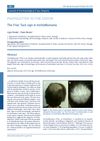
June 2012 in “Journal of Dermatological Case Reports” This report describes an 8-year-old male with trichotillomania, confirmed by trichoscopy showing characteristic hair damage and patterns.
 April 2024 in “Indian dermatology online journal”
 This case report describes a 53-year-old woman with a rare presentation of trichostasis spinulosa on her breast and abdomen, featuring itchy, comedo-like lesions. Dermoscopy revealed diagnostic features that may eliminate the need for a biopsy, highlighting the potential for non-invasive diagnosis in such cases.
1 citations
,
April 2024 in “JDDG Journal der Deutschen Dermatologischen Gesellschaft” In this case report, the authors concluded that cutaneous lupus erythematosus was induced by the PD-1 inhibitor tislelizumab during treatment for metastatic lung adenocarcinoma, despite initial remission and treatment adjustments.
 29 citations
,
January 2021 in “Translational Psychiatry”
29 citations
,
January 2021 in “Translational Psychiatry” This study found that certain gene sets, including those involved in ligand-gated ion channel signaling and cell adhesion, are associated with Tourette syndrome, suggesting a potential neurobiological basis for the disorder.
 2 citations
,
October 2018 in “Archives of Dermatological Research”
2 citations
,
October 2018 in “Archives of Dermatological Research” The researchers reported that topical tofacitinib in mice increased hair follicles in the growth phase and boosted noggin and BMP4 mRNA expressions, compared to a vehicle and minoxidil.
 January 2022 in “International review of movement disorders”
 In this review, the authors found that cannabinoids and steroid-related drugs show potential for treating Tourette syndrome, but existing evidence is limited and further research is needed to confirm their efficacy and safety.
 2 citations
,
April 2019 in “Dermatologic Therapy”
2 citations
,
April 2019 in “Dermatologic Therapy” A patient with alopecia had hair regrowth with tofacitinib but developed a skin reaction, choosing to continue the treatment despite the side effect.
2 citations
,
January 2014 in “Dermatology Online Journal” This article reviews hair-thread tourniquet syndrome, discussing its demographics, causes, and current treatment methods, but presents no new clinical findings.

This presentation reviews the role and implementation of journal clubs in physical medicine and rehabilitation but reports no new research findings.