 May 2024 in “Actas dermo-sifiliográficas/Actas dermo-sifiliográficas”
 This review outlines current treatment strategies for trichotillomania, noting cognitive-behavioral therapy's success, while highlighting the promise and limitations of various pharmacological options.
January 2026 in “Journal of Advanced Research” This study found that fermentation products from Bacillus sp. TC5 can effectively promote hair regrowth and improve transdermal drug absorption, suggesting their potential as eco-friendly agents in developing cosmeceuticals for hair restoration and skin repair.
June 2023 in “Zenodo (CERN European Organization for Nuclear Research)” This review discusses the transformative potential of direct-to-consumer (DTC) hair regrowth solutions and reports no clinical results; it emphasizes innovation, personalization, and trust in reshaping the industry.
March 2026 in “Al-Azhar International Medical Journal /Al-Azhar International Medical Journal” In this study, patients with resistant alopecia areata treated with 35% trichloroacetic acid showed significantly better outcomes compared to those receiving superficial cryotherapy, with TCA demonstrating "excellent" results in 37.5% of cases versus 6.25% for cryotherapy.
 February 2024 in “Journal of medical science and clinical research”
 This case study reports a near-complete response of a proliferating trichilemmal tumor to neoadjuvant radiotherapy in a 79-year-old woman, highlighting radiotherapy's role in managing this condition when patients are unsuitable for surgery.
 April 2024 in “Indian Journal of Paediatric Dermatology”
 This case report highlights a rare association between congenital triangular alopecia and vitiligo, noting that treatment with tofacitinib improved the patient's vitiligo but not the alopecia.
21 citations
,
March 2003 in “Acta Dermato Venereologica” Tacalcitol ointment effectively improves bilateral nevus comedonicus.
September 2021 in “The journal of investigative dermatology/Journal of investigative dermatology” This study identified a germline variant in PLCD1 as a major risk allele for familial trichilemmal cysts, requiring a subsequent somatic mutation in the same allele for cyst formation.
3 citations
,
March 2013 in “American Journal of Dermatopathology” This study found that ossification in trichilemmal cysts may be more common than previously thought, often associated with cyst wall rupture, and reports a novel case of ossifying TC with extramedullary hematopoiesis.
11 citations
,
May 2008 in “British journal of dermatology/British journal of dermatology, Supplement” This case report describes a 32-year-old man who developed SCC of the common bile duct a year after receiving treatment for a malignant proliferating trichilemmal tumour on the scalp.
June 2024 in “Journal of the Mississippi State Medical Association” 
This review discusses central centrifugal cicatricial alopecia and emphasizes the need for more research to understand and manage the disease, while also suggesting initiatives like educating hairstylists for early detection.
 2 citations
,
January 2023 in “Journal of Education, Health and Sport”
2 citations
,
January 2023 in “Journal of Education, Health and Sport” In this study, researchers reviewed current treatments for trichotillomania and found that psychotherapy, particularly cognitive-behavioral therapy like habit reversal training, is most effective, with some medications helping to alleviate symptoms, though further study is needed on their use.
21 citations
,
January 2000 in “Fetal Diagnosis and Therapy” This study found that trichothiodystrophy can be diagnosed prenatally in the second trimester using an endoscopically-guided fetal eyebrow biopsy, with sulfur content analysis being the most reliable test.
42 citations
,
July 2017 in “Molecular therapy” This study found that applying a tocotrienol-rich phytochemical topically induced hair follicle development in adult mice, revealing a new epidermal pathway involving E-cadherin and β-catenin.
This article reviews confocal microscopy findings in trichoepithelioma and desmoplastic trichoepithelioma, noting similarities with histological features, but it provides no new clinical results.

The man has Temporal Triangular Alopecia, a stable, non-scarring hair loss condition best treated with hair transplantation.
 18 citations
,
May 2014 in “Menopause”
18 citations
,
May 2014 in “Menopause” This study found that a 5-mg daily dose of transdermal testosterone cream in postmenopausal women restored testosterone levels to those typical of premenopausal women.
July 2025 in “Journal of Investigative Dermatology” Enhancing Tregs can protect against alopecia areata.
April 2024 in “Journal of the American Academy of Dermatology” Diagnosing and treating CCCA requires understanding multiple causes and using various diagnostic tools.
 39 citations
,
May 2004 in “Clinics in Dermatology”
39 citations
,
May 2004 in “Clinics in Dermatology” This article reviews treatment options for cutaneous T-cell lymphoma, including skin-directed therapies and aggressive treatments for advanced cases, but reports no new clinical results.
September 2023 in “Journal of the American Academy of Dermatology” CTP-543 is generally safe for treating alopecia areata.
 5 citations
,
January 2014 in “Journal of Cutaneous and Aesthetic Surgery”
5 citations
,
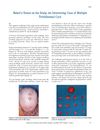
January 2014 in “Journal of Cutaneous and Aesthetic Surgery” A woman had 13 non-cancerous cysts on her scalp successfully removed in one surgery.
 March 2024 in “Journal of Experimental & Biomedical Sciences/Biomedical Science Letters”
 In this study, BCC therapy reduced oxidative stress and cell damage in cardiomyocyte cells, suggesting it may serve as a new treatment alternative for heart disease.
 5 citations
,
October 2018 in “Dermatologic therapy”
5 citations
,
October 2018 in “Dermatologic therapy” This case report describes the first recorded instance of congenital triangular alopecia in the mid-frontal scalp region, challenging the assumption that it is restricted to the frontotemporal area.
52 citations
,
February 2012 in “PloS one” This study found that the absence of Ctip2 in epidermal keratinocytes led to impaired wound healing in mice, affecting cell migration, proliferation, and hair follicle stem cell maintenance.
March 2026 in “Journal of Investigative Dermatology” Genetic factors, especially PADI3 gene variants, contribute to CCCA in women of African descent.
 January 2025 in “Biomedical Reports”
 This case report describes the first successful use of telitacicept in treating a patient with systemic lupus erythematosus and a history of papillary thyroid carcinoma, suggesting its potential as a therapeutic option for such conditions.
 145 citations
,
May 2008 in “Cancer Science”
145 citations
,
May 2008 in “Cancer Science” This review discusses how increased gene copy number for telomerase components may contribute to telomerase up-regulation in cancer cells, although the exact mechanisms are not fully understood.
February 2026 in “Biophysical Journal”