 28 citations
,
July 2007 in “Development”
28 citations
,
July 2007 in “Development” In this study, inactivating the TAF4 subunit of transcription factor TFIID in mouse epidermis disrupted gene expression linked to skin and hair function, and increased tumor risk.
10 citations
,
January 1997 in “Dermatology” This case report details two siblings with trichothiodystrophy, identifying reduced hair sulfur content as essential for diagnosis despite varied symptoms complicating recognition.
20 citations
,
February 2004 in “Clinical & Experimental Immunology” This study suggests that long-term treatment with the contact sensitizer SADBE in mice may reduce leucocyte traffic in alopecia areata through impaired leucocyte extravasation.
May 2025 in “OPAL (Open@LaTrobe) (La Trobe University)” The researchers reported that in a mouse model of alopecia areata, tofacitinib treatment influenced disease progression by modulating CD8+ T cell infiltration through the linoleic acid metabolism and magnesium ion pathway, offering insights into potential treatment approaches.
1 citations
,
May 2025 in “The Journal of Dermatology” In this study, increased Treg cell activity indicated by IL-10 and IL-15 was identified as a feature of ADTA, distinguishing it from AA and potentially explaining ADTA's more favorable prognosis.
12 citations
,
March 2022 in “Dermatologic Therapy” This report presents a case of a patient developing new multiple sclerosis while using tofacitinib for alopecia areata, noting no new comprehensive research findings.
January 2019 in “eScholarship (California Digital Library)” This study concluded that CNS1-dependent peripheral Tregs do not significantly impact type 1 diabetes in the NOD mouse model, with thymus-derived Tregs being the primary regulators.
 11 citations
,
January 2018 in “Acta dermato-venereologica”
11 citations
,
January 2018 in “Acta dermato-venereologica” In this study, oral tofacitinib showed higher efficacy and tolerability in treating refractory alopecia totalis and universalis compared to traditional treatments, achieving a 50% improvement in severity scores for 44.4% of patients over six months, with fewer adverse effects.
April 2019 in “The journal of investigative dermatology/Journal of investigative dermatology” This study in mice suggests that defects in hair follicles with mesenchymal TSC2 disruption may result from an impaired TGFβ1 response, indicating a potential novel treatment approach for tuberous sclerosis complex.
January 2023 in “Indian Dermatology Online Journal” This case report identifies a 23-year-old man with congenital triangular alopecia, a non-scarring alopecia characterized by preserved follicles and vellus hair, for which unnecessary interventions should be avoided.
May 2025 in “OPAL (Open@LaTrobe) (La Trobe University)” This study revealed that tofacitinib may inhibit CD8+ T cell infiltration in alopecia areata by modulating the linoleic acid metabolism-Mg2+ pathway, providing new insights for potential treatments and diagnosis.
May 2025 in “OPAL (Open@LaTrobe) (La Trobe University)” This study found that in a mouse model of alopecia areata, tofacitinib inhibited CD8+ T cell infiltration at hair follicles by modulating linoleic acid metabolism and magnesium pathways, offering insights into potential therapeutic strategies for the condition.
September 2023 in “Journal of the American Academy of Dermatology” Increased Treg cells and IL-10 may help quick recovery in acute diffuse and total alopecia.
12 citations
,
January 1987 in “Carcinogenesis” This study found that a single application of TCDD on the skin of hairless mice altered epidermal differentiation, changing keratin expression patterns similarly to a known tumor promoter.
2 citations
,
December 2024 in “eLife” This study observed that individuals with Down syndrome exhibit early immune dysregulation, including multi-organ autoimmunity and hypercytokinemia, and found that the JAK inhibitor tofacitinib showed a good safety profile and reduced skin pathology in a Phase II trial.
22 citations
,
March 2017 in “Journal of the Formosan Medical Association” This report presents the Taiwanese Dermatological Association's 2016 consensus on defining and managing skin toxicities from EGFR-TKI treatments, providing comprehensive guidelines for clinicians in Taiwan.
 39 citations
,
January 2019 in “Journal of the American Academy of Dermatology”
39 citations
,
January 2019 in “Journal of the American Academy of Dermatology” In this study, three children with severe alopecia treated with systemic tofacitinib showed significant hair regrowth, suggesting it may be a potential option for those unresponsive to conventional therapy.
In this study, introducing the rat OTC gene into spf-ash mice led to increased OTC activity and normalized hair growth and biochemical markers like urinary orotic acid and serum citrulline, partially correcting the symptoms of OTC deficiency.
 30 citations
,
February 2017 in “Histochemistry and Cell Biology”
30 citations
,
February 2017 in “Histochemistry and Cell Biology” This study found that applying TPA to mice accelerated hair follicle regeneration by activating Akt and Wnt/ß-catenin signaling pathways, involving hair follicle stem cell proliferation.
 18 citations
,
February 2019 in “Scientific Reports”
18 citations
,
February 2019 in “Scientific Reports” This study found that TSA restored the hair-inductive capacity of skin-derived precursors in mice by enhancing BMP gene expression and signaling through histone acetylation.
 August 2026 in “Bone and Joint Research”
 In this study, tibial cortex transverse transport accelerated wound healing in diabetic rats, potentially through enhanced mobilization of non-classical monocytes and increased M2 macrophage polarization.
22 citations
,
July 2006 in “Annals of The Royal College of Surgeons of England” This case report aims to raise physician awareness about 'toe-tourniquet' syndrome, which can lead to digit loss if not promptly treated, and to prevent its misdiagnosis as child abuse.
10 citations
,
August 2022 in “JAAD Case Reports” This research abstract describes alopecia areata as an autoimmune disease causing hair loss due to an inflammatory response mediated by the JAK/STAT signaling pathway. The condition, which affects young people disproportionately, lacks a cure and entails significant psychosocial challenges, despite varied treatment attempts.
 May 2025 in “Journal of Pharmacy And Bioallied Sciences”
 In this study, oral tofacitinib significantly reduced alopecia severity in pediatric patients with moderate-to-severe alopecia areata over 24 weeks, with 42.2% achieving complete or near-complete hair regrowth, although further research is needed on long-term safety and relapse rates.
 29 citations
,
January 2021 in “Translational Psychiatry”
29 citations
,
January 2021 in “Translational Psychiatry” This study found that certain gene sets, including those involved in ligand-gated ion channel signaling and cell adhesion, are associated with Tourette syndrome, suggesting a potential neurobiological basis for the disorder.
 April 2016 in “Journal of Investigative Dermatology”
 This study found that administering botulinum toxin A via Flex-PADs to mouse footpads inhibited sweating similarly to traditional injections, suggesting a promising patient-friendly delivery method for hyperhidrosis treatment.
4 citations
,
February 2022 in “Journal of Cosmetic Dermatology” This study found that dermatoscopic features can distinguish between tinea capitis and alopecia areata in children, with tinea capitis commonly showing comma hairs and alopecia areata showing exclamation mark hairs.
 15 citations
,
November 2020 in “Pharmaceutics”
15 citations
,
November 2020 in “Pharmaceutics” In this ex vivo and mouse model study, Tofacitinib-loaded nanoparticles demonstrated enhanced delivery of the drug into hair follicles and reduced inflammatory effects compared to conventional forms, indicating potential for safer, topical use in treating alopecia areata.
 4 citations
,
February 2014 in “Journal of the European Academy of Dermatology and Venereology”
4 citations
,
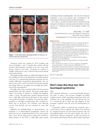
February 2014 in “Journal of the European Academy of Dermatology and Venereology” Early diagnosis of hair tourniquet syndrome saved a baby's toe from being lost.
 2 citations
,
January 2020 in “Skin appendage disorders”
2 citations
,
January 2020 in “Skin appendage disorders” This article discusses traction alopecia in children and adolescents, emphasizing its occurrence due to hairstyles that exert chronic tension on hair, but reports no new findings.