 146 citations
,
July 2003 in “Journal of the American Academy of Dermatology”
146 citations
,
July 2003 in “Journal of the American Academy of Dermatology” In this study, clobetasol propionate 0.05% ointment was found to induce hair regrowth in 28.5% of patients with severe alopecia areata under occlusive conditions, though long-term benefit was limited to 17.8%.
In this study, 1% pimekrolimus cream was found to be more effective than 0.05% clobetasol propionate for treating active plaques in patients with alopecia areata.
 26 citations
,
March 2015 in “American journal of clinical dermatology”
26 citations
,
March 2015 in “American journal of clinical dermatology” This study found that systemic mycophenolate mofetil and topical clobetasol were equally effective at reducing lichen planopilaris activity over six months, but satisfaction differed between the treatments.
10 citations
,
April 2023 in “JAAD Case Reports” This article discusses the challenges in treating hidradenitis suppurativa, highlighting that adalimumab is currently the only FDA-approved treatment, and reports no clinical results.
 14 citations
,
July 2012 in “Journal of the American Academy of Dermatology”
14 citations
,
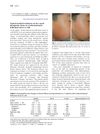
July 2012 in “Journal of the American Academy of Dermatology” This study found that topical tacalcitol improved roughness and scaling in erythromelanosis follicularis faciei et colli, although it was less effective for facial erythema.
 1 citations
,
September 2022 in “International Journal of Trichology”
1 citations
,
September 2022 in “International Journal of Trichology” In this case report, a young adult male with resistant alopecia areata showed nearly 90% hair regrowth after 3 months of treatment with tofacitinib, alongside biotin supplementation, without any side effects observed.
1 citations
,
January 2024 in “Pharmaceuticals” The researchers reported that dPGS-PCL as a carrier improved the penetration of tofacitinib in an ex-vivo human skin model compared to free tofacitinib, but did not show significant differences in inhibiting IL-6 and IL-8 during short incubation.
June 2025 in “British Journal of Dermatology” This study found that both tofacitinib and methotrexate effectively reduced hair loss and psychological distress in patients with moderate-to-severe alopecia areata, but tofacitinib showed much greater efficacy. Both treatments had similar safety profiles, with no serious adverse effects reported.
 June 2026 in “Indian Dermatology Online Journal”
 In this pilot study, both tofacitinib and methotrexate improved alopecia areata outcomes, but tofacitinib showed greater efficacy in achieving significant SALT score improvement after 6 months, although the difference was not statistically significant.
 January 2016 in “The Australian Pharmacist”
 Tofacitinib might be used to treat hair loss.
 79 citations
,
September 2018 in “Dermatologic therapy”
79 citations
,
September 2018 in “Dermatologic therapy” This study found that treatment with oral tofacitinib, alone or with other therapies, was associated with clinical improvement in most patients with recalcitrant lichen planopilaris.
December 2024 in “The American Journal of Gastroenterology” This case report highlights the successful use of tofacitinib in a 12-year-old patient with Crohn’s disease who developed alopecia areata following infliximab treatment, showing significant hair regrowth and complete resolution of alopecia within eight months while maintaining remission of Crohn’s symptoms.
August 2025 in “Journal of the American Academy of Dermatology”  March 2022 in “International Journal of Trichology”
 In this case report, a young female Indian patient with alopecia areata saw hair regrowth within 2 months of treatment with oral tofacitinib, with continued improvements over a 5-month period and no reported side effects.
December 2025 in “JEADV Clinical Practice” This review reports that innovative topical treatments for dermatologic conditions like acne and atopic dermatitis show minimal systemic absorption, indicating improved safety and tolerability compared to traditional therapies.
October 2023 in “Journal of cystic fibrosis” March 2023 in “Reactions Weekly”  January 2025 in “Dermatology and Therapy”
 This review updates dermatologists on both FDA-approved and off-label hormonal therapies, including combined oral contraceptives, clascoterone, and spironolactone, used for acne treatment, providing insights into emerging approaches for managing the condition.
46 citations
,
October 2018 in “JCI insight” In this study, the researchers found that treatment with the JAK inhibitor tofacitinib in alopecia areata patients may reduce clonal CD8+ T cell expansions but does not eliminate them entirely, which could contribute to disease relapse.
1 citations
,
January 2021 in “Journal of clinical and diagnostic research” In this study, adding topical calcipotriol 0.005% to topical clobetasol 0.05% significantly improved treatment efficacy for Alopecia Areata compared to using clobetasol alone, as evidenced by a greater reduction in SALT scores over 24 weeks.
1 citations
,
January 2024 in “Arab Board Medical Journal” This study found that tofacitinib was an effective and well-tolerated treatment for alopecia areata, with significant to moderate hair regrowth in 78% of patients observed.
22 citations
,
June 1991 in “Clinical Therapeutics” This study found that once-daily oxiconazole cream effectively treats tinea infections, achieving at least 80% cure rates, and shows comparable efficacy to other antifungal creams with similar tolerability.
November 2024 in “Actas Dermo-Sifiliográficas” This review outlines current treatment strategies for trichotillomania, noting that while cognitive-behavioral therapy is effective, N-acetylcysteine and memantine are also recommended due to their safety and efficacy, though evidence for other drugs like fluoxetine and naltrexone remains limited.
 48 citations
,
November 2017 in “Journal of the American Academy of Dermatology”
48 citations
,
November 2017 in “Journal of the American Academy of Dermatology” Tofacitinib 2% ointment helped hair regrow in 3 out of 10 patients with alopecia areata, but caused side effects like scalp irritation and raised cholesterol in some.
 1 citations
,
April 2018 in “Journal of Investigative Dermatology”
1 citations
,
April 2018 in “Journal of Investigative Dermatology” This open-label study found that oral tofacitinib led to significant hair regrowth in patients with moderate-to-severe alopecia areata, supported by changes in gene expression and T cell dynamics.
 January 2011 in “Side effects of drugs annual”
 Tretinoin gel is safe for sun exposure, but tacalcitol doesn't significantly improve non-segmental vitiligo.
 September 2025 in “Tạp chí Da liễu học Việt Nam”
 This study found that both 2.5 mg/mL and 5 mg/mL concentrations of intralesional triamcinolone acetonide are effective for treating patchy alopecia areata, but the higher concentration promoted greater hair regrowth and density with more side effects.
 April 2023 in “Dermatology practical & conceptual”
 This study observed that a tacrolimus solution (0.1%) applied to the scalp was effective and well-tolerated for treating inflammatory scalp conditions, with 72.7% of patients showing an excellent response after 2 months of treatment, which persisted after 6 months.
 4 citations
,
July 2001 in “Journal of Cutaneous Medicine and Surgery”
4 citations
,
July 2001 in “Journal of Cutaneous Medicine and Surgery” This study suggests that oral and topical tacrolimus may effectively treat psoriasis, atopic dermatitis, and hair growth disorders, although results are mostly based on small or animal studies.
 June 2025 in “International Journal of Science and Research (IJSR)”
 This study found that oral tofacitinib at a 5mg twice daily dosage was effective in treating recalcitrant alopecia areata, showing significant improvement in hair regrowth and a 27% reduction in SALT scores over six months, with minimal side effects among the 19 patients monitored.