 March 2026 in “Tissue Engineering and Regenerative Medicine”
 In this review, the authors discuss recent advancements in underwater adhesion technologies, specifically highlighting mussel-inspired catechol-based adhesives, which offer strong underwater bonding through various interfacial interactions and the influence of dopamine-modified polymeric tissue adhesives.
 February 2026 in “Frontiers in Bioengineering and Biotechnology”
 This review discusses the development of liposome-based delivery systems to enhance skin wound healing, highlighting their advantages and potential applications, but reports no new clinical results.
 January 2026 in “International Journal of Advanced Research in Science Communication and Technology”
 This report describes the creation of a natural herbal beard balm formulated to nourish, hydrate, and support healthy beard growth while reducing irritation, using ingredients like coconut oil, rosemary oil, and beeswax.
 January 2026 in “International Journal of Applied Pharmaceutics”
 This review discusses the integration of nanoparticles with microneedles to improve drug delivery through enhanced stability, bioavailability, and controlled release, noting ongoing challenges with stability, scalability, and safety.
 January 2026 in “E3S Web of Conferences”
 This study found that silver nanoparticles synthesized using Mitracarpus scaber extract showed potential hepatoprotective and anti-hyperplastic effects in rats, suggesting novel therapeutic strategies for managing liver injury and benign prostatic hyperplasia.
 November 2025 in “Nanoscale Advances”
 This review highlights the potential of inorganic nanoparticle-based scaffolds as innovative tools for advanced wound care, emphasizing their ability to provide antimicrobial action and regenerative support, while also discussing fabrication strategies and challenges in optimizing their clinical application.
 November 2025 in “Journal of Neonatal Surgery”
 This study developed an herbal hair oil containing plant extracts such as Aloe barbadensis and Nigella sativa, reporting it showed good antioxidant and antimicrobial activity, suggesting potential benefits for hair growth and hair fall prevention.
July 2025 in “Highlights in Science Engineering and Technology” In this study, researchers found that nanomaterials designed for plastic surgery applications show promising results, including a 95% dynamic wrinkle filling rate and enhanced hair density by 41%; however, challenges like potential long-term safety issues and high production costs must be addressed.
 January 2025 in “Institutional Repositories DataBase (IRDB)”
 This study observed that topical application of maslinic acid stimulated hair growth in mice comparably to minoxidil, possibly through the Wnt/β-catenin pathway and involving ciliary gene activity, highlighting increased levels of trichogenic gene expression and protein levels.
 January 2025 in “International Journal of Biological Innovations”
 This review article discusses the potential benefits of phytochemicals in hair care, highlighting their ability to improve scalp health, reduce dandruff, and promote hair growth, while emphasizing their safety and minimal side effects compared to conventional therapies.
 January 2025 in “ARC Journal of Dermatology”
 This study discusses the importance of careful dermatological care for transgender youth receiving hormonal therapies, cautioning that acne treatments can interfere with hormone replacement therapy and emphasizing the need for a collaborative interdisciplinary approach to support both acne management and overall well-being.
 April 2024 in “Medical & clinical research”
 This study reviews the range of both conventional and unconventional treatments for Alopecia Areata, highlighting the promise of biological therapies like JAK inhibitors, but notes more research is needed to optimize treatment effectiveness and personalization.
April 2024 in “International Journal For Multidisciplinary Research” This review discusses the potential benefits of using natural permeation enhancers to improve transdermal drug penetration in formulations like emulgel, a promising topical delivery system for hydrophobic drugs.
 January 2024 in “International Research Journal of Ayurveda & Yoga”
 This study reports that in a single-case study, a 24-year-old female with alopecia areata experienced significant hair regrowth after undergoing seven sessions of Jalaukavacharana (leech therapy) along with Ayurvedic medication, suggesting these treatments may be beneficial for such cases.
 January 2024 in “Open access journal of pharmaceutical research”
 This study aimed to develop a herbal hair oil formulation using ingredients like hibiscus, amla, and coconut oil to address hair loss and related issues without causing the adverse effects associated with synthetic medications.
 January 2024 in “Journal of Ayurveda Campus”
 In this review, researchers reported that Psoralea corylifolia, extensively used in Ayurveda and Traditional Chinese Medicine, exhibits various pharmacological activities, including antioxidant and antidiabetic effects, and is primarily used for treating skin diseases. The authors suggest further clinical trials to explore its therapeutic potential.
 February 2023 in “International Journal of Advanced Research in Science, Communication and Technology”
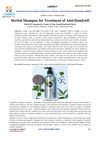
 In this study, the researchers investigated the effectiveness of shampoo containing herbal extracts, specifically Neem and Tulsi, for managing dandruff and found it may offer benefits compared to synthetic drugs, which often cause side effects.
 January 2023 in “Book of Abstracts”
 COVID-19 can cause different types of hair loss, with telogen effluvium being the most common.
 June 2020 in “Journal of Dermatological Treatment”
 This source outlines the potential effects of treatments commonly used in trichology on SARS-CoV-2 infection and offers a guide for managing trichological patients during the COVID-19 era, addressing the challenges of safely visiting and treating patients.
 August 2018 in “Journal of The American Academy of Dermatology”
 Oral alitretinoin is effective for certain types of chronic hand eczema, with mild side effects.
 August 2018 in “Journal of The American Academy of Dermatology”
 Ozenoxacin 1% cream is an effective and safe treatment for impetigo in children and adults.
 December 2017 in “Springer eBooks”
 Transplant patients often get skin problems, with treatments varying by condition.
 March 2017 in “InTech eBooks”
 This source provides a comprehensive review of acne vulgaris, highlighting its pathophysiology, epidemiology, molecular mechanisms, and treatment options, emphasizing the significance of addressing acne's psychosocial burden for adolescents and beyond.
 September 2007 in “Dermatologic Surgery”
 This study found that using 3% hydrogen peroxide for surgical wound care during hair restoration surgery did not significantly impact the survival rate of hair grafts compared to normal saline.
 January 2006 in “Elsevier eBooks”
 Cats with Feline Symmetrical Alopecia can regrow hair with proper treatment based on the specific cause, including diet, medication, or stress management.
 August 2001 in “Veterinary Dermatology”
 This article reviews topics from the American Academy of Veterinary Dermatology and American College of Veterinary Dermatology Annual Meeting and contains no new clinical findings.
 March 2023 in “International Journal of Advanced Research in Science, Communication and Technology”
 This article discusses various synthetic and herbal treatments for alopecia, noting limited effectiveness and associated side effects of synthetic options, and reports no new clinical results.
 14 citations
,
April 2019 in “Saudi pharmaceutical journal”
14 citations
,
April 2019 in “Saudi pharmaceutical journal” This study reported that microparticle-loaded emulsions containing caffeic acid achieved more homogeneous distribution and prolonged release in hair follicles, suggesting potential for effective folliculitis treatment.
 6 citations
,
May 2018 in “Plant Cell, Tissue and Organ Culture (PCTOC)”
6 citations
,
May 2018 in “Plant Cell, Tissue and Organ Culture (PCTOC)” This study found that adjusting plant growth conditions, such as the use of elicitors like yeast extract and methyl jasmonate, increased wedelolactone production in Eclipta alba cell suspension culture.
 6 citations
,
January 2019 in “Dermatology Research and Practice”
6 citations
,
January 2019 in “Dermatology Research and Practice” This study found that ocular and mucocutaneous sequelae are common in SJS/TEN survivors, with exposure to sulfadoxine and severe acute ocular involvement identified as significant risk factors for ocular sequelae.