13 citations
,
January 1997 in “Biochemical Pharmacology” This study found that human liver dehydroepiandrosterone sulfotransferase (DHEA ST) catalyzes the sulfate conjugation of minoxidil, indicating another pathway contributing to its metabolism in humans.
 18 citations
,
January 2002 in “Chemical & pharmaceutical bulletin/Chemical and pharmaceutical bulletin”
18 citations
,
January 2002 in “Chemical & pharmaceutical bulletin/Chemical and pharmaceutical bulletin” This study found that several new pregnane derivatives, especially steroids 16 and 19, demonstrated higher antiandrogenic activity on male hamster models than the commonly used finasteride.
 1 citations
,
November 2021 in “Drug Testing and Analysis”
1 citations
,
November 2021 in “Drug Testing and Analysis” This collection from the 2021 Manfred Donike Workshop outlines advancements in doping detection, highlighting new test methods and challenges, with a focus on steroidal substances, peptide hormones, and gene doping analysis.
35 citations
,
October 2011 in “Medicine and science in sports and exercise” This review discusses the role of skeletal muscle in synthesizing bioactive androgens, highlighting that intramuscular androgens may influence muscle via intracrine action, but their precise function remains unclear.
 49 citations
,
December 2017 in “Journal of pharmaceutical and biomedical analysis”
49 citations
,
December 2017 in “Journal of pharmaceutical and biomedical analysis” This study developed and validated a high-resolution mass spectrometry method to screen for prohibited substances and analyze six endogenous steroids in urine according to World Antidoping Agency requirements, demonstrating its effectiveness for antidoping analysis.
23 citations
,
June 2019 in “Bioanalysis” This study found that monitoring endogenous steroid metabolites in serum may improve the detection of testosterone doping by highlighting promising biomarkers.
June 2023 in “Clinical Chemistry” This case report uncovered that hidden dexamethasone in a dietary supplement caused misleading Cushingoid symptoms and lab results, underscoring the risk of undisclosed ingredients in supplements.
 October 2020 in “System Dynamics Review”
 This study models the pathways of nandrolone and its metabolites in the body and suggests methods to counteract finasteride's role in enabling PED users to cheat drug tests.
December 2025 in “Current Issues in Molecular Biology” This study evaluated novel steroids' potential as future hormonal therapies for neuroprotection in glucose disorders, but emphasized that further research is needed to optimize androgen antagonist use in the context of COVID-19 progression.
19 citations
,
July 2005 in “Steroids” In this study, researchers developed a sensitive LC–MS–MS assay to measure 3α-androstanediol levels in rat plasma and observed that testosterone raises these levels via a 5α-reductase pathway.
16 citations
,
August 2022 in “Drug Testing and Analysis” In this study, transdermal application of anabolic steroids demonstrated rapid and extended detectability in urine, suggesting potential implications for doping control considerations.
61 citations
,
September 1970 in “Journal of the American Geriatrics Society” In this study, anabolic and catatoxic steroids were reported to prevent weight loss, tissue calcification, and cardiac necrosis in a rat model of disturbed calcium metabolism and progeria-like syndrome.
 September 2009 in “Annales D Endocrinologie”
 This article reviews the clinical signs, diagnostic approaches, and treatment options for hyperandrogenism in women, focusing on hirsutism and specifies that cyproterone acetate is effective for severe cases, but reports no new clinical results.
13 citations
,
August 2016 in “Reproduction” In this study, nandrolone decanoate treatment in rats caused persistent diestrus and altered steroid receptor expression and sex hormones, especially at higher doses, with partial reversibility at lower doses over time.
 7 citations
,
April 2019 in “The Journal of Steroid Biochemistry and Molecular Biology”
7 citations
,
April 2019 in “The Journal of Steroid Biochemistry and Molecular Biology” This study found that 11α-hydroxyprogesterone is a potent inhibitor of 11βHSD2 in vitro and may serve as a precursor to unique C11α-hydroxy steroids in prostate cancer tissue.
 January 2022 in “Figshare”
 This study suggests that stress-associated hair loss may occur due to increased androgen receptor expression and activity induced by dexamethasone in human and mouse dermal papilla cells.
1 citations
,
January 2023 in “Drug Development and Industrial Pharmacy” This study observed that DMSO-modified liposomes enhanced the topical delivery of finasteride, improving hair follicle density and growth phase ratio in a rat model of testosterone-induced alopecia.
5 citations
,
November 2015 in “Journal of Enzyme Inhibition and Medicinal Chemistry” This study found that aliphatic ester moieties in 16-formyl-17-methoxy dehydroepiandrosterone derivatives increased their potency as 5α-reductase type 2 inhibitors in vitro compared to finasteride.
1 citations
,
January 1988 In this study, topical dehydroepiandrosterone (DHEA) doubled sebum production in women without systemic side effects, suggesting it may be a safe treatment for reduced sebum output related to menopause.
 December 2023 in “Biointerface Research in Applied Chemistry”
 This study used molecular docking to identify stiripentol as a potential new inhibitor of the SRD5A2 enzyme, which is targeted for treating androgen-related diseases; however, in vivo trials are needed to validate its efficacy.
 124 citations
,
March 2012 in “JAMA”
124 citations
,
March 2012 in “JAMA” This abstract discusses the unclear role of dihydrotestosterone (DHT) in postembryonic life in marsupials and possibly humans, reporting no new findings.
 17 citations
,
August 2015 in “Journal of steroid biochemistry and molecular biology/The Journal of steroid biochemistry and molecular biology”
17 citations
,
August 2015 in “Journal of steroid biochemistry and molecular biology/The Journal of steroid biochemistry and molecular biology” This study concluded that the best approach for detecting Androsta-1,4,6-triene-3,17-dione administration in horses is monitoring the metabolites M1b or M4 in urine, detectable up to 77 hours post-administration.
 21 citations
,
February 2021 in “BMJ case reports”
21 citations
,
February 2021 in “BMJ case reports” This case study potentially links the use of anabolic steroids to increased severity of COVID-19 in a healthy 28-year-old man, with marked symptom improvement following treatment with proxalutamide.
April 2025 in “Sabuncuoglu Serefeddin Health Sciences” This study highlights the public health significance of androgenic-anabolic steroid use disorder, emphasizing health risks, societal effects, and the need for routine AAS analyses in forensic autopsies, especially in athlete deaths.
 1 citations
,
September 2023 in “Journal of Education Health and Sport”
1 citations
,
September 2023 in “Journal of Education Health and Sport” This study provides a comprehensive analysis of anabolic-androgenic steroids, reporting that their use enhances muscle mass but is associated with significant health issues including cardiac muscle hypertrophy, liver disease, and changes in gender characteristics, emphasizing the need for patient awareness of these risks.
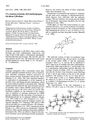 December 1998 in “Acta Crystallographica Section C-crystal Structure Communications”
 This study describes the molecular conformation and intermolecular interactions in the crystalline structure of the compound C24H31BrO4.
 11 citations
,
December 2010 in “The Journal of Urology”
11 citations
,
December 2010 in “The Journal of Urology” This study found that combining oral testosterone with dutasteride increased testosterone bioavailability in hypogonadal men while suppressing dihydrotestosterone levels over a 28-day period.
41 citations
,
March 2016 in “The Journal of Clinical Endocrinology & Metabolism” This study suggests that patients with STSD show a different pattern in androgen activation compared to healthy controls, potentially due to increased 5α-reductase activity and absent prepubertal serum DHEA surge.
 379 citations
,
May 2016 in “Cochrane library”
379 citations
,
May 2016 in “Cochrane library” This review concluded that corticosteroids improve muscle strength and function in boys with Duchenne muscular dystrophy over short-term periods, but evidence on prolonging walking ability remains insufficient, and side effects are common.
 403 citations
,
November 2005 in “Journal of Endocrinology”
403 citations
,
November 2005 in “Journal of Endocrinology” This review discusses the role of DHEA in intracrinology, highlighting its impact on breast and prostate cancer treatment and potential as a menopause therapy, but reports no new research findings.