October 2019 in “Journal of Pakistan Association of Dermatologists” In this study, NB-UVB therapy significantly increased Wnt1 and β-catenin expression in hair follicles, which may play a role in vitiligo perifollicular repigmentation.

This study found that lysine carboxymethyl cysteinate helps protect the epidermis from UVB-induced damage by activating autophagy and restoring cornification processes in a skin model.
January 2012 in “Human health handbooks” This review examines the various functions of vitamin D and its receptor in regulating skin processes, highlighting their role in cell differentiation, immunity, and tumor suppression, but reports no new clinical results.
This study found that the loss of papillary fibroblasts in the skin due to UV radiation is mainly caused by an uncontrolled inflammatory response, with T cells helping fibroblast survival.
 1 citations
,
November 1953 in “Archives of Dermatology”
1 citations
,
November 1953 in “Archives of Dermatology” This case presentation by Dr. Howard Fox describes a persistent skin eruption in a woman following sun exposure and the use of a specific lotion, highlighting diagnostic challenges between Lupus Erythematosus and Erythema Perstans but reports no definitive diagnosis.
 March 2014 in “Institutional Repositories DataBase (IRDB)”
 Skin-derived stem cells could help treat skin aging and pigmentation issues.
 September 2017 in “Journal of Investigative Dermatology”
 This study found that mackerel fermented fish oil protected human keratinocyte cells from UVB-induced oxidative stress by scavenging free radicals and reducing cellular damage.
 3 citations
,
January 2016 in “Annals of Dermatology”
3 citations
,
January 2016 in “Annals of Dermatology” This article discusses the multifactorial nature of acne, including its association with follicular hyperkeratosis, sebaceous lipids, Propionibacterium acnes, and perifollicular inflammation, but reports no new clinical findings.
This study found that deleting the Twist1 gene in skin keratinocytes significantly reduced UVB-induced skin cancer and hyperproliferation in mice and suggested Twist1 as a target for skin cancer prevention.
 September 2024 in “Journal of Cosmetic Dermatology”
 This study found that quercetin-loaded solid lipid nanoparticles demonstrated positive protective effects on human hair against UV-B light, as they controlled microscopic surface roughness, reduced chemical changes, and minimized protein loss in vitro compared to other treatments.
 November 2022 in “The journal of investigative dermatology/Journal of investigative dermatology”
 This study found that hemoglobin α is upregulated in epidermal keratinocytes after UV exposure and may function as an antioxidant, particularly for hair follicle stem cells.
 48 citations
,
January 2015 in “Indian Journal of Dermatology, Venereology and Leprology”
48 citations
,
January 2015 in “Indian Journal of Dermatology, Venereology and Leprology” This review discusses the various roles of vitamin D in skin disorders, including established use in psoriasis and potential applications for atopic dermatitis and skin cancer prevention, but reports no new clinical results.
10 citations
,
September 2022 in “Journal of Biophotonics” This study analyzed clinical and histological reports and concluded that blue light therapy is safe for human skin, with potential photoprotective effects against UV irradiation due to its impact on skin pigmentation mediated by Opsin-3.
16 citations
,
July 2001 in “Dermatologic Clinics” This article reviews the dermabrasion resurfacing technique and details consultation, medication, management practices, and expected outcomes, but it does not present any new clinical data.
 13 citations
,
June 2020 in “Scientific reports”
13 citations
,
June 2020 in “Scientific reports” In this study, melatonin administration enhanced various cellular and structural features of the scrotal skin in Soay rams, including increased thickness, cell count, and gland activity.
3 citations
,
May 2024 in “Indian Journal of Dermatology” In this case report, researchers identified a potential adverse skin reaction, called SDRIFE or Baboon syndrome, caused by the drug tofacitinib in a 19-year-old woman being treated for alopecia subtotalis, leading the authors to recommend discontinuation of the drug.
September 2014 in “Emergency Medicine News” This case report describes the diagnosis of pseudoporphyria in a hemodialysis patient, highlighting the importance of discontinuing causative medications and advising patients on sun protection to manage this photosensitive condition.
 3 citations
,
October 1979 in “Laboratory animals”
3 citations
,
October 1979 in “Laboratory animals” This study found that phenylbutazone and fluocinolone acetonide have similar anti-redness effects in both haired and hairless animals, making hairless rats a potential alternative for testing without needing depilation.

In this case report, a 59-year-old woman experienced burning sensations and developed atrophic, hypopigmented, ivory papules and plaques on her palms and soles over three years, which worsened after walking for extended periods.
 139 citations
,
February 2014 in “Journal of Advanced Research”
139 citations
,
February 2014 in “Journal of Advanced Research” This review explores the impact of vitamin D deficiency on the skin from a dermatological perspective, but reports no new clinical results.
 5 citations
,
July 2006 in “Contact dermatitis”
5 citations
,
July 2006 in “Contact dermatitis” This case report indicates that contact dermatitis on the face can result from using a bleaching ointment containing ammonium bisulfite during hair-dyeing.
 September 2023 in “Jurnal Ilmu Kesehatan Hewan”
 This case report describes a Balinese breed dog diagnosed with demodecosis and malasseziosis, which improved after 30 days of treatment including amitraz, ketoconazole, and supportive therapies. The findings suggest that consistent treatment and environmental management can aid in recovery from these skin conditions in dogs.
May 2025 in “International Journal of Trichology” This study highlights two cases of Mudichood dermatosis in Pune, Maharashtra, suggesting the condition may occur outside its typical geographic range due to hair management practices causing friction.
14 citations
,
September 2016 in “Journal of Photochemistry and Photobiology B Biology” This study observed that mercury-lamp irradiation may cause cleavage of disulfide bonds in keratins of white hair, leading to the formation of thiols in laboratory settings.
 8 citations
,
November 2020 in “Optics and Laser Technology”
8 citations
,
November 2020 in “Optics and Laser Technology” This review discusses the applications and advantages of LED-based photobiomodulation therapy for dermatological and cosmetic purposes but highlights existing challenges and health concerns while exploring future perspectives.
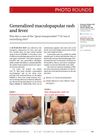 July 2023 in “The Journal of Family Practice”
 This case study describes a 29-year-old man who presented with a fever and a generalized maculopapular rash, alongside symptoms like hair loss and joint pain, leading to an investigation into whether his condition was a case of the "great masquerader.

This study validated a new test method using a patented chamber to measure the efficacy of a sunscreen in reducing carbon black particle adhesion, with a 55% reduction observed on treated skin in a group of 22 women.
February 2024 in “International journal of molecular sciences” This study established an animal model using UV-irradiated C57BL/6 mice to assess hair luster, reporting that UV exposure alters keratin-associated protein gene expression, and suggested potential for developing effective hair care products by evaluating treatments like oral minoxidil.
 April 2017 in “Journal of Investigative Dermatology”
 This study found that a single dose of TRP significantly reduced the number of UV-B-induced actinic keratosis lesions in a mouse model and was associated with improved skin histology and minimal side effects.
 January 2022 in “Przegla̧d dermatologiczny”
 This article reviews potential causes of frontal fibrosing alopecia but does not provide new clinical findings.