 February 2024 in “Journal of Modern Oncology”
 In this study, researchers found that using the Orbis II scalp cooling device in a single-center setting effectively prevented severe chemotherapy-induced alopecia in 73% of patients with various cancer types, though the authors recommend further studies to explore broader applicability and influencing factors.
 September 2023 in “Clinical, cosmetic and investigational dermatology”
 This case series reports successful treatment of refractory folliculitis decalvans using surgical excision with second-intention healing and guarded high-tension suturing, resulting in long-term remission without recurrence over a 10–24 month follow-up period.
 August 2023 in “International journal of medical science and clinical research studies”
 This review discusses platelet-rich plasma (PRP) therapy for pediatric surgical wound care, evaluating its potential as an adjunctive treatment, but reports no new clinical results.
 April 2021 in “Sohag Medical Journal”
 This review outlines the proposed theories behind the development of alopecia areata, emphasizing the autoimmune process involving lost immune privilege in hair follicles, and stresses the need to pinpoint specific pathogenic mechanisms for potential treatments.
 November 2019 in “Harper's Textbook of Pediatric Dermatology”
 This index of Harper's Textbook of Pediatric Dermatology, Fourth Edition, provides no clinical results or new findings.
 January 2019 in “LASER THERAPY”
 Laser technologies improve medical treatments and outcomes.
 June 2017 in “International Journal of Periodontics & Restorative Dentistry”
 This study found that using retroauricular full-thickness skin grafts in vestibuloplasty contributed to successful cosmetic and functional outcomes in dental implant rehabilitation for patients with mandibular gunshot injuries.
 May 1993 in “Current problems in dermatology”
 This review discusses diagnostic approaches for childhood skin diseases with fever through clinical observations and covers recent advances in understanding the pathogenesis and epidemiology of related infections, without reporting new clinical results.
 September 2020 in “International journal of computer science and mobile computing”
 This article discusses the use of low-level laser therapy for hair regrowth in men and women but reports no new clinical results; it reviews types of lasers and evidence from animal and human studies.
 9 citations
,
May 2019 in “Experimental Cell Research”
9 citations
,
May 2019 in “Experimental Cell Research” This study found that Hedgehog signaling likely contributes to cervical carcinogenesis, and while itraconazole reduced growth in mice, it did so through pathways other than inhibiting Hedgehog signaling.
9 citations
,
January 2012 in “International journal of trichology” This case report suggests that Trichostasis spinulosa should be considered in diagnosing treatment-resistant open comedone-like lesions and that skin surface biopsy might be an effective diagnostic method.
November 2025 in “Journal of Investigative Dermatology” Dithranol reduces inflammation in alopecia areata by lowering certain immune responses.
11 citations
,
December 2017 in “Orphanet Journal of Rare Diseases” This study found a previously unreported ST14 gene mutation in a patient with ichthyosis-hypotrichosis syndrome, highlighting novel skin and hair characteristics and emphasizing the critical role of the Asp482 amino acid in matriptase activation.
 July 2023 in “Media Dermato Venereologica Indonesiana”
 This research discusses Stevens-Johnson syndrome and toxic epidermal necrolysis, life-threatening conditions often induced by immune-mediated drug reactions. Optimal management involves early diagnosis, drug withdrawal, and supportive therapy, though evidence for systemic treatments like corticosteroids and cyclosporin remains variable and lacks randomized controlled trial confirmation.
13 citations
,
November 2005 in “Endocrinology” This study explored the secretion and cellular localization of different forms of follistatin and FST-like-3, revealing variable secretion kinetics and possible intracellular roles, particularly for nuclear FSTL3.
103 citations
,
April 2005 in “Experimental dermatology” This study found that PGF2alpha analogues and PGE2 stimulated hair follicle activity in mice, with PGF2alpha analogues also linked to potential side effects like poliosis when used as eye treatments.
35 citations
,
October 2014 in “Wound Repair and Regeneration” This study developed a validated murine model of hypertrophic scar contraction, demonstrating similarities to human skin and observing graft contraction and tissue characteristics over time.
 January 2020 in “Modern Plastic Surgery”
 This study concluded that estimating split thickness skin graft take by observation is as reliable as using the Image J digital program.
January 2023 in “Frontiers in Medicine”  March 2026 in “JMIR Dermatology”
 This article highlights the rising interest in Janus kinase inhibitors for alopecia areata, especially following the FDA approval of baricitinib, underscoring the need for better patient education and physician guidance in selecting appropriate treatments for hair loss.
8 citations
,
January 1991 in “Soviet physics. Doklady” This article suggests that testosterone therapy might be considered if other treatments fail, but emphasizes discussing potential risks and benefits with patients before prescribing.
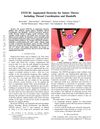 April 2024 in “arXiv (Cornell University)”
 In this study, the researchers developed an advanced robotic system called STITCH for performing suture tasks, which completed an average of 2.93 sutures autonomously and 4.47 sutures with human intervention in physical trials.
192 citations
,
January 2018 in “Burns & Trauma” This review discusses the advancements in biologic skin substitutes for wound treatment and their potential in enhancing cutaneous regeneration but reports no new clinical results.
38 citations
,
March 2019 in “International Wound Journal” In this study, a new cell-tissue technology using a patient's own skin to create a full-thickness skin autograft successfully treated a chronic wound larger than 200 cm², achieving complete functional skin coverage within 12 weeks and maintaining results at a 6-month follow-up.
38 citations
,
June 2016 in “Journal of Tissue Engineering and Regenerative Medicine” This study demonstrated that implanting μm-scale full-thickness columns of human skin tissue into immunodeficient mice restored key features of normal human skin, suggesting potential for human wound repair with minimal donor site morbidity.
15 citations
,
May 2002 in “PubMed” This article explores the hormonal and genetic factors influencing androgenetic alopecia and identifies potential targets for treatment but reports no new clinical findings.
 5 citations
,
October 2018 in “Burns”
5 citations
,
October 2018 in “Burns” This study found that long-term morbidity from scalp skin harvesting for grafts is low, with high patient satisfaction, and androgenetic alopecia is unlikely to uncover underlying harvest-related hair loss.
3 citations
,
May 2025 in “Clinical Endocrinology” Evaluate and manage androgen excess in women with a systematic approach, considering both physical and psychological impacts.
3 citations
,
February 2002 This study suggests that low phosphorus and ethylene may influence root hair density through separate pathways, with ethylene manipulation affecting root hair growth in Arabidopsis thaliana.
3 citations
,
March 2023 in “Annals of the New York Academy of Sciences” In this study using mice, simultaneous deficiencies in claudin-1 and claudin-3 were associated with hair loss and altered hair follicle architecture during the telogen phase, suggesting a role in hair retention.