 November 2022 in “Journal of Investigative Dermatology”
 This study found that stimulating the olfactory receptor OR2A4/7 with cyclohexyl salicylate promoted human hair growth and increased progeny of hair follicle epithelial stem cells in an ex vivo setting.
 July 2022 in “Journal of Investigative Dermatology”
 This study found that the cosmetic olfactory receptor agonist cyclohexyl salicylate may stimulate hair growth and expand stem cell progeny, suggesting potential as a cosmetic adjuvant for hair loss.
 61 citations
,
December 2016 in “The EMBO Journal”
61 citations
,
December 2016 in “The EMBO Journal” This study established a new in vitro culture system that supports the growth and dynamic self-organization of hair follicle stem cells and their progeny, promoting a stable population equilibrium.
 6 citations
,
May 2013 in “PloS one”
6 citations
,
May 2013 in “PloS one” This study found that the Foxn1(-/-) nude phenotype significantly influences epithelial progeny in skin, with notable changes in stem cell niches not achievable in other models.
December 2004 in “PLoS ONE” In this study, the Foxn1(-/-) nude phenotype was associated with an altered regulation of epithelial progeny in skin, offering a valuable model for investigating stem cell niche maintenance and regulation.
February 2026 in “Experimental Dermatology” In human hair follicle cultures, this study found that cyclohexyl salicylate, an OR2A4/7 agonist, promoted hair growth by delaying catagen development and expanding epithelial stem cell progeny, suggesting its potential as a non-drug hair loss treatment.
 254 citations
,
January 2012 in “Nature Reviews Molecular Cell Biology”
254 citations
,
January 2012 in “Nature Reviews Molecular Cell Biology” This review discusses the role of stem cell progeny as integral components of stem cell niches, offering feedback that may influence different stem cell systems' microenvironments, but it presents no new research findings.
 305 citations
,
June 2012 in “Nature”
305 citations
,
June 2012 in “Nature” This study reports that hair regeneration in live mice involves spatially regulated stem cell divisions and requires mesenchymal interactions, observed in real-time using a novel non-invasive imaging method.
 17 citations
,
March 2012 in “The Journal of Pathology”
17 citations
,
March 2012 in “The Journal of Pathology” This article argues that lineage labeling with genetic markers is the gold standard for identifying epithelial stem cells, contrary to the view that in vitro methods alone are sufficient.
 61 citations
,
January 2008 in “Cold Spring Harbor Symposia on Quantitative Biology”
61 citations
,
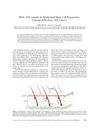
January 2008 in “Cold Spring Harbor Symposia on Quantitative Biology” This review examines beta-catenin's role in stem cell renewal, lineage selection, and tumor formation in the epidermis and reports no new experimental findings.
 480 citations
,
August 2014 in “Nature Biotechnology”
480 citations
,
August 2014 in “Nature Biotechnology” This review discusses manipulating the stem cell niche as a strategy in regenerative medicine to repair damaged tissues, highlighting the potential benefits and challenges but reporting no new results.
15 citations
,
March 2021 in “Journal of Nanobiotechnology” This study developed a nanoscale biomimetic matrix that effectively and stably expands human hair follicle stem cells, offering a new tool for hair follicle reconstruction research.
 14 citations
,
April 2011 in “Cell Proliferation”
14 citations
,
April 2011 in “Cell Proliferation” This study demonstrates that human hair follicle stem cells can be cultured and expanded without major changes to their phenotypes, which suggests potential for use in regenerative medicine.
10 citations
,
June 2021 in “EMBO reports” This study found that in skin blister healing, hair follicle development is compromised as stem cells repair wounds at the expense of morphogenesis gene expression.
 37 citations
,
April 2017 in “npj Regenerative Medicine”
37 citations
,
April 2017 in “npj Regenerative Medicine” This study found that platelet-derived growth factor signaling is crucial for maintaining the hair follicle dermal stem cell pool and supporting their regenerative capacity.
 46 citations
,
May 2018 in “The journal of investigative dermatology/Journal of investigative dermatology”
46 citations
,
May 2018 in “The journal of investigative dermatology/Journal of investigative dermatology” This study found that the vitamin D receptor is essential for the self-renewal, migration, and differentiation of epidermal stem cells during skin wound healing in mice.
 1 citations
,
February 2023 in “ACS Biomaterials Science & Engineering”
1 citations
,
February 2023 in “ACS Biomaterials Science & Engineering” This study found that using a microwell array device to expand hair follicle stem cells in Matrigel significantly increased cell numbers and enhanced hair regeneration in mice.
 91 citations
,
March 2011 in “Stem Cell Reviews and Reports”
91 citations
,
March 2011 in “Stem Cell Reviews and Reports” This article describes protocols for isolating and expanding human epidermal neural crest stem cells and discusses their potential for cell-based therapies in regenerative medicine, but reports no new clinical results.
 7 citations
,
August 2022 in “Nature communications”
7 citations
,
August 2022 in “Nature communications” This study found that Thy1+ keratinocytes in the basal layer of the interfollicular epidermis play a crucial role in epidermal homeostasis and wound repair, with their ablation impairing these processes.
 April 2023 in “Egyptian journal of Immunology”
 This study found that human platelet lysate supported mesenchymal stem cell growth as effectively as fetal bovine serum, while fetal bovine serum was more effective for hepatocyte proliferation.
 24 citations
,
November 2016 in “Cell death and disease”
24 citations
,
November 2016 in “Cell death and disease” This review discusses the generation of germ cell-like cells from skin-derived stem cells and reports no new results; the potential for these cells to produce viable progeny remains unclear.

This study found that chemically induced skin tumors in mice predominantly originated from Lgr6 + and/or Lrig1 + stem cells of the upper hair follicle rather than from other stem cell populations.
 May 2015 in “Journal of Investigative Dermatology”
 In this study, Wnt-3a was found to play an important role in partially maintaining and expanding epithelial skin stem cells in vitro, suggesting potential for in vitro stem cell culture without feeder cells.
17 citations
,
September 2016 in “Stem cells translational medicine” In this study, using stirred-suspension bioreactors to expand dermal stem cells resulted in larger numbers, but had reduced efficiency in forming hair follicle structures compared to static culture conditions.
 11 citations
,
July 2016 in “Current Opinion in Cell Biology”
11 citations
,
July 2016 in “Current Opinion in Cell Biology” This review discusses stem cell behavior, highlighting their plasticity in tissue repair and the impact of somatic mutations on clonal expansion in early cancer, but reports no new experimental results.
May 2023 in “International journal of molecular sciences” This study investigated the role of the ABCA4 gene in human keratinocytes and hair follicle stem cells and found that silencing the ABCA4 gene increases the harmful effects of all-trans-retinal on hair follicle stem cells.
 384 citations
,
June 2005 in “Genes & development”
384 citations
,
June 2005 in “Genes & development” This study found that stabilized beta-catenin is crucial for activating stem cell transition from quiescence to proliferation in hair follicles by influencing gene expression within the stem cell niche.
28 citations
,
April 2024 in “Immunity” In this study, researchers found that hair follicle stem cells activate an immune-modulatory program during wound healing, promoting Treg cell expansion and aiding skin repair, while deleting certain immune components impaired healing and increased inflammation in a mouse model.
 129 citations
,
May 2015 in “Cell Stem Cell”
129 citations
,
May 2015 in “Cell Stem Cell” This review discusses recent findings on the plasticity and regulation of epithelial stem cells and reports no new experimental results.
170 citations
,
November 2007 in “The journal of investigative dermatology/Journal of investigative dermatology” This study found that in the absence of hair follicles, cutaneous wounds in mice showed delayed reepithelialization but eventually achieved normal wound closure after expanding the activated epidermis region.