 23 citations
,
February 2004 in “Clinical and Experimental Ophthalmology”
23 citations
,
February 2004 in “Clinical and Experimental Ophthalmology” This case report describes a 68-year-old woman with metastatic breast cancer who experienced significant improvement in visual acuity after stopping tamoxifen, which was associated with bilateral optic neuropathies.
 20 citations
,
February 2004 in “Clinical and Experimental Ophthalmology”
20 citations
,
February 2004 in “Clinical and Experimental Ophthalmology” This paper presents two cases of rare intraorbital ophthalmic artery aneurysms associated with arteriovenous malformations and discusses their clinical presentation, pathogenesis, and management, but reports no new clinical outcomes.
 13 citations
,
February 2004 in “Clinical and Experimental Ophthalmology”
13 citations
,
February 2004 in “Clinical and Experimental Ophthalmology” This report describes the clinical and histopathological features of lipoid proteinosis in a brother and sister with lid lesions, highlighting the importance of recognizing such lesions for diagnosis.
 11 citations
,
February 2004 in “Clinical and Experimental Ophthalmology”
11 citations
,
February 2004 in “Clinical and Experimental Ophthalmology” In this case report, the authors suggest an association between prolonged finasteride use and anterior subcapsular cataracts, as observed in a 43-year-old man, marking the first reported instance.
 9 citations
,
February 2004 in “Clinical and Experimental Ophthalmology”
9 citations
,
February 2004 in “Clinical and Experimental Ophthalmology” This report documents the second known case of Castleman's disease in the lacrimal gland, diagnosed in an 84-year-old woman through histological examination after excising a left upper lid mass.
 7 citations
,
February 2004 in “Clinical and Experimental Ophthalmology”
7 citations
,
February 2004 in “Clinical and Experimental Ophthalmology” This case report details a 65-year-old woman who developed malignant melanoma in her right eye socket following previous eye trauma, treated by orbital exenteration.
 6 citations
,
February 2004 in “Clinical and Experimental Ophthalmology”
6 citations
,
February 2004 in “Clinical and Experimental Ophthalmology” This case report indicates that retinoblastoma can occur in a microphthalmic eye and recommends using multiple imaging techniques due to potential differences in calcification visibility.
 5 citations
,
February 2004 in “Clinical and Experimental Ophthalmology”
5 citations
,
February 2004 in “Clinical and Experimental Ophthalmology” This study presents two cases correlating the clinical appearance of adult-onset foveomacular vitelliform dystrophy with optical coherence tomography findings, describing the location of the yellow vitelliform material.
Personalized care and evidence-based treatments are crucial for managing skin and hair conditions.

The guide suggests using keratin fibers and wigs to help hair look thicker or hide hair loss.
106 citations
,
June 2009 in “BMC Genomics” This study identified specific gene expression profiles during the intestinal regeneration of sea cucumbers, highlighting potential novel genes and advancing the understanding of regenerative biology in echinoderms.
60 citations
,
September 2023 in “Science” This study found that the restoration of CD103⁺γδ T cells in humans is associated with sustained remission in inflammatory bowel disease, suggesting a conserved role for these cells in limiting disease progression.
22 citations
,
August 2021 in “Frontiers in medicine” This study found that monocytes/macrophages with a pro-inflammatory M1-like phenotype may play a crucial role in the pathogenesis of hidradenitis suppurativa, suggesting potential therapeutic targets.
9 citations
,
August 2021 in “International journal of molecular sciences” This study found that loss of epidermal PPARγ in mice altered the expression of many genes related to skin inflammation, keratinization, and sebaceous gland function, indicating its key role in maintaining skin homeostasis.
 May 2026 in “Nature Communications”
 This study observed that the loss of H3K9me3, via the ablation of Suv39h1, Suv39h2, and Setdb1 in embryonic mouse epidermis, disrupts skin development processes such as keratinocyte differentiation and hair follicle formation, highlighting H3K9me3's crucial role in epidermal morphogenesis.
 48 citations
,
February 2013 in “Molecular and Cellular Endocrinology”
48 citations
,
February 2013 in “Molecular and Cellular Endocrinology” This review discusses the presence of the StAR protein in 17 non-classical steroidogenic tissues, suggesting that advanced detection methods are needed for a complete understanding of its functions in these tissues.
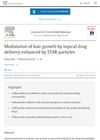 August 2023 in “Journal of controlled release”
 This research found that STAR particles, ceramic particles with microneedles, significantly enhance skin permeability and improve the topical delivery of drugs like minoxidil and acyclovir, effectively promoting or inhibiting hair growth without causing skin irritation in ex vivo pig skin and rat models.
43 citations
,
March 2017 in “Drug Design Development and Therapy” The researchers reported that a new nanoformulation of paclitaxel-loaded nanoparticles showed superior antitumor effects against malignant melanoma in vitro and in vivo compared to the commercial formulation Taxol®.
5 citations
,
April 2023 in “Bioengineering & Translational Medicine” This study found that STAR particles, when applied to human skin, were well tolerated and highly acceptable at various pressures and with repeated daily use, suggesting they may provide a safe and effective method for enhancing drug delivery through the skin.
52 citations
,
May 2011 in “Journal of Neuroendocrinology” This study found that palmitoylethanolamide may stimulate allopregnanolone synthesis and reduce oxidative stress in astrocytes through PPAR-α activation, suggesting a neuroprotective role.
 46 citations
,
May 2012 in “Molecular and Cellular Endocrinology”
46 citations
,
May 2012 in “Molecular and Cellular Endocrinology” In this study, higher expression levels of aromatase and steroidogenic acute regulatory protein were correlated with increased estrogen synthesis and fewer hair follicles in human skin, suggesting a link to elastic fiber formation and hair growth.
 23 citations
,
June 2006 in “Journal of Investigative Dermatology”
23 citations
,
June 2006 in “Journal of Investigative Dermatology” Men with baldness have higher levels of specific proteins, suggesting local hormone production may play a role in hair loss.
12 citations
,
June 2024 in “Nutrients” In this review, researchers highlighted that natural polyphenolics like flavonoids and resveratrol may help enhance testosterone production in aging males by boosting the expression of the Star gene in Leydig cells, potentially preventing age-related degenerative conditions linked to testosterone insufficiency.
 6 citations
,
March 2014 in “Herba Polonica”
6 citations
,
March 2014 in “Herba Polonica” This article reviews treatment options for androgenetic alopecia, highlighting potential uses of plant materials, but reports no new clinical results.
 1 citations
,
July 2022 in “Han'gug sigpum yeong'yang gwahag hoeji/Journal of the Korean society of food science and nutrition”
1 citations
,
July 2022 in “Han'gug sigpum yeong'yang gwahag hoeji/Journal of the Korean society of food science and nutrition” In this study, ELE was found to protect against oxidative stress-induced testosterone reduction in TM3 Leydig cells by increasing testosterone synthesis and decreasing its conversion.
January 2017 in “Archivio Istituzionale della Ricerca (Universita Degli Studi Di Milano)” This study found that one month of diabetes altered neuroactive steroid levels and associated mechanisms in the hippocampus and cerebral cortex of an experimental rat model.
April 2008 in “Annals of General Psychiatry” This study found that social isolation in rats enhanced the effects of ethanol on certain brain steroids, increased GABAA receptor subunits, and amplified ethanol's inhibitory effects on seizures.
November 2024 in “Journal of Investigative Dermatology” Ursolic and shikimic acid together boost hair growth better than alone.
January 2014 in “Shanghai Journal of Traditional Chinese Medicine” In this study, Chinese comprehensive therapy was found to effectively improve symptoms and promote hair growth in individuals with androgenetic alopecia of a specific traditional Chinese medicine pattern.
 8 citations
,
August 2020 in “PLOS Computational Biology”
8 citations
,
August 2020 in “PLOS Computational Biology” This study presents a computational approach, CATNIP, which repurposes drugs using only their biological and chemical information, predicting new uses like adrenergic uptake inhibitors for Parkinson's and vandetanib for Type 2 Diabetes.