15 citations
,
October 2012 in “Journal of child neurology” In this study, two unrelated Honduran patients with Sjögren-Larsson syndrome had the same genetic mutation but displayed different disease severities, suggesting that factors beyond the ALDH3A2 mutation influence clinical outcome.
 September 2024 in “Journal of the American Academy of Dermatology”
 In this case report, a 53-year-old woman with Little-Graham-Piccardi-Lassueur-Syndrome responded well to a treatment regimen of hydroxychloroquine, methotrexate, and other therapies, effectively halting the progression of this rare dermatosis characterized by alopecia and hyperkeratotic eruptions.
July 2025 in “Human Genomics” This source reports that a comprehensive review of LSS gene variant phenotypes enhances understanding of congenital hypotrichosis 14 and could guide more precise genetic counseling and future research into disease mechanisms and potential therapies.
January 2025 in “Dermatologic Therapy” This study found that ablative fractional carbon dioxide laser treatment improved skin fibrosis, reduced skin hardening, and enhanced hair follicle growth in localized scleroderma patients, with significant improvements across several clinical measures and no severe adverse effects observed.
24 citations
,
November 2023 in “International Journal of Molecular Sciences” This review highlights that platelet-rich plasma and adipose-derived stem cell therapy may offer safe and promising improvements for managing symptoms of genital lichen sclerosus, with a potential synergistic benefit when combined.
12 citations
,
October 2001 in “British Journal of Ophthalmology” This paper suggests intralesional cidofovir as a potentially effective treatment for SCC with no systemic toxicity observed, but surgical excision remains the standard for its curative outcomes and thorough evaluation.
57 citations
,
August 2002 in “American Journal Of Pathology” Cathepsin L deficiency causes hair and skin issues in mice.
28 citations
,
October 1987 in “PubMed” This study found that treating Tradescantia stamen hair cells with LiCl disrupts mitotic progression, leading to metaphase arrest, which can be reversed by myo-inositol or CaCl2 addition.
 March 2026 in “SKIN The Journal of Cutaneous Medicine”
 This study demonstrated that litifilimab significantly reduced disease activity in cutaneous lupus erythematosus by Week 16, with improvements most notable in sunlight-exposed skin areas.
 1 citations
,
September 2025 in “Journal of Zhejiang University SCIENCE B”
1 citations
,
September 2025 in “Journal of Zhejiang University SCIENCE B” This abstract outlines the current understanding of cutaneous squamous cell carcinoma (cSCC), identifying it as the second most common non-melanoma skin cancer with risk factors like UV exposure and immunosuppression. It highlights cSCC's potential to metastasize and become fatal, affecting 2%-5% of in situ cases.
 1 citations
,
January 2022 in “Research Square (Research Square)”
1 citations
,
January 2022 in “Research Square (Research Square)” This study found that CRISPR/Cas9 efficiently edited two cellulose synthase-like genes in spinach, significantly altering root hair growth patterns and suggesting potential for large-scale genome editing in this crop.
October 2017 in “The American Journal of Gastroenterology” This case report details a 71-year-old man diagnosed with Cronkhite-Canada Syndrome, highlighting the importance of early diagnosis and endoscopic evaluation due to the disease's progressive nature and significant mortality risk.
 August 2020 in “International Journal of Research in Dermatology”
 This report describes a 23-year-old male with Clouston’s syndrome, characterized by nail abnormalities, palmoplantar skin thickening, anodontia, and androgenic alopecia, highlighting the need for supportive management due to the lack of a definitive treatment.
11 citations
,
January 2009 in “World Journal of Gastroenterology” This study reports the first documented case of Cronkhite-Canada syndrome in a patient with myelodysplastic syndrome, where corticosteroids dramatically improved the patient's condition.
 January 2017 in “Springer eBooks”
 This article reviews the classification, pathogenesis, and treatment options for cutaneous lupus erythematosus and reports no new clinical findings.
13 citations
,
September 2012 in “Cell & tissue research/Cell and tissue research” In this study, researchers found that the pCLCA2 protein is expressed in specific areas of pig skin, but its role in skin structure or function remains unclear.
5 citations
,
November 2005 This review discusses the applications of confocal laser scanning microscopy in visualizing fluorescent compounds within the skin, noting its potential for tracking drug carriers and enhancing penetration studies, but reports no new results.
 February 2016 in “Acta Medica Marisiensis”
 This case study presents what is reportedly the first association of Graham Little-Lassueur Syndrome with chronic hepatitis C, observed in a 47-year-old female patient.
6 citations
,
October 2001 in “British Journal of Ophthalmology” This article discusses the potential of intralesional cidofovir for treating SCC without systemic toxicity, noting that surgical excision remains the best treatment option; it reports no new clinical results.
 May 2024 in “Animal genetics”
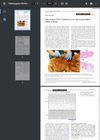
 The researchers investigated a Maine Coon cat with suspected classical Ehlers-Danlos Syndrome and discovered a heterozygous deletion in the COL5A1 gene, underscoring the value of whole-genome sequencing for precise veterinary diagnostics.
 May 2014 in “Clinical and Experimental Dermatology”
 A 70-year-old woman with a rare skin condition improved after treatment with topical steroids and acitretin.
4 citations
,
December 2021 in “Journal of clinical laboratory analysis” This study identified a splicing-site deletion in the DCAF17 gene associated with Woodhouse-Sakati syndrome in a large consanguineous pedigree, leading to typical phenotypic features.
November 2025 in “Informatica” This study introduces a novel image enhancement method that significantly improves the visual quality of low-light sports images by utilizing improved bilateral filtering and the CLAHE algorithm, achieving a 65.24% improvement in color and edge detail preservation compared to state-of-the-art methods on the LOL dataset.
38 citations
,
May 1982 in “PubMed” This report describes almost complete resolution of calcinosis and healing of associated ulcers in an 83-year-old woman with localized scleroderma after repeated intralesional steroid injections.
2 citations
,
February 2018 in “Journal of bone oncology” This study found that low-dose chemotherapy for solitary bone lesions of Langerhans cell histiocytosis in children led to quicker recovery, higher quality of life at 3 months, and was more cost-effective compared to surgery.
 67 citations
,
May 2019 in “British Journal of Dermatology”
67 citations
,
May 2019 in “British Journal of Dermatology” In this study, newly diagnosed women with mycosis fungoides or Sézary syndrome and those with alopecia experienced significantly poorer health-related quality of life.
3 citations
,
October 2001 in “British Journal of Ophthalmology” This case report suggests that intralesional cidofovir successfully treated SCC without systemic toxicity, making it a potential alternative to consider alongside surgical excision.

This study retrospectively analyzed 945 patients with head and neck cSCC to identify risk factors for recurrences, reporting treatment modality, tumor characteristics, and patient factors such as immunosuppression as strong predictors for loco-regional recurrences.
May 2015 in “European Journal of Paediatric Neurology” This study describes three additional cases of encephalocraniocutaneous lipomatosis, emphasizing the importance of examining patients with ocular and ipsilateral skin lesions for this rare neurocutaneous disorder.
January 2025 in “Indian Journal of Dermatopathology and Diagnostic Dermatology” In this case report, a rare instance of Graham–Little–Piccardi–Lassueur syndrome coexisting with linear lichen planus was identified in a 35-year-old male, highlighting the condition's rarity in males, with dermoscopy aiding diagnosis through distinctive scalp and trunk lesion features.