November 2025 in “Cancer Cell International” This study provides a detailed cellular atlas of cutaneous squamous cell carcinoma, indicating that different fibroblast subtypes play roles in tumor progression and suppression, with potential biomarkers identified for HPV-related tumor growth.
 February 2023 in “International journal of research - granthaalayah”
 This article reviews a tabletop microscopy method for recording electromagnetic radiation from tissues, using hair follicles as a model, and presents no new clinical findings.
 6 citations
,
October 2014 in “Experimental Dermatology”
6 citations
,
October 2014 in “Experimental Dermatology” This study suggests that AKR1C3 expression may influence PGD2-related pathways in skin squamous cell carcinoma and potentially be involved in androgenetic alopecia, although further investigation is needed to clarify its role.
19 citations
,
October 2016 in “Journal of oncology pharmacy practice” In this study, the first case of a persistent curly hair phenotype was reported with nivolumab treatment in a patient with metastatic squamous cell lung cancer.
December 2024 in “International Journal of Molecular Sciences” This study observed that treating basal and squamous cell carcinoma cells with platelet-rich fibrin significantly reduced cell viability and increased apoptosis-associated gene expression, suggesting potential use as adjunctive therapy for localized nonmelanoma skin cancers.
25 citations
,
June 2017 in “Journal of Investigative Dermatology” This study found that in a transgenic mouse model, β-HPV infection led to increased skin thickness and proliferation of specific keratinocyte stem cells, which may contribute to squamous cell carcinoma development.
48 citations
,
April 2021 in “Pharmaceuticals” This study found that curcumin encapsulated in liposomes enhanced photodynamic therapy's effectiveness against skin cancer cells while reducing toxicity to normal human keratinocytes.

In this study with mice, simultaneous inactivation of Smad4 and PTEN genes led to rapid development of invasive forestomach squamous cell carcinomas, mirroring human esophageal SCCs.
34 citations
,
August 2018 in “Cancer research” In this study, researchers found that selectively disabling ribonucleotide excision repair in mouse epidermis caused DNA damage, skin inflammation, and led to skin cancer, suggesting a potential role for this repair mechanism in tumorigenesis.
3 citations
,
January 2005 in “Photochemistry and Photobiology” This study found that overexpression of PKCɛ in mouse epidermis increased sensitivity to metastatic squamous cell carcinoma, suggesting that a PKCɛ-mediated microenvironment may promote cancer development through specific cytokines like TNFα.
 2 citations
,
August 2012 in “Aesthetic Plastic Surgery”
2 citations
,
August 2012 in “Aesthetic Plastic Surgery” The letter argues that blaming synthetic hair implants for scalp cancer based on one report is biased and possibly coincidental.
This study found that selectively inactivating ribonucleotide excision repair in mouse epidermis leads to DNA damage, keratinocyte intraepithelial neoplasia, and squamous cell carcinoma, indicating a potential tumor-promoting mechanism related to compromised genome maintenance.
This study found that selective inactivation of ribonucleotide excision repair in mouse epidermis led to spontaneous DNA damage, skin inflammation, and the development of squamous cell carcinoma, suggesting potential implications for cancer development in humans.
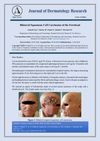
A 70-year-old man with skin cancer on both sides of his forehead was treated with surgery and cryotherapy, highlighting the need for early detection and prevention.
 66 citations
,
December 2013 in “Nature Cell Biology”
66 citations
,
December 2013 in “Nature Cell Biology” This study found that quiescence in hair follicle stem cells acts as a tumor suppression mechanism for cutaneous squamous cell carcinoma, with Pten activity necessary to maintain this state.
 April 2018 in “Journal of Investigative Dermatology”
 This study observed that β-catenin overexpression in human squamous cell carcinoma cells led to increased CREB expression, which significantly enhanced clonogenic activity, suggesting CREB as a β-catenin-regulated factor promoting cancer characteristics.
January 2019 in “Publisher” This study found that human basal cell and squamous cell carcinomas have distinct gene expression patterns, with specific up-regulation of zinc finger encoding genes in basal cell carcinoma.
This study found that super-enhancers play a crucial role in driving malignant progression in squamous cell carcinoma stem cells through a regulatory network involving ETS2 transcription factors, highlighting the potential link between high ETS2 levels and poor patient outcomes in head and neck cancers.
6 citations
,
May 2016 in “Experimental Dermatology” This study by Flores and colleagues found that the type of tumor that develops in a specific subset of epidermal stem cells is influenced by which tumor suppressor gene is deleted.
 2 citations
,
May 2017 in “The Journal of Dermatology”
2 citations
,
May 2017 in “The Journal of Dermatology” This case report describes a Japanese bone marrow transplant recipient who developed a high-risk cutaneous squamous cell carcinoma on the scalp, potentially linked to long-term voriconazole use.
11 citations
,
February 2018 in “Oncotarget” This study observed that reduced activation of SMAD2/3 proteins in cutaneous squamous cell carcinoma tissue compared to adjacent tissue may indicate a tumor suppressor role in disease progression.
October 2023 in “Cancers” In this retrospective study, patients with cutaneous squamous cell carcinoma located in highly sun-exposed areas had a higher risk of local recurrence compared to those with tumors in less sun-exposed areas, though metastasis rates did not differ between the groups.
August 2019 in “International journal of dermatology and venereology” This review discusses the calcineurin/NFAT pathway's role in cutaneous squamous cell carcinoma, noting its involvement in tumor development, skin cell behavior, and the tumor microenvironment; it reports no new results.
3 citations
,
April 2012 in “Cancer research” This study reports that side-population stem cells, distinct from hair follicle stem cells, may play a significant role in the malignant progression of squamous cell carcinomas in mice.
 2 citations
,
September 2022 in “Annals of Medicine and Surgery”
2 citations
,
September 2022 in “Annals of Medicine and Surgery” The researchers reported a rare case of invasive cutaneous squamous cell carcinoma of the scalp extending into bone and dura mater, successfully treated with surgery and skin flap repair, without metastasis observed at three months.
 1 citations
,
September 2025 in “Journal of Zhejiang University SCIENCE B”
1 citations
,
September 2025 in “Journal of Zhejiang University SCIENCE B” This abstract outlines the current understanding of cutaneous squamous cell carcinoma (cSCC), identifying it as the second most common non-melanoma skin cancer with risk factors like UV exposure and immunosuppression. It highlights cSCC's potential to metastasize and become fatal, affecting 2%-5% of in situ cases.
June 2015 in “OhioLink ETD Center (Ohio Library and Information Network)” This study found that acute UVB exposure in mice increases the synthesis of retinoic acid in the epidermis, which is necessary for normal repair from UVB light.
 55 citations
,
March 2015 in “Carcinogenesis”
55 citations
,
March 2015 in “Carcinogenesis” This study found that WNT10A is significantly upregulated in human esophageal squamous cell carcinoma and is associated with enhanced tumor cell migration, invasion, and poor survival.
January 2015 in “CU Scholar (University of Colorado Boulder)” This research found that Foxc1 is critical for maintaining quiescence in activated hair follicle stem cells and that the cancer cell-of-origin influences tumor heterogeneity in mouse skin squamous cell carcinoma.
 12 citations
,
January 2011 in “Dermatologic Surgery”
12 citations
,
January 2011 in “Dermatologic Surgery” This entry contains only a placeholder abstract with no research findings described or summarized.