 1 citations
,
November 2017
1 citations
,
November 2017 This chapter reviews classic regeneration models in planarian worms and amphibian limbs, focusing on the role of stem cells, and reports no new experimental results.
 1 citations
,
July 2016 in “Livestock science”
1 citations
,
July 2016 in “Livestock science” This study suggests that nerve growth factor may support hair follicle growth in Liaoning cashmere goats through pathways involving its receptor, TrkA, particularly during the anagen phase.
 1 citations
,
December 2010 in “Elsevier eBooks”
1 citations
,
December 2010 in “Elsevier eBooks” This review covers cell transplantation methods for genitourinary reconstruction, discussing tissue sources and complications but presenting no new clinical findings.
This narrative review highlights the critical role of intracrine hormone production in peripheral tissues, suggesting that continuous-release subcutaneous testosterone pellet therapy may offer a more effective symptom-driven approach for aging populations, though large-scale randomized controlled trials are needed for confirmation.
 March 2026 in “Collagen and Leather”
 This study found that a newly developed supramolecular FPC hydrogel effectively promotes wound healing through its anti-inflammatory and angiogenic properties, making it a promising material for wilderness first aid due to its storage convenience, sprayability, and ability to speed up wound recovery.
 May 2025 in “International Journal of Innovations in Science Engineering and Management.”
 This study reviewed the literature on cryptorchidism in dogs and found it may be associated with dermatological issues like alopecia, with surgical intervention and cyclosporine offering partial benefit.

This study found that olive leaves extract significantly decreased prostate index, serum PSA, testosterone, and DHT levels in male rats with testosterone-induced benign prostatic hyperplasia, and showed potential as a therapeutic option due to its positive effects on prostate histology and antioxidant activity.
 December 2024 in “Research Journal for Social Affairs”
 This review discusses the etiology, diagnosis, and management of polycystic ovary syndrome and reports no new clinical findings.
 August 2024 in “Journal of Contemporary Medical Practice”
 In this analysis, Professor Ma Shuanquan attributes androgenetic alopecia to liver, spleen, and kidney dysfunctions and describes a treatment approach using Chinese medicines focused on these organs, suggesting individualization and noting significant therapeutic effects.
 July 2024 in “Journal of Rare Diseases”
 This review describes the genetic and phenotypic diversity of Woodhouse-Sakati syndrome, highlighting new DCAF17 gene variants and their varying clinical implications.
 June 2024 in “Georgetown medical review”
 This article evaluated evidence on finasteride's effects on male reproductive health, finding contradictory data about its adverse effects, but consensus that such cases are infrequent in research and clinical settings.
 March 2024 in “Cleveland Clinic journal of medicine”
 This review details contemporary medical management options for benign prostatic hyperplasia, highlighting the expanding role of phosphodiesterase-5 inhibitors and beta-3 agonists, but reports no new clinical findings.
 September 2023 in “Fides et Ratio”
 This paper reviews the current lack of evidence on the safety and effectiveness of gender-affirming therapies in minors with gender dysphoria, highlighting ethical and legal concerns, including possible long-term consequences such as infertility.
 May 2023 in “Animal Reproduction Update”
 This article reviews the use of hair cortisol concentration as a biomarker to assess long-term stress in both animals and humans, but it reports no new experimental results.
 May 2023 in “International journal of Ayurveda and pharma research”
 This case report details the successful management of infertility in a woman with PCOS using Ayurvedic treatments, leading to natural conception and the delivery of a full-term male baby after two and a half months of therapy.
 April 2023 in “Clinical theriogenology”
 This report highlights the usefulness of specific diagnostic procedures, including penile/preputial cytology and transabdominal ultrasonography, in diagnosing cryptorchidism and Sertoli cell tumors in dogs with generalized skin conditions.
 February 2023 in “Global Journal of Reproductive Medicine”
 The authors discuss BPH treatment options and highlight that while medications can manage symptoms, recent minimally invasive procedures may offer promise for elderly males who are not surgical candidates or wish to avoid surgery.
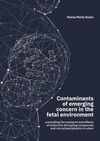
This study developed a new analytical method to identify a wide range of endocrine disrupting compounds in full-term amniotic fluid, revealing diverse substances with potential endocrine activity.
 February 2021 in “Austin journal of nutrition & metabolism”
 This study found that among university students, both low and high zinc levels were associated with significant hair loss, while these zinc concentrations did not significantly impact other health issues like diarrhea, acne, or weight loss.
 January 2021 in “Journal of clinical and cosmetic dermatology”
 This review highlights the role of the skin's photosensory system in mediating responses to UVA radiation, contributing both to immediate protective effects and to broader circadian and seasonal adaptations, but reports no new experimental results.
Different drugs are used to manage breeding, prevent or end pregnancy, and treat reproductive issues in dogs and cats.
 July 2017 in “Contemporary Endocrinology”
 This article discusses the ongoing care needs for individuals with 21-hydroxylase deficiency due to mutations in the CYP21A2 gene but does not present new clinical findings.
 August 2014 in “Warwick Research Archive Portal (University of Warwick)”
 This study found that obesity in women may impair endometrial stromal function and contribute to reproductive complications, possibly due to metabolic influences rather than immune cell differences.
This study reported that high cholesterol levels were linked to increased prostate cancer risk, while selenium supplementation affected gene expression, suggesting nutritional and clinical factors might influence prostate cancer risk and biology.
 January 2009 in “Springer eBooks”
 The document concludes that treating skin conditions should include psychological care and a multidisciplinary approach is essential for effective management.
 February 1999 in “Drugs in R & D”
 The document concludes that various drugs for men's health issues are in development, with treatments for sexual dysfunction and prostate conditions being the most advanced.
 December 2022 in “Scholars journal of applied medical sciences”
 This study concluded that dutasteride 0.5 mg/day improved hair growth in patients with androgenetic alopecia over six months but was associated with a higher prevalence of sexual dysfunction.
 April 2008 in “Blackwell Publishing Ltd eBooks”
 AGA causes permanent hair loss; minoxidil helps men, finasteride helps men, minoxidil somewhat helps women, estrogens/antiandrogens lack evidence for women.
 March 2000 in “The Journal of pharmacy technology”
 This review discusses the use of finasteride for treating androgenetic alopecia in men, noting its effectiveness in maintaining and regrowing hair on the scalp and top of the head.
 101 citations
,
November 1992 in “Archives of Dermatology”
101 citations
,
November 1992 in “Archives of Dermatology” In this study, tapering prednisone followed by 2% topical minoxidil helped limit hair loss in some patients with alopecia areata, with 30% to 47% showing over 25% hair regrowth initially.