10 citations
,
April 2013 in “Revista cubana de plantas medicinales” This study found that Sida cordifolia L. from Colombia is rich in saponins, which may contribute to its antioxidant and antifungal properties.
12 citations
,
February 2023 in “Applied and Environmental Microbiology” This study reported that structure-guided engineering of CYP154C2 mutants significantly improved the 2α-hydroxylation of androstenedione and testosterone, with enhanced conversion efficiency and substrate selectivity compared to the wild-type enzyme.
 1 citations
,
January 2023 in “Bioscience Journal”
1 citations
,
January 2023 in “Bioscience Journal” This study found that combining sorafenib with Platycladus orientalis leaf extract effectively suppressed cervical cancer cell growth by increasing tumor suppressor gene expression and reducing anti-apoptotic gene expression, suggesting a potential rationale for further clinical trials.
7 citations
,
August 2025 in “Plants” This review highlights the role of plant-derived organic selenium compounds, noting their high bioavailability and low toxicity, and provides a comprehensive overview of selenium's uptake in plants and metabolism in humans, offering a theoretical basis for future nutritional research.
5 citations
,
February 2025 in “Cell Reports” In this study, inducible whole-body Acly-knockout mice revealed that ACLY is essential for skin homeostasis, as its deficiency led to increased sebum production and skin abnormalities, indicating a vital role for cytosolic acetyl-CoA synthesis in preserving skin barrier integrity and systemic lipid regulation.
22 citations
,
June 2021 in “Plants” This study found that a methanolic extract of Sterculia foetida seeds demonstrated significant thrombolytic, anti-arthritic, analgesic, and antipyretic activities, with moderate cytotoxic effects in vitro and in vivo.
December 2025 in “International Journal of Molecular Sciences” In this study, orally administered Centella asiatica extract, standardized for asiaticoside content, significantly improved skin barrier function, elasticity, and reduced signs of UVB-induced photoaging in hairless mice, highlighting its potential as a nutricosmetic for skin health.
 25 citations
,
March 2017 in “Archives of Dermatological Research”
25 citations
,
March 2017 in “Archives of Dermatological Research” This study suggests that sinapic acid may promote hair growth in human hair follicle dermal papilla cells by activating specific signaling pathways and inducing the expression of growth factors.
6 citations
,
February 2023 in “Lara D. Veeken” This study reports that improvement with corticosteroids or other immunosuppressants in Satoyoshi syndrome suggests an autoimmune origin, supported by its association with other autoimmune diseases and autoantibodies.
 January 2022 in “Healthy Tadulako Journal”
 This study found no difference in the physical stability of hair tonic preparations made from sansevieria leaves extract, regardless of whether maceration or soxhletation methods were used.
 8 citations
,
July 2024 in “Scientific Reports”
8 citations
,
July 2024 in “Scientific Reports” This study reported that administering salicylates to wounds in adult mice promoted wound healing patterns similar to embryonic wounds, enabling complete wound regeneration and reduced scarring by activating AMPK and subsequent signaling pathways.
2 citations
,
April 2016 in “DOAJ (DOAJ: Directory of Open Access Journals)” This study found that a novel saw palmetto supercritical CO2 extract effectively inhibits 5α-reductase type II in vitro, suggesting its potential for promoting prostate health in benign prostatic hyperplasia.
 32 citations
,
October 2003
32 citations
,
October 2003 This review reports that 100 mg/day spironolactone improved hair growth more than placebo and was more effective in reducing hair growth than finasteride and low-dose cyproterone acetate, but its effectiveness for acne remains unclear due to small sample sizes.
January 2025 in “International Journal of Pharmaceutics” In this study, gelatin-coated transferosomes were developed to deliver tofacitinib specifically to hair follicles, resulting in 80% hair regrowth in alopecia areata patients with recalcitrant lesions after 12 weeks of treatment.
 8 citations
,
June 2022 in “Frontiers in Medicine”
8 citations
,
June 2022 in “Frontiers in Medicine” This study found that tofacitinib is an effective and more tolerable treatment than systemic corticosteroids for moderate-to-severe alopecia areata, and its combination with corticosteroids may offer improved efficacy.
 September 2024 in “Journal of Cosmetic Dermatology”
 In this study, researchers found that Ectoin, derived from halophilic bacteria, can mitigate stress-related skin damage by reducing cortisone's inhibitory effects on essential skin proteins and decreasing UVB-induced glucocorticoid activity, highlighting its potential as a preventative agent for stress-induced skin issues.
 1 citations
,
April 2006 in “International Journal of Oncology”
1 citations
,
April 2006 in “International Journal of Oncology” In this study, lysocellin induced G1 phase arrest in human osteosarcoma cells, but diminished the cytotoxic efficacy of etoposide, while its derivative alopestatin may reduce etoposide-induced alopecia in a rat model.
1 citations
,
December 2011 in “Arzneimittelforschung” This study found that the compound 9,11-dehydrocortexolone 17alpha-butyrate (CB-03-04) showed strong local antiandrogenic activity in animal models, suggesting potential for treating prostate conditions.
November 2025 in “Quantum Wellness : Jurnal Ilmu Kesehatan” This study analyzed the ethanol extract of pacing tawar leaves and found it contains alkaloids, saponins, tannins, and steroids but not flavonoids, suggesting potential for use in natural medicinal products.
This study found that cyproterone compound is not more effective than oral isotretinoin in treating nodulocystic acne in adult females with SAHA syndrome or cutaneous hyperandrogenism, suggesting isotretinoin may be preferable due to its established effectiveness in reducing acne lesions.
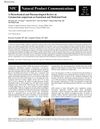 2 citations
,
April 2018 in “Natural Product Communications”
2 citations
,
April 2018 in “Natural Product Communications” This review summarizes the bioactive compounds and pharmacological functions of Cynomorium songaricum Rupr., emphasizing its potential in developing health-related products, and notes that further research is needed.
1 citations
,
November 2022 in “International Journal of Cosmetic Science” In this study, a topical application of Lotus corniculatus seed extract significantly reduced sebum production and skin oiliness in humans through inhibition of lipid synthesis pathways.
1 citations
,
January 2004 in “China Surfactant Detergent & Cosmetics” This study found that tea-seed saponin modified silicone polymer quaternary ammonium salt significantly improves hair conditioning performance in both dry and wet states when used in shampoo formulations.
 October 2023 in “Journal of the American Academy of Dermatology”
 This source reports that clascoterone cream has been approved in the U.S. for treating acne vulgaris in patients aged 12 and older, suggesting it works by competing with dihydrotestosterone at androgen receptors to mitigate acne's effects.
 April 2026 in “Zenodo (CERN European Organization for Nuclear Research)”
 This review discusses the formulation and evaluation of herbal hair creams using ingredients like kidney beans, aloe vera, and vitamin E, highlighting recent advances such as eco-friendly extraction techniques and computer-aided optimization to enhance application ease, shelf life, and effectiveness in maintaining a healthy scalp.
September 2002 in “Research Repository (Kingston University London)” This review discusses strategies for treating hormone-dependent prostate diseases and synthesizes a range of potential 5α-reductase inhibitors, but experimental evaluation of these compounds was not completed.
 8 citations
,
April 2019 in “ACS Biomaterials Science & Engineering”
8 citations
,
April 2019 in “ACS Biomaterials Science & Engineering” This study found that a new SIS-PEG sponge promoted rapid skin defect healing in mice and showed potential for reconstructing reconstituted skin with regenerated hair.
 7 citations
,
March 2012 in “European Journal of Pediatrics”
7 citations
,
March 2012 in “European Journal of Pediatrics” This case report describes a 4.5-year-old boy with steroid-resistant nephrotic syndrome linked to X-linked recessive ichthyosis, where remission was achieved using cyclosporine, suggesting STS deficiency as a potential genetic cause of the condition.
 July 2023 in “Skin Research and Technology”
 This study reports that combining baricitinib with low-dose cyclosporine and steroids resulted in effective and safe treatment for a case of alopecia totalis, maintaining hair regrowth without adverse effects.