24 citations
,
January 2007 in “The FASEB Journal” This study developed a rat model for catamenial epilepsy, suggesting that neurosteroid withdrawal may increase seizure frequency and help test new treatments.
84 citations
,
October 2005 in “Annals of Clinical Psychiatry” This review examines the existing research on pathologic hairpulling, skin picking, and nail biting, suggesting these behaviors are underrecognized and may benefit from a unified diagnostic categorization; it reports no new clinical findings.
 September 2021 in “International Journal of Biomedicine”
 This study found that SNPs in the MVK, ARPC1B, and CA2 genes may indicate a genetic predisposition for severe acne related to steroidogenesis.
 April 2023 in “The journal of investigative dermatology/Journal of investigative dermatology”
 This study found that deleting Ube2n in adult mouse skin leads to inflammation and other skin changes, and identifies IRAK1/4 as potential treatment targets for inflammatory skin disorders.
This study reports that diagnosing food allergies in pets requires a strict 10-week hypoallergenic diet trial, followed by a food challenge, to confirm sensitivities to specific diet components like beef, dairy, or preservatives.
 65 citations
,
June 2003 in “EMBO journal”
65 citations
,
June 2003 in “EMBO journal” This study reports that overexpressing the BMP antagonist noggin in mice inhibits eyelid opening by reducing apoptosis and delaying cell differentiation in the eyelid epithelium.
 August 2024 in “Clinical Cosmetic and Investigational Dermatology”
 This report describes the successful resolution of an epidermoid cyst using a minimally invasive approach with intralesional injection of recombinant enzymes.
3 citations
,
August 2024 in “Molecular Biology Reports” This study found that the lncRNA018392, responsive to melatonin, accelerates cell proliferation in cashmere goats by recruiting the transcription factor SPI1 to upregulate the nearby gene CSF1R, which may explain the molecular mechanisms of cashmere growth.
 October 2022 in “BMC genomics”
 This study investigated adenosine-to-inosine RNA editing in the hair follicle cycle of Tianzhu white yak, identifying numerous editing sites and suggesting their involvement in pathways related to hair growth.
 May 2022 in “Голова и шея.”
 The study found that experimental inflammation from nasal septum surgery in rats caused a shifts in autonomic nervous system balance, with sympathetic dominance and parasympathetic suppression, normalizing after one week.
 17 citations
,
September 2010 in “Pediatric dermatology”
17 citations
,
September 2010 in “Pediatric dermatology” This report describes a case of widespread Porokeratotic eccrine and hair follicle nevus in a 15-year-old woman with keratitis-ichthyosis-deafness syndrome, involving both eccrine ostia and hair follicle infundibula.
4 citations
,
January 2018 in “Health” This report describes the development of a low-cost method to mass-produce ostrich antibodies, which were shown to alleviate allergic reactions and demonstrate therapeutic effects in conditions such as atopic dermatitis, acne, and pollen allergies, potentially providing an alternative to steroids or antibiotics.
This study found that subcutaneous administration of Botulinum toxin type A significantly reduced histamine-induced itch intensity and neurogenic inflammation in human skin compared to saline.
3 citations
,
November 2023 in “The Journal of Dermatology”  April 2025 in “Archives of Dermatological Research”
 In this study, microneedling-administered topical cetirizine was observed to significantly enhance hair density and increase vellus hair prevalence in men with androgenetic alopecia, with no notable adverse effects reported.
February 2023 in “Reactions Weekly” 3 citations
,
February 1983 in “Journal of Investigative Dermatology” This study found that plucking hair from rats' dorsal skin rapidly decreased ornithine decarboxylase activity, possibly due to an inhibitory substance that was activated by ammonium sulfate treatment.
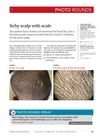 December 2020 in “The Journal of Family Practice”
 This report describes an 11-year-old boy in Panama who visited a village health center due to scalp itching and subtle hair loss, previously treated for head lice, with no hair pulling reported.
 April 2019 in “Journal of Investigative Dermatology”
 The researchers reported that different allergens showed unique patterns based on season, gender, and age among patients with allergic skin rashes, with notable differences in allergen predispositions across groups.
January 2022 in “Clinical Cases in Dermatology” This case report describes a middle-aged man with niacinamide-induced poikilodermatous flushing observed on the neck, established through clinical and dermatoscopic evaluation.
 May 2022 in “Голова и шея.”
 This study observed that, in rats, modeling sinus lifting and septoplasty led to increased sympathetic nervous system activity and metabolic shifts in the early postoperative period due to inflammation.
 6 citations
,
July 2006 in “International Journal of Dermatology”
6 citations
,
July 2006 in “International Journal of Dermatology” This review discusses various dermatological conditions prevalent among football athletes and suggests that these are exacerbated by the sport's physical demands, environmental conditions, and use of specific equipment.
 October 2025 in “Animal Bioscience”
 This study identified important lncRNAs and genes associated with cashmere shedding in goats and explored their regulatory interactions, providing insights into the molecular mechanisms that may underlie this phenomenon.
November 2025 in “Allergologia et Immunopathologia” This case report documents a rare incident where total alopecia developed within ten days of a bee sting, in the absence of hypersensitivity reactions, suggesting that bee venom may have an immunomodulatory or exacerbating effect on the immune system.
 1 citations
,
December 2018 in “Journal of genetic medicine”
1 citations
,
December 2018 in “Journal of genetic medicine” In this case report, a 20-year-old male with tricho-rhino-phalangeal syndrome was found to have a de novo frameshift mutation in the TRPS1 gene, highlighting the challenges in diagnosing this rare disorder.
 April 2025 in “Otorhinolaryngology Clinics - An International Journal”
 This case report highlights the critical role of preoperative histopathology in accurately diagnosing and treating ambiguous cutaneous lesions in the ear, nose, and throat area, emphasizing that reliance solely on clinical features can lead to misdiagnosis.
 July 2022 in “The journal of investigative dermatology/Journal of investigative dermatology”
 This case study reports that a 26-year-old woman with epidermolysis bullosa prurogompsa also presented with unique findings of co-existing muscular dystrophy and immune-based myasthenia gravis, with significant improvement following steroid treatment.
September 2022 in “European Journal of Dermatology” This study identified a novel pathogenic splice-site variant of the LAMB3 gene in patients with junctional epidermolysis bullosa, highlighting the importance of gene sequencing for diagnosis.
 June 2021 in “International journal of research in dermatology”
 This case report describes a man with trichorrhexis nodosa of the beard, who experienced symptomatic improvement after being advised to shave and avoid brushing, confirming the diagnosis.
 August 2024 in “Turkish Journal of Pediatric Disease”
 This case report details a 5-month-old infant with acrodermatitis enteropathica, linked to zinc deficiency from total parenteral nutrition, who showed improvement using zinc spray and cream, contrasting with typical literature outcomes.