 September 2012 in “Hair transplant forum international”
 This piece celebrates the 20th anniversary of the ISHRS, noting its success in uniting hair restoration surgeons and highlighting the current exciting developments in the field.
33 citations
,
August 2008 in “American Journal Of Pathology” This study found that K6a expression in mouse sebaceous gland ducts correlates with Hedgehog signaling, suggesting a role in duct fate.
6 citations
,
December 2022 in “Biomedicines” This study found that the expression of the sonic hedgehog protein is involved in wound healing texture regeneration, inhibiting skin texture after embryonic day 14 and affecting keratinocyte migration and division.
 2 citations
,
January 2015 in “Sen'i Gakkaishi”
2 citations
,
January 2015 in “Sen'i Gakkaishi” This study found that washing hair after reduction in a permanent waving process allows for significant reformation of disulfide cross-links, enhancing the strength and elasticity of hair fibers.
July 2026 in “Macromolecular Bioscience” In this study on wound healing, sulfated glycosaminoglycans from sturgeon cartilage enhanced fibroblast cell proliferation, migration, and collagen deposition, significantly accelerating wound closure and promoting re-epithelialization in both in vitro and in vivo tests.
September 2017 in “The journal of investigative dermatology/Journal of investigative dermatology” The researchers reported that TGM2 appears to play a crucial role in sebocyte differentiation and may act as a negative regulator of lipid metabolism in sebaceous glands.
1 citations
,
May 2013 in “PubMed” This study found that glycylglycine treatment improved hair softness by enhancing hair alignment and altering internal fiber properties among Japanese women with typically coarse hair.
 April 2018 in “Journal of Investigative Dermatology”
 This study found that deleting all three Desmoglein 1 genes in mice led to impaired skin barrier function, disorganized epidermis, and postnatal lethality, highlighting Dsg1's essential role in epidermal development and maintenance.

This study found that pectin lyase-modified red ginseng extract (GS-E3D) may promote hair growth by enhancing antioxidant and anti-inflammatory effects, proliferating hair dermal papilla cells, and inhibiting 5α-reductase activity.
 42 citations
,
July 2014 in “Journal of biological chemistry/The Journal of biological chemistry”
42 citations
,
July 2014 in “Journal of biological chemistry/The Journal of biological chemistry” This study suggests that heparan sulfate is crucial for regulating hair follicle formation, cycling, and gland morphogenesis, with its ablation leading to continuous hair growth and increased gland activity in mice.
99 citations
,
September 2004 in “Development” This study suggests that deregulation of sonic and desert hedgehog signaling in mouse skin can lead to altered epidermal stem cell activity and lesions similar to human basal cell carcinoma, indicating these cancers may originate outside the stem cell population.
2 citations
,
June 2018 in “International Journal of Pharmacological Research” This article reviews treatments for progeria, including aspirin, hydrotherapy, and farnesyl transferase inhibitors, but reports no new clinical results.
June 1996 in “Journal of Dermatological Science”  January 1995 in “Hair transplant forum international”
 This article describes the inaugural meeting of the ASHRS, detailing its organization and schedule, but reports no research findings.
 36 citations
,
September 2013 in “PLoS ONE”
36 citations
,
September 2013 in “PLoS ONE” This study found that sweat gland stem cells primarily maintain sweat gland homeostasis but can trans-differentiate to aid in epidermal healing and regenerate diverse skin structures under certain conditions.
10 citations
,
September 2021 in “American Journal of Medical Genetics Part A” This study on Qatari patients with Woodhouse-Sakati syndrome highlights the high incidence and diverse clinical presentation due to a specific genetic variant, emphasizing early diagnosis for effective management.
 October 2023 in “The Journal of Dermatology”
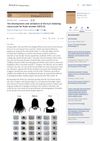
 This study developed and validated the Hair-Shedding Visual Scale for Asian Women, finding it to be an effective tool for identifying FPHL and TE.
 396 citations
,
May 2011 in “Cell stem cell”
396 citations
,
May 2011 in “Cell stem cell” This study found that Shh from neurons signals to Gli1-expressing cells in the hair follicle, cultivating a niche where these bulge cells can potentially transform into epidermal stem cells in wound healing.
 September 1996 in “Hair transplant forum international”
 This article discusses the rapid advancements in hair restoration surgery presented at ISHRS Annual Meetings and underscores the difficulty of staying updated without attending, but it reports no new experimental findings.
 4 citations
,
May 2019 in “Zeitschrift für Naturforschung C”
4 citations
,
May 2019 in “Zeitschrift für Naturforschung C” This study found that Ishige sinicola extract stimulated osteoblast differentiation and bone formation in MC3T3-E1 cells, suggesting potential use for osteoporosis prevention and treatment.
 70 citations
,
January 2000 in “Hormone Research in Paediatrics”
70 citations
,
January 2000 in “Hormone Research in Paediatrics” This article reviews the characteristics and classification of SAHA syndrome and its relationship with other conditions, without presenting new clinical findings.
July 2026 in “Clinical Cosmetic and Investigational Dermatology” In this case report, a 9-year-old boy with Sjogren-Larsson syndrome was also diagnosed with central precocious puberty, showing genetic mutations and increased hormone levels; he was treated with triptorelin acetate for CPP but experienced growth delay during follow-up.
September 2022 in “Indian Journal of Paediatric Dermatology” This case report documents the first confirmed mutation-proved instance of Clouston syndrome in a large Chinese-Malaysian family, linked to the c.263C>T (A88V) mutation in the GJB6 gene, with no available treatment but highlighting the importance of genetic counseling.
14 citations
,
March 2018 in “The American journal of case reports” This study highlights the phenotypic variability in 5 patients with Woodhouse-Sakati syndrome carrying the c.436delC mutation, suggesting a broader range of clinical presentations than previously recognized.
January 1990 in “Advances in forensic haemogenetics” This study used one-dimensional SDS electrophoresis to examine low sulfur proteins in hair samples from multiple generations within five families, but does not report new results.
 April 2023 in “The journal of investigative dermatology/Journal of investigative dermatology”
 This study suggests that tissue transglutaminase (TG2) may play a role in sebum production by regulating autophagy in sebaceous glands, offering potential targets for dermatological interventions.
 December 2023 in “International journal of multidisciplinary research and analysis”
 This study suggests that administering SH-MSCs gel might decrease IL-6 expression and increase TGF-β expression in alopecia-like rats, indicating potential for alopecia therapy.
 1 citations
,
August 2021 in “Canadian journal of neurological sciences”
1 citations
,
August 2021 in “Canadian journal of neurological sciences” This article offers HTML content and a downloadable PDF but does not provide an abstract or new findings for summary.
 1 citations
,
January 2003 in “Expert Opinion on Therapeutic Patents”
1 citations
,
January 2003 in “Expert Opinion on Therapeutic Patents” This review discusses the development and potential therapeutic applications of steroid sulfatase inhibitors for hormone-dependent disorders and cognitive dysfunction, reporting no new clinical results.