 April 2023 in “Journal of Investigative Dermatology”
 This study suggests that caveolin-1 may be a potential target for treating psoriasis, as its downregulation was linked to psoriasis markers that improved with soluble caveolin scaffolding domain peptide treatment.
 56 citations
,
December 2011 in “The Plant Journal”
56 citations
,
December 2011 in “The Plant Journal” AGD1 is important for root hair development in Arabidopsis, working with phosphoinositide signaling and the actin cytoskeleton.
 August 2019 in “Journal of Investigative Dermatology”
 This study found that the desmosomal protein desmoplakin is crucial for proper epidermal morphogenesis and radial intercalation in developing Xenopus embryos, affecting keratin organization and ectodermal structures.
 1 citations
,
February 2004 in “Dermatologic Surgery”
1 citations
,
February 2004 in “Dermatologic Surgery” This study found that using deep plane fixation during scalp surgeries significantly reduced closure tension and allowed for increased tissue excision compared to standard techniques without fixation.
 1 citations
,
September 2023 in “Dermatology and therapy”
1 citations
,
September 2023 in “Dermatology and therapy” This review explores the efficacy and safety of treatments for dissecting cellulitis of the scalp, revealing a predominance of case reports and series, and concludes that randomized controlled trials are needed for better evidence-based therapies.
57 citations
,
April 2009 in “Differentiation” This study demonstrates that SDF-1/CXCL12 and CXCR4 signaling play a crucial role in directing the migration and positioning of melanoblasts in mouse hair follicle formation.

This study found that new methods for isolating human dermal papilla cells were more efficient than traditional methods, maintaining higher levels of specific markers and improving the cells' research potential.
July 2024 in “Journal of Investigative Dermatology” This study suggests that macrophages, especially CD206+ subsets, play a key role in hair growth induced by squaric acid dibutyl ester, a therapy used for alopecia areata.
 11 citations
,
June 2017 in “Journal of cell science”
11 citations
,
June 2017 in “Journal of cell science” In this study, researchers found that AGD1 is crucial for membrane recruitment during root hair development in Arabidopsis thaliana, with its pleckstrin homology domain essential for targeting specific plasma membrane regions.
 2 citations
,
June 2012 in “Journal of Dermatological Science”
2 citations
,
June 2012 in “Journal of Dermatological Science” This study found that histidine decarboxylase is crucial for the hair-inducing ability of newborn mouse dermal cells, with its expression significantly decreasing in the first few days after birth.
 5 citations
,
March 2019 in “Journal of lipid research”
5 citations
,
March 2019 in “Journal of lipid research” This study reports new fluorogenic ceramidase substrates and highlights RBM14C24:1 as an efficient substrate for neutral ceramidase, while RBM15C18:1 is the best probe for measuring ACER1 and ACER2 activities, potentially aiding high-throughput screening for ceramidase inhibitors.
 13 citations
,
June 2007 in “Journal of Dermatological Science”
13 citations
,
June 2007 in “Journal of Dermatological Science” This study identified several genes regulated by dihydrotestosterone in an SV40T-transformed human dermal papilla cell line, which may play a role in androgen-mediated hair growth regulation.
 May 2024 in “Animal genetics”
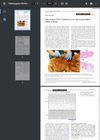
 The researchers investigated a Maine Coon cat with suspected classical Ehlers-Danlos Syndrome and discovered a heterozygous deletion in the COL5A1 gene, underscoring the value of whole-genome sequencing for precise veterinary diagnostics.
15 citations
,
November 2012 in “Archives of Ophthalmology” This description of dystrophy hypotrichosis associated with juvenile macular dystrophy provides an overview of this rare disorder characterized by short hair from birth and progressive loss of central vision but reports no new findings.
33 citations
,
October 2005 in “Journal of Investigative Dermatology” A specific gene mutation causes sparse, brittle hair in a family.
December 2025 in “Biomolecules” This study reviews the emerging role of protein S-palmitoylation in dermatology, highlighting its impact on skin functions like inflammation and barrier maintenance, and evaluating its potential as a therapeutic target for skin disorders such as alopecia and psoriasis.
 September 2017 in “Journal of Investigative Dermatology”
 This study suggests that the newly characterized sebocytic progenitor cells HSGC1 and HSGC2 from different skin sites may have proliferative and differentiating potential in response to DHT.
 January 2020 in “Journal of Cutaneous and Aesthetic Surgery”
 The conference improved skills and knowledge in skin and aesthetic surgery.
1 citations
,
July 2017 in “Cancer Research” This study found that overexpression of NSD3 in the mammary gland of transgenic mice led to mammary hyperplasia, dysplasia, and invasive ductal carcinoma, mirroring patterns seen in human breast cancer.
1 citations
,
April 2013 in “Journal of Investigative Dermatology” October 2025 in “Clinical and Experimental Pediatrics” In this case report and literature review, researchers identified a novel mutation in the CLDN1 gene linked to neonatal ichthyosis-sclerosing cholangitis syndrome and found that its phenotype varies widely, suggesting a multidisciplinary approach is crucial for management.
June 1996 in “Journal of Dermatological Science”  July 2021 in “Advances in laboratory medicine”
 This article reviews differential diagnosis approaches for 46,XY DSD, proposing a diagnostic algorithm focused on biochemical and genetic data, without presenting new clinical results.
 2 citations
,
July 2015 in “Archives of Dermatological Research”
2 citations
,
July 2015 in “Archives of Dermatological Research” This study reports the first familial case of alopecia linked to a novel homozygous variant in the DSP gene, which did not coincide with heart abnormalities despite prior associations.
 6 citations
,
January 2015 in “Biochemical Society Transactions”
6 citations
,
January 2015 in “Biochemical Society Transactions” This review discusses the role of Ysc84/SH3yl1 proteins in linking actin regulation to membrane morphology changes but reports no new experimental results.
 2 citations
,
July 2011 in “AFRICAN JOURNAL OF BIOTECHNOLOGY”
2 citations
,
July 2011 in “AFRICAN JOURNAL OF BIOTECHNOLOGY” This study identified genetic variations in the DSG4 gene among sheep, revealing valuable markers for assessing their impact on wool traits.
16 citations
,
June 2015 in “The journal of investigative dermatology/Journal of investigative dermatology” This study found that DHHC13 is crucial for hair anchoring and skin barrier function, with its deficiency in Zdhhc13(skc4) mice leading to cyclic alopecia and skin abnormalities due to cornifelin deficiencies.
119 citations
,
August 2010 in “Journal of Investigative Dermatology” This study reports that 11β-HSD1 activity in human skin increases with age and photoexposure, potentially contributing to skin aging and the effects of glucocorticoids.
1 citations
,
April 2024 in “Animal Genetics” This study described an Appenzeller Mountain Dog with clinical signs of an NSDHL defect, discovering a large heterozygous de novo deletion spanning the entire NSDHL gene through whole genome sequencing.
3 citations
,
May 2024 in “BMC Medical Genomics” This study is the first to identify a de novo heterozygous frameshift insertion variant in the ARID1B gene as a cause of Coffin-Siris syndrome with an association to excessive early-onset high myopia.