 February 2022 in “Pakistan Armed Forces Medical Journal”
 This study concluded that androgenetic alopecia more severely impacts the quality of life of females compared to males among Pakistani patients, as measured by Skindex-29 scores.
 January 2022 in “Turkiye Klinikleri Journal of Dermatology”
 This study found that the Turkish version of the Multidimensional Assessment of Interoceptive Awareness-2 Scale is valid and reliable for use with Turkish dermatology patients.
 December 2020 in “The Journal of Family Practice”
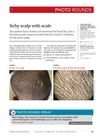
 This report describes an 11-year-old boy in Panama who visited a village health center due to scalp itching and subtle hair loss, previously treated for head lice, with no hair pulling reported.
April 2019 in “Faculty Opinions – Post-Publication Peer Review of the Biomedical Literature” This study identified three new genetic loci associated with PCOS and found a similar genetic structure across different diagnostic criteria, suggesting a genetic basis for shared metabolic traits and potential causal links to other conditions.
 August 2018 in “Journal of The American Academy of Dermatology”
 Regular follow-up visits, especially with dermatologists, can lower death rates for melanoma patients, with socioeconomic factors also affecting outcomes.
This study found that hair follicles in mouse skin use common activator/inhibitor signals to maintain cyclical hair growth across different regions, with varying dynamics influenced by distinct anatomical domains.
 February 2017 in “The Journal of Sexual Medicine”
 This study found that young men using finasteride for androgenic alopecia exhibited erectile tissue fibrosis and associated sexual dysfunction, including low libido and mood changes.
 December 2016 in “The Journal of Sexual Medicine”
 This study found that young men using finasteride for androgenic alopecia experienced erectile dysfunction and signs of erectile tissue fibrosis, alongside symptoms like low libido and mood changes.
86 citations
,
January 2020 in “British Journal of Dermatology” This study developed the Alopecia Areata Investigator Global Assessment (AA-IGA) to measure scalp-hair loss in alopecia areata patients, incorporating perspectives of both patients and clinicians to define treatment success.
68 citations
,
March 2019 in “Journal of Cranio-Maxillofacial Surgery” This study validated a facial aging scale that predicts patients' age with good reliability and validity, potentially serving as a useful tool for assessing facial rejuvenation treatments and clinical research.
50 citations
,
April 2010 in “Biology direct” This study's model suggests that low androgen levels can increase selection for prostate cancer phenotypes resistant to hormonal therapy, potentially leading to more aggressive forms of cancer.
 45 citations
,
November 2017 in “Biomaterials”
45 citations
,
November 2017 in “Biomaterials” This study demonstrated a method for large-scale preparation of self-sorted hair follicle germs in vitro, which successfully generated hair follicles when transplanted into the skin of nude mice.
11 citations
,
February 2019 in “Stem cells international” In this study, researchers found that while both hair follicles and skin dermis-derived neural crest stem cells are suitable for large-scale manufacturing, skin dermis cells grow faster and are easier to obtain.
 7 citations
,
October 2018 in “BMC genomics”
7 citations
,
October 2018 in “BMC genomics” This study reveals that β-catenin and retinoic acid are key regulators in the gene networks controlling the fate of skin appendages, such as scales and feathers.
6 citations
,
January 2021 in “Journal of the mechanics and physics of solids/Journal of the Mechanics and Physics of Solids” This study's simulations suggest that biomechanical factors, like follicle geometry and tissue stiffness, are likely significant in hair fiber protrusion, providing a framework for future experimental validation.
3 citations
,
January 1999 in “PubMed” This review discusses the societal impact and treatment development for androgenetic alopecia, highlighting promising new drugs but reporting no new clinical results.
 May 2022 in “Dermatologic Surgery”
 Hair restoration surgery has a growing risk of hair loss over time.
This study provides genomic and epigenomic insights into the white wax scale insect, highlighting high methylation levels and differential hormone profiles linked to its sexual dimorphism and developmental differences.
 June 2020 in “Journal of cosmetic medicine”
 This article discusses the development of a standardized assessment scale for hair transplant outcomes, emphasizing multiple parameters that contribute to an aesthetically pleasing result and reports no new clinical findings.
This article discusses the structure and protective function of pangolin scales, emphasizing their composition of α-keratins and β-keratins, and highlights evolutionary keratin diversification in tetrapods; it reports no new empirical findings.
May 2022 in “Dermatology practical & conceptual” This study developed new graded visual scales integrating macroscopic and trichoscopic images for assessing the severity of androgenetic alopecia in men and women, potentially aiding in more objective disease evaluation.
30 citations
,
July 2000 in “PubMed” This study used advanced analytical techniques to reveal that proteins and lipids are distributed unevenly in hair, with distinct structural differences depending on their location within the fiber.
 5 citations
,
October 2018 in “Research in psychotherapy”
5 citations
,
October 2018 in “Research in psychotherapy” This study presents the Italian adaptation of the ECR-M16 to assess attachment dimensions in cancer outpatients and notes that its factor structure is partly similar to the original.
 3 citations
,
January 2021 in “Journal of The American Academy of Dermatology”
3 citations
,
January 2021 in “Journal of The American Academy of Dermatology” This study observed that atopic dermatitis severity was associated with higher eosinophil counts and FLG variants, suggesting distinct endotypes that may require tailored treatment approaches.
 1 citations
,
February 2023 in “JMIR. Journal of medical internet research/Journal of medical internet research”
1 citations
,
February 2023 in “JMIR. Journal of medical internet research/Journal of medical internet research” This study used social media data to identify more and milder COVID-19 symptoms than clinical research and to map symptom evolution over 27 months, highlighting differences between the Delta and Omicron periods.
1 citations
,
March 2022 in “bioRxiv (Cold Spring Harbor Laboratory)” In this study, the researchers reported that using a biodegradable ECM scaffold for large-area wound regeneration accelerated wound coverage and improved hair follicle neogenesis by activating the adaptive immune system.
 1 citations
,
May 2018 in “Psychology, Health & Medicine”
1 citations
,
May 2018 in “Psychology, Health & Medicine” In this study, researchers found that the original four-factor model of causal illness attributions in the IPQ-R did not fit a Chinese sample, and instead identified a two-factor model focusing on psychological attributions and risk factors.
March 2026 in “Research Square”  September 2023 in “Nature Communications”
 In this animal study, the researchers found that biodegradable extracellular matrix scaffolds accelerated wound healing and enhanced hair follicle neogenesis in mice, suggesting a role for immune systems in tissue regeneration.
In this study, analyzing over 400 million tweets revealed a broader and milder spectrum of COVID-19 symptoms than clinical research, and illustrated symptom evolution and co-occurrence throughout the pandemic.