 June 2023 in “Aesthetic Plastic Surgery”
 This study introduces the PRECISE scale, a quantitative tool to classify androgenetic alopecia, aiming to improve planning and outcomes for hair transplantation surgeries by evaluating the whole hairless and thinning areas.
 128 citations
,
February 2016 in “British Journal of Dermatology”
128 citations
,
February 2016 in “British Journal of Dermatology” This study found that patients with alopecia areata experience significant impairments in health-related quality of life, notably affecting mental health, according to various quality of life assessment tools.
 3 citations
,
May 2015 in “Journal of The American Academy of Dermatology”
3 citations
,
May 2015 in “Journal of The American Academy of Dermatology” Adalimumab significantly improves quality of life for patients with moderate to severe hidradenitis suppurativa.
July 2026 in “JEADV Clinical Practice” This study found that the SAAD-41 is a validated tool for assessing psychosocial outcomes in individuals with alopecia areata, showing strong correlations with established measures of quality of life and coping.
 March 2026 in “Portuguese Journal of Dermatology and Venereology”
 This study found that patients with androgenetic alopecia and alopecia areata experienced a significant impact on quality of life, with moderate levels of anxiety and depression, and no significant difference in psychiatric comorbidities between the groups.

This study discovered that androgenetic alopecia disrupts the scalp microbiome balance across the whole scalp, not just areas with hair loss, and introduced a microbial index for early detection and severity prediction.

This study found that applying amaranthus extract cream to the scalp significantly improved terminal hair density, anagen hair count, and pilary index in men with male pattern hair loss, suggesting it may be a safe and effective supportive therapy.
 November 2024 in “International Journal of Social health”
 This study concluded that a hair-nourishing formulation combining virgin coconut oil and 4% chilli oil significantly enhanced hair growth in white rats over a 21-day period, while also exhibiting good physical stability under varying storage conditions.
2 citations
,
January 2024 In this study, researchers proposed a deep learning approach combining genetic, hormonal, scalp health, and lifestyle data to predict hair loss, employing CNNs for image analysis and RNNs for modeling data over time, although specific results are not reported.
 October 2025 in “Current Pharmaceutical Research”
 This study evaluated a new herbal shampoo made from traditional plants and found it to have effective cleansing properties, moderate foam stability, and environmental safety, suggesting it as a favorable natural alternative to synthetic shampoos.
4 citations
,
March 2023 in “SKIN The Journal of Cutaneous Medicine” This abstract does not provide specific results or a conclusion; additional context is needed to interpret the data.
December 2020 in “Galen Medical Journal” This study observed that patients with alopecia areata and androgenic alopecia have significantly more perifollicular and perivascular mast cells compared to healthy individuals, particularly in those over 40 and with greater disease severity.
 December 2020 in “Galen Medical Journal”
 This study found that patients with alopecia areata and androgenic alopecia had significantly increased mast cell infiltration, which was influenced by age and disease severity, especially in alopecia areata.
 January 2025 in “Clinical and Experimental Optometry”
 This study found that men with androgenetic alopecia had significantly higher rates of dry eye symptoms and meibomian gland dysfunction compared to healthy controls, suggesting a potential link between the condition and these ocular issues.
21 citations
,
February 2024 in “JAMA Dermatology” This study identified multiple factors affecting the severity of alopecia areata, suggesting they could inform a tool for measuring disease impact and guide treatment selection.
15 citations
,
July 2021 in “JAMA Dermatology” This study found that androgenetic alopecia is significantly associated with moderate impairment of health-related quality of life and emotions, but not with depressive symptoms.
2 citations
,
September 2024 in “International Journal of Dermatology” This study by Yücesoy et al. reported that pediatric alopecia areata significantly impacts the quality of life for both affected children and their caregivers, with parents of female patients experiencing more HRQoL challenges.
 August 2025 in “European Journal of Dermatology”
 This study found that patients with telogen effluvium experienced higher stress, depression, anxiety, and lower quality of life compared to healthy controls.
 29 citations
,
January 2019 in “Journal of the European Academy of Dermatology and Venereology”
29 citations
,
January 2019 in “Journal of the European Academy of Dermatology and Venereology” This study found that trichoscopic examination is useful for diagnosing and monitoring systemic lupus erythematosus, with severe diffuse non-scarring alopecia indicating active disease.
 April 2024 in “International journal of clinical trials”
 In this study, researchers found that a standardized extract of Sesbania grandiflora (SesZen-Bio™) improved hair density and thickness, as well as increased serum ferritin levels, over an 8-week period among participants, suggesting enhanced keratin production and follicle growth.
January 2026 in “The American Journal of Medical Sciences and Pharmaceutical Research” This study reports that disruptions to the scalp microbiome from invasive cosmetic procedures may contribute to dermatological conditions, and suggests incorporating microbiome assessments and personalized restoration programs into trichological and dermatological practices.
February 2026 in “Middle European Scientific Bulletin” In this study, researchers explored the formation of the skin's epidermal barrier, its interplay with skin microbiota, and the role of skin appendages, suggesting that probiotics might offer promising avenues for treating scalp diseases, particularly those affecting hair loss.
 April 2025 in “Brazilian Journal of Hair Health”
 This report from Tangle Teezer and TRI Princeton indicates that their Extra Gentle brush reduces hair breakage by up to 39%, offering a therapeutic experience for users with fragile scalps.
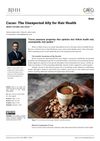 September 2025 in “Brazilian Journal of Hair Health”
 This abstract highlights that Theobroma cacao, commonly associated with chocolate, has potential benefits for hair health beyond its culinary appeal, though specific results are not reported.
 August 2025 in “Libyan Medical Journal”
 This study found that patients with vitiligo or alopecia areata have higher levels of anxiety and depression compared to healthy individuals, though no significant differences were observed between the two patient groups, highlighting the psychological impact of these dermatological conditions.
 December 2023 in “International journal of research in dermatology”
 This study found that using 'moha: 5-in-1' hair oil for 8 weeks significantly reduced hair fall, increased hair growth rate and thickness, and decreased scalp dandruff among healthy adults with alopecia, with no adverse effects reported.
April 2024 in “Journal of Pakistan Association of Dermatologists” Hair fall is not significantly linked to stress but is often caused by poor diet, low protein, and tight hairstyles.
 24 citations
,
June 2021 in “Journal of the European Academy of Dermatology and Venereology”
24 citations
,
June 2021 in “Journal of the European Academy of Dermatology and Venereology” This review highlights current knowledge about quality of life assessment in alopecia areata, noting limited use of existing instruments and a need for further validation.
 August 2025 in “American Journal of Clinical Dermatology”
 This vodcast discusses various tools for assessing the severity of alopecia areata, emphasizing the importance of considering psychosocial impacts alongside physical symptoms.
May 2017 in “Chinese Journal of Dermatology” This study reported that alopecia can moderately impact patients' quality of life and is linked to a depressive tendency, with frequent medical visits and higher quality of life impairment as risk factors.