 January 2023 in “Acta historiae medicinae stomatologiae pharmaciae medicinae veterinariae”
 This article reviews historical uses of male red deer parts in traditional medicine but provides no new research findings; it emphasizes their long-standing role in treatments for various health issues.
This review discusses various herbal and pharmaceutical products, including their purported uses and possible interactions, but reports no new research findings.
 May 2023 in “Pharma xplore : jurnal sains dan ilmu farmasi”
 In an animal study, researchers found that a hair tonic containing a 1:1 ratio of kelor and rambutan leaf extracts led to similar hair growth in rabbits compared to a minoxidil control, with average hair lengths of 3 cm versus 2.025 cm, respectively.
January 2014 in “ACTA SCIENTIAE VETERINARIAE” This case report describes a cat with localized scleroderma (morphea-like) that did not show clinical resolution or spontaneous remission after treatment, differing from previously documented cases.
 3 citations
,
January 2010 in “Actas Dermo-Sifiliográficas”
3 citations
,
January 2010 in “Actas Dermo-Sifiliográficas” This paper reviews the growing use of psychotropic drugs in dermatology due to the link between mental states and skin conditions but does not present new clinical findings.
21 citations
,
March 2003 in “Acta Dermato Venereologica” Tacalcitol ointment effectively improves bilateral nevus comedonicus.

This review identifies 1859 plant and fungal species from the Pantanal and highlights patents, mainly from South Korea, focused on extracts with antitumoral, anti-inflammatory, and cosmetic applications, but reports no new clinical results.
 25 citations
,
January 2011 in “Pharmacognosy magazine”
25 citations
,
January 2011 in “Pharmacognosy magazine” This study found that Nardostachys jatamansi DC rhizome extracts and specific isolated terpenoids promoted hair growth.
24 citations
,
June 2012 in “Journal of Feline Medicine and Surgery” This case report describes three Devon Rex cats with papular dermatitis due to dermatophytosis, which resolved with antifungal treatment.
 January 2024 in “Jurnal Ilmu Kesehatan Hewan”
 In this study, a two-month-old dog diagnosed with scabiosis and toxocariosis showed significant clinical improvement after being treated with sarolaner and pyrantel, evidenced by resolved skin lesions, hair regrowth, and a return to normal abdominal size and oral mucosa color after 30 days.
April 2024 in “Veterinary Science and Medicine Journal” In this study, researchers describe the causes and treatment of scabiosis in cats, identifying mites Sarcoptes scabiei and Notoedres cati as the culprits and detailing a therapeutic regimen including ivermectin, diphenhydramine, nutritional supplements, and sulfur shampoo that resulted in improved symptoms and hair regrowth.
June 2007 in “CRC Press eBooks” Aesthetic mesotherapy can improve the appearance of the face and hair.
November 2017 in “International Journal of Biomedical and Advance Research - International Journal of Biomedical and Advance Research” This study reviews the ethnobotanical and pharmacological uses of Guazuma tomentosa, highlighting its diverse applications in traditional medicine and research findings that demonstrate its potential anti-diabetic, anti-hypertensive, anti-microbial, anti-oxidant, anti-ulcer properties, and more, in various animal models.
 December 2024 in “Indian Dermatology Online Journal”
 This study presents a compilation of dermatological disorders that are descriptively compared to the "Navaratnas," or nine planetary gems from Vedic astrology, highlighting unique diagnostic terms and their clinical presentations to make dermatology more accessible and memorable for practitioners and patients.
January 1982 in “Los Cuadernos del Norte: Revista cultural de la Caja de Ahorros de Asturias” This review discusses the link between androgenic alopecia and smoking habits, offering guidance for future research and updates to clinical practice guidelines, but presents no new research findings.
 14 citations
,
July 2012 in “Journal of the American Academy of Dermatology”
14 citations
,
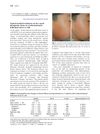
July 2012 in “Journal of the American Academy of Dermatology” This study found that topical tacalcitol improved roughness and scaling in erythromelanosis follicularis faciei et colli, although it was less effective for facial erythema.
39 citations
,
January 2010 in “Trends in Parasitology” This opinion article explores the possibility of repurposing anticancer drugs, like methotrexate, as antimalarials, highlighting that toxicity might be manageable with appropriate dosing according to Paracelsus' law.
 35 citations
,
December 2006 in “Journal of medicinal food”
35 citations
,
December 2006 in “Journal of medicinal food” This study found that topical application of Morinda pubescens fruit extract significantly accelerated wound healing and hair regrowth in rats compared to controls, with complete wound contraction and new hair growth observed in treated animals.
October 2025 in “Molecular Genetics and Genomics”  15 citations
,
September 2008 in “Archives of Dermatological Research”
15 citations
,
September 2008 in “Archives of Dermatological Research” In this study, topical 5% roxithromycin was effective in restoring hair growth in about half of individuals with androgenetic alopecia without causing adverse effects.
July 2024 in “Reactions Weekly” 3 citations
,
October 2024 in “Veterinary Medicine and Science” This study reported successful treatment of sarcoptic mange in two wild bare-nosed wombats using three topical doses of moxidectin, clearing skin crusting and mites within two weeks.
5 citations
,
August 2021 in “Journal of Ethnobiology and Ethnomedicine” This study found that the population of Smilax aristolochiifolia in the Poblano Totonacapan region of Mexico has decreased over the past 50 years, mainly due to land-use changes and herbicide use.
 July 2024 in “Jurnal Adiguna Pengabdian Masyarakat.”
 This study reports that a community program in Desa Cibiru Wetan led to a significant increase in knowledge about utilizing peppermint leaves from TOGA cultivation as an ingredient in hair masks, which may enhance local economic opportunities.
10 citations
,
May 2020 in “Advances in Polymer Technology” This study found that melatonin-loaded nanoparticles improved antidepressant effects and HPA axis regulation in pinealectomized rats, compared to free melatonin, through controlled-release properties.
 January 2025 in “International Journal of Veterinary Sciences and Animal Husbandry”
 In this case study, researchers found that treatment with sarolaner led to complete recovery from generalized demodicosis in six dogs within four weeks, resolving clinical signs without adverse reactions.
December 2025 in “Sustainable Chemistry One World” In this study, researchers found that mangosteen pericarp extract, combined with FeSO₄ as a mordant, effectively produced a stable reddish hair dye on bleached hair, with good color persistence and enhanced tensile strength, indicating its potential as an eco-friendly and safer alternative to synthetic dyes.
 March 2021 in “International journal for research in applied science and engineering technology”
 In this study, researchers explored the use of natural herbal hair dyes made from tannin-producing plants like henna and pomegranate, reporting that these dyes can permanently color hair without causing damage or irritation, unlike synthetic dyes.