December 2010 in “Journal of Oriental Medicine” This study found that shampoos containing extracts from black bean, wheat, and rice bran enhanced hair growth activity and improved the physical properties of aged hair in laboratory models.
This study reports the development of a natural hair conditioner incorporating herbs like flaxseed, turmeric, and fenugreek, demonstrating satisfactory physical characteristics, stability, and potential effectiveness as a cost-effective alternative to commercial chemical hair products.
 April 2024 in “International journal of innovative science and research technology”
 This article describes the use of natural ingredients like aloe vera juice and neem extract in scalp scrubs, highlighting their role in exfoliating the scalp, balancing sebum, and moisturizing the scalp.
 August 2023 in “Vittalle”
 This integrative literature review investigated clinical trials on using medicinal plants, herbal products, and dietary supplements for treating alopecia, noting a need for further studies due to limited chemical-pharmaceutical analyses of the plant species involved, which include Allium sativum and Rosmarinus officinalis.
 1 citations
,
May 2019 in “Bioactive compounds in health and disease”
1 citations
,
May 2019 in “Bioactive compounds in health and disease” This review discusses the potential of vitamins, minerals, and functional foods to promote hair growth and address hair loss, but reports no new clinical results.
 December 2024 in “International Journal of Molecular Sciences”
 This review suggests that linoleic acid, an essential fatty acid, may have various beneficial effects on skin health and hair growth through diverse biological activities observed in animal or skin cell models.

This study reports that Hair RiseTM microemulsion, made from plant extracts, significantly enhanced hair follicle cell growth and improved hair growth signaling pathways, suggesting it as a plant-based alternative for androgenetic alopecia treatment.

Some TikTok hair loss remedies like rosemary oil, onion juice, and garlic gel show promise, but more research is needed and they might delay proper treatment.
 December 2021 in “Bandung Conference Series. Pharmacy”
 This literature review found that combinations of certain herbal extracts with coconut oil, such as Hibiscus rosa sinensis and Centella asiatica, promoted hair growth in animals over 30 days, with varied results across rat and rabbit models.
 November 2022 in “Cosmetics”
 This study observed that SY red pericarp rice extract promotes hair growth, inhibits 5α-reductase, and enhances hair regeneration in mice, with the extract being safe from cytotoxicity and irritation, indicating its potential as a natural hair growth promoter.
August 2021 in “Journal of the American Academy of Dermatology” This review discusses the use of rice bran extracts from Oryza sativa in cosmetic hair products and notes a lack of scientific evidence supporting their effectiveness in enhancing hair growth.
5 citations
,
January 2018 in “Thai Journal of Pharmaceutical Sciences (TJPS)” This study found that extracts from riceberry broken rice and crude riceberry rice oil contain bioactive compounds with antioxidant and tyrosinase-stimulating activities, suggesting potential use in hair product development.

This review summarizes the composition, bioactive functions, and potential industrial applications of rice bran polysaccharides, focusing on how extraction methods and modifications impact their biological activities.
 June 2024 in “Okayama University Scientific Achievement Repository (Okayama University)”
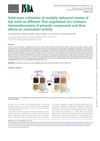
 In this study, methanol extracts from Thai-colored rice fermented with Aspergillus molds exhibited an increase in polyphenolic content and antioxidant activity, outperforming Thai white and Japanese white rice, notably transforming key polyphenols like quercetin and ferulic acid.
August 2021 in “Prosiding Farmasi” This literature review found that combining coconut oil with various herbal extracts can promote hair growth in rats and rabbits, with different combinations producing varying hair length increases over 18 to 30 days.
7 citations
,
May 2024 in “Molecules” In this study, red rice was found to contain 87.2% carbohydrates, 9.1% proteins, and demonstrated bioactive properties due to its flavan-3-ol phenolic compounds, suggesting potential health benefits beyond its nutritional content.
4 citations
,
January 2024 in “Environmental Research” In this study, the authors reported that Sargassum wightii seaweed-based biostimulants improved soil quality and enhanced rice plant growth and yield by ameliorating acid soil effects, boosting antioxidant enzyme activity, and facilitating nitrogen uptake, photosynthesis, and water use efficiency.
April 2011 in “Journal of Medicinal Plants Research” This study found that Ocimum basilicum L. showed the highest 5α-reductase inhibitory activity among ten Thai plants, despite no correlation between enzyme inhibition and total phenolic content.
35 citations
,
April 1937 in “The journal of nutrition/The Journal of nutrition” This study found that supplementing young rats' diet with lactoflavin prevented cataract development, while a diet lacking all B vitamins, except flavin, led to cataracts and alopecia.
14 citations
,
February 2025 in “Pharmaceutics” This review highlights recent advancements in using niosomes as nanocarriers for improved delivery and sustained release of active cosmetic compounds, discussing their properties, applications, and future potential in cosmetic chemistry.
April 2020 in “Rice Research Repository (Rice University)” This study suggests that MultiDomain Peptide hydrogels may support wound healing in diabetic mice by accelerating closure and promoting tissue regeneration, though they did not inhibit bacterial growth in infected wounds as expected.
February 1999 in “The anatomical record” This study observed defects in hair cuticle cross-linking in some, but not all, mouse mutants with sparse or structurally unsound hair.
 15 citations
,
February 1999 in “The anatomical record”
15 citations
,
February 1999 in “The anatomical record” This study found that defective cross-linking in hair cuticles is observable in a minority of mouse hair mutants, suggesting different proteins are involved in cross-linking across cell types.
 August 2025 in “International Journal for Research in Applied Science and Engineering Technology”
 In this study, rice water was reviewed as a cosmetic ingredient, highlighting its safety, stability, and possible benefits such as anti-inflammatory and anti-aging effects, as well as improvements in hair growth and skin hydration.
 September 2025 in “Acta Scientific Pharmaceutical Sciences”
 This paper examines the rising popularity and potential benefits of rice water for hair care, noting that while it contains beneficial compounds like inositol that may increase hair strength and decrease frizz, there is still no definitive scientific proof of its efficacy.
 21 citations
,
April 2012 in “European Journal of Pharmaceutics and Biopharmaceutics”
21 citations
,
April 2012 in “European Journal of Pharmaceutics and Biopharmaceutics” This study suggests that gel containing OSF3 loaded in niosomes offers high transfollicular penetration for topical anti-androgenic alopecia treatment with minimal systemic effect.
 3 citations
,
June 2017 in “Journal of Biomaterials Applications”
3 citations
,
June 2017 in “Journal of Biomaterials Applications” This study demonstrated that keratin extract can stimulate hair growth by inducing the anagen phase in telogenic mice.
 June 2021 in “Journal of Emerging Technologies and Innovative Research”
 This article discusses the hair nutrition and growth effects of rice water and hibiscus, but reports no clinical results; it aims to understand their role in hair care.
 December 2025 in “International Journal of Therapeutic Innovation.”
 This study developed an herbal hair mask using natural ingredients like rice water, aloe vera gel, and coconut oil, which demonstrated moisturizing, strengthening, and protective properties, potentially aiding in maintaining healthy and resilient hair.
 January 2002 in “Journal of Toxicology-cutaneous and Ocular Toxicology”
 Botanical extracts are increasingly important in cosmetics and drugs for their effectiveness and safety, backed by traditional use and scientific evidence.