 June 2017 in “Poster presentations”
 In this study, the safety profiles of four treatments for early rheumatoid arthritis were assessed over one year, and the most serious side effects necessitating treatment discontinuation were noted in the leflunomide group, whereas no such withdrawals occurred in the methotrexate plus prednisolone group.
 260 citations
,
July 2010 in “Cell”
260 citations
,
July 2010 in “Cell” This study identifies mutations in the SRD5A3 gene as a cause of a new type of congenital disorder of glycosylation, impacting mental, ophthalmologic, and cerebellar functions.
2 citations
,
July 2013 in “Journal of Life Sciences” In this case report, researchers described a two-year-old girl with Vitamin D dependent rickets Type II, noting elevated 1,25-dihydroxyvitamin D3 and alopecia, and observed limited treatment response likely due to poor compliance.
 May 2017 in “Journal of The American Academy of Dermatology”
 A woman with a skin disorder was found to have hepatitis C, which may be linked, and was safely treated with methotrexate.
 December 2023 in “Forensic science international. Genetics”
 This study found that the RapidHIT™ ID system can successfully obtain DNA profiles from single hair roots, particularly those with high nuclei counts.
 1 citations
,
September 2021 in “Cureus”
1 citations
,
September 2021 in “Cureus” This study found that the rs1128977 SNP in the RXRG gene may be linked to altered clinical characteristics such as higher HDL-cholesterol levels and increased body mass index in individuals with dyslipidemia.
 1 citations
,
November 2017 in “Expert opinion on orphan drugs”
1 citations
,
November 2017 in “Expert opinion on orphan drugs” This review discusses the genetic basis of ectodermal dysplasia, highlighting that identification of gene pathologies enhances diagnosis and supports prenatal DNA testing, but it reports no new clinical results.
35 citations
,
April 2008 in “Journal of Biological Chemistry” This study found that the lack of expression and deletion of specific hair keratin genes on chromosome 7q36 in Hirosaki hairless rats suggests the crucial role of these genes in hair growth.
39 citations
,
October 2012 in “Familial cancer” This review covers the molecular basis of Birt–Hogg–Dubé syndrome and its implications for potential therapeutic targets, but it does not report new experimental results.
215 citations
,
September 2003 in “Journal of Biological Chemistry” This study found that the hairless gene product (Hr) suppresses VDR-mediated gene activation by directly interacting with the vitamin D receptor, potentially affecting hair follicle function.
3 citations
,
September 2013 in “Journal of the American Academy of Dermatology” This report details two patients with Hutchinson-Gilford Progeria syndrome who exhibited generalized shiny skin in infancy and had a novel mutation in the LMNA gene.
December 2013 in “American journal of transplantation” This case report describes a 27-year-old kidney transplant recipient with end stage renal failure who developed infections and adverse reactions, ultimately resolving with antiviral treatment targeting HHV6.
 1 citations
,
August 2011 in “Dermatology Reports”
1 citations
,
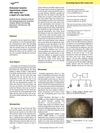
August 2011 in “Dermatology Reports” This case report describes a new family with autosomal recessive hypotrichosis simplex with woolly hair, suggesting the disorder may be underreported due to misdiagnosis.
This study found that in early retinal neurogenesis in mice, the transcription factor Lhx2 regulates Sonic Hedgehog signaling by controlling expression of pathway genes like the co-receptors Gas1 and Cdon.
 6 citations
,
June 2011 in “British Journal of Dermatology”
6 citations
,
June 2011 in “British Journal of Dermatology” This study found that individuals with alopecia areata had significantly higher serum levels of retinol-binding protein 4 and increased IgG immunoreactivity against it, suggesting a role in the disease's pathogenesis.
 6 citations
,
November 2015 in “Equine Veterinary Education”
6 citations
,
November 2015 in “Equine Veterinary Education” This report describes the successful treatment of multiple extrapulmonary disorders from Rhodococcus equi pneumonia in a foal, emphasizing the importance of thorough diagnosis and targeted treatment.
12 citations
,
January 2013 in “Indian dermatology online journal” This case report details a 21-year-old woman with dermatopathia pigmentosa reticularis, presenting with generalized reticulate hyperpigmentation, diffuse noncicatricial alopecia, onychodystrophy, palmoplantar keratoderma, and poorly developed dermatoglyphics.
39 citations
,
August 1998 in “FEBS Letters” In this study, researchers identified two novel peptidylarginine deiminases from treated rat keratinocytes, both showing enzyme activity with PAD‐R11 reflecting a characteristic of epidermal enzymes.
 50 citations
,
October 1986 in “European journal of pediatrics”
50 citations
,
October 1986 in “European journal of pediatrics” This case study reported that absence of alopecia does not reliably predict responsiveness to vitamin D treatment in Vitamin D-dependent rickets type II, as demonstrated by a patient with normal hair growth who showed extreme resistance.
 April 2018 in “The journal of investigative dermatology/Journal of investigative dermatology”
 This study identified a novel mechanism by which dsRNA-induced TLR3 activation and retinoic acid pathways contribute to new hair follicle formation after deep wounds in mice and suggested a similar potential in humans.
June 2025 in “Acta Dermato Venereologica” Low-dose Ritlecitinib may help children with stubborn Alopecia Areata.
29 citations
,
January 2003 in “KARGER eBooks” In this study, researchers concluded that hereditary 1,25-dihydroxyvitamin D-resistant rickets, characterized by specific mutations in the vitamin D receptor gene, may resolve metabolic abnormalities with age, though associated alopecia remains.
September 2017 in “Griffith Research Online (Griffith University, Queensland, Australia)” This study found that in a mouse model of Ross River virus-induced joint inflammation, targeting IL-17A and IL-17A/F heterodimers reduced disease severity.
17 citations
,
March 2012 in “Journal of biological chemistry/The Journal of biological chemistry” In this study, researchers found that overexpression of the hairless protein in Hr mutant mice disrupts inner root sheath formation by downregulating Dlx3 and associated keratins in hair follicle development.
August 2024 in “American Journal of Medical Genetics Part A” In this case study, researchers detailed two Saudi cases of the ultra-rare Trichohepatoneurodevelopmental syndrome, identifying pathogenic variants in the CCDC47 gene and reinforcing a strong gene-disease association, which helps clarify the disorder's clinical features and genetic mutations.
 2 citations
,
May 2017 in “International journal of pharmacy and pharmaceutical sciences/International Journal of Pharmacy and Pharmaceutical Sciences”
2 citations
,
May 2017 in “International journal of pharmacy and pharmaceutical sciences/International Journal of Pharmacy and Pharmaceutical Sciences” This review discusses genetic mutations associated with Hutchinson-Gilford progeria syndrome and reports no clinical results; the authors emphasize the importance of cardiovascular monitoring in management.
 December 2022 in “American journal of medical genetics. Part A”
 This case report describes an instance of autosomal recessive uncombable hair syndrome caused by maternal uniparental disomy of chromosome 1.
 29 citations
,
May 2018 in “Clinical Endocrinology”
29 citations
,
May 2018 in “Clinical Endocrinology” This review discusses the differential diagnosis of low-renin hypertension and highlights recent genetic discoveries related to familial forms, but it presents no new clinical results.
November 2024 in “Rheumatology Advances in Practice” This case report highlights a rare instance of visceral leishmaniasis presenting as seropositive rheumatoid arthritis in a patient with HIV, emphasizing the importance of considering chronic infections as a differential diagnosis in inflammatory arthritis, especially in diverse populations with a history of travel.
 July 2023 in “Journal of medical and health studies”
 This case study reported on a 3-year-old child with vitamin D-dependent rickets type II treated in the Gaza Strip, whose condition deteriorated despite vitamin D and calcium treatments, leading to recurrent chest infections, respiratory failure, and eventual death.