![Activity of 17β-(N-Alkyl/Arylformamido) and 17β-[(N-Alkyl/Aryl) Alkyl/Arylamido]-4-Methyl-4-Aza-5α-Androstan-3-Ones as 5α-Reductase Inhibitors in the Hamster Flank Organ and Ear](/images/assets/861159f1-7bd4-420c-a16b-4829458efe68/small/15592.jpg) 10 citations
,
August 1998 in “Journal of Investigative Dermatology”
10 citations
,
August 1998 in “Journal of Investigative Dermatology” This study observed that the compound EM-402 reduced 5α-reductase activity and sebaceous gland size in the flank organs and ears of hamsters, indicating potent localized anti-androgenic effects without systemic action.
 3 citations
,
September 2015 in “Journal of Vascular Surgery”
3 citations
,
September 2015 in “Journal of Vascular Surgery” This study found that chemical lumbar sympathectomy with 5% phenol effectively treated idiopathic livedo reticularis in most patients, offering a potential long-lasting solution with repeatable efficacy upon recurrence.
November 2025 in “The Journal of Dermatology” In this case report, a Japanese woman with both atopic dermatitis and alopecia areata showed improvement in both conditions following treatment with nemolizumab.

This case study indicates that older patients with NMOSD may show favorable clinical improvements with aggressive treatment, even when the intervention is initiated later in the disease course.
 6 citations
,
January 2018 in “Annals of dermatology/Annals of Dermatology”
6 citations
,
January 2018 in “Annals of dermatology/Annals of Dermatology” In this first reported case, a 42-year-old female with Parry Romberg Syndrome was treated using hyaluronic acid filler, which the authors suggest may serve as a safe, simple, and cost-effective alternative to more complex surgical methods.
 6 citations
,
September 2019 in “Skin pharmacology and physiology”
6 citations
,
September 2019 in “Skin pharmacology and physiology” This study found that RCS-01 cell therapy for aged skin was well tolerated and associated with increased gene expression related to extracellular matrix homeostasis, suggesting potential skin improvement.

This review examines complex regional pain syndrome (CRPS I) mechanisms, including immune dysregulation and psychological factors, but reports no new clinical results; the authors highlight potential diagnostic refinements.
 18 citations
,
July 2008 in “Current Oncology Reports”
18 citations
,
July 2008 in “Current Oncology Reports” EGFR cancer drugs often cause a rash, which can lead to distress and isolation, but may also improve outcomes for some cancer patients. Current treatments for the rash are limited, but a compound called menadione shows promise.
 April 2017 in “Journal of Investigative Dermatology”
 This study found that retinoic acid and a retinol complex formulation showed different permeation and compound localization in a skin equivalent model, with unique lipid changes observed with only the retinol formulation.
 March 2019 in “Journal der Deutschen Dermatologischen Gesellschaft”
 This clinical letter identifies Rothmund-Thomson syndrome type 2 as a rare cause of chronic wounds, but provides no new experimental findings.
 November 2022 in “The journal of investigative dermatology/Journal of investigative dermatology”
 This study found that applying ivermectin 1% cream significantly improved both visible symptoms like erythema and invisible symptoms such as stinging, burning, and dryness in rosacea patients over a period of at least 16 weeks.
June 2026 in “Journal of Investigative Dermatology” Retinoic acids temporarily change skin stem cells to a slower cycle and more differentiated state.
June 2026 in “JAAD Case Reports” 24 citations
,
July 2021 in “Pharmaceutics” This article reviews the JAK signaling pathway and the development of ruxolitinib cream as a targeted treatment for inflammatory skin diseases, reporting no new clinical results.
March 2026 in “SKIN The Journal of Cutaneous Medicine” This study found that ritlecitinib was well tolerated in children aged 6 to under 12 years with severe alopecia areata, with ongoing trials examining its efficacy and safety over a 24-week period and in long-term use up to 36 months.
 January 2023 in “Journal of The American Society of Nephrology”
 This article discusses the potential benefits and challenges of metatrials as a new clinical trial methodology during COVID-19 and reflects on its application in nephrology, but reports no new results.
 July 2018 in “Our Dermatology Online”
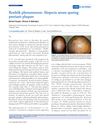
 In this study, researchers examined the under-studied mechanisms behind specific dermatological phenomena such as co-localization, Wolf's isotopic phenomenon, Koebner's isomorphic phenomenon, and the recently described Renbök phenomenon, noting that only a few cases have been reported so far.
 March 2026 in “Preprints.org”
 This review suggests that the compound DRDE-07, originally a sulphur-mustard countermeasure candidate, could potentially be repurposed for skin protection due to its compatibility with pathways involved in oxidative stress and inflammation, though further experimental study is needed to confirm its therapeutic applicability in dermatology.
 January 2024 in “Wiadomości Lekarskie”
 This source provides an overview of diagnostic and treatment innovations for gastrointestinal disorders, such as wireless capsule technology for motility assessment and new methods for treating constipation and nausea, highlighting both current and emerging techniques.
 July 2016 in “Dermatologie pro praxi”
 This article discusses the use of Espumil foam base in pharmacies for preparing dermatological medications and reports no new clinical results.
 September 2025 in “Cancer Innovation”
 This study argues for "clinical trial re-innovation," highlighting new designs like basket, umbrella, and platform trials that incorporate biomarker technologies to meet the dynamic needs of precision medicine, potentially enabling more effective, patient-specific treatments and overcoming limitations of traditional disease-centered trials.
 January 2023 in “Hormone and Metabolic Research”
 This review discusses drug repositioning as a promising strategy for developing treatments for cardiometabolic disorders and reports no new clinical results.
June 2026 in “The Egyptian Journal of Neurology Psychiatry and Neurosurgery” This review discusses the potential of mesenchymal stem cells and their secretome, mainly extracellular vesicles, in Parkinson's disease therapy, highlighting their neuroprotective abilities and therapeutic prospects, but it reports no clinical results.
 1 citations
,
June 2023 in “Advances in therapy”
1 citations
,
June 2023 in “Advances in therapy” In a real-world registry study, ripretinib showed effectiveness with a median progression-free survival of 7.70 months and a tolerable safety profile in Chinese patients using it as a fourth-line treatment for advanced GIST, particularly benefiting those with non-gastric tumors.
 March 2024 in “EMBO molecular medicine”
 This study found that the antiviral drug daclatasvir significantly improved fibrosis and quality of life in a mouse model of recessive dystrophic epidermolysis bullosa, suggesting potential for treating this and other fibrotic diseases.
December 2025 in “eTheses of Maulana Malik Ibrahim State Islamic University (Maulana Malik Ibrahim State Islamic University)” This study found that the highest antioxidant-activity formulation of the RENTT herbal combination effectively stimulated hair growth in mice and may serve as a natural therapy for chemotherapy-induced alopecia.
This review examines the potential of CAR-T cell therapy as a transformative treatment for refractory autoimmune diseases, highlighting its mechanisms, clinical challenges, and promising strategies for precision immunotherapy despite issues like complex manufacturing and antigen escape.
 1 citations
,
September 2021 in “Cureus”
1 citations
,
September 2021 in “Cureus” This study found that the rs1128977 SNP in the RXRG gene may be linked to altered clinical characteristics such as higher HDL-cholesterol levels and increased body mass index in individuals with dyslipidemia.
This study found that Dex-loaded hyaluronic acid hydrogel microneedles significantly reduced pain in an acute inflammatory visceral pain model without sedation, suggesting a promising and patient-friendly alternative to intravenous delivery.
 15 citations
,
March 2015 in “Facial plastic surgery”
15 citations
,
March 2015 in “Facial plastic surgery” This article series reviews volumetric restoration techniques for different facial regions by expert authors, offering assessments of specific products but provides no new clinical results.