 8 citations
,
April 2019 in “Australasian Journal of Dermatology”
8 citations
,
April 2019 in “Australasian Journal of Dermatology” This article addresses erosive pustular dermatosis of the scalp, particularly in Australia's elderly population, and proposes a management plan to improve their quality of life, without presenting new clinical results.
 7 citations
,
January 2017 in “Dermatology”
7 citations
,
January 2017 in “Dermatology” In this study, late-onset alopecia areata in Israeli patients was predominantly observed in females with mild disease, showing a high rate of complete hair regrowth but frequent relapses.
 1 citations
,
October 2023 in “Dermatology and therapy”
1 citations
,
October 2023 in “Dermatology and therapy” This review concluded that baricitinib and other oral JAK inhibitors have the most robust evidence supporting their use in treating severe alopecia areata in adults, compared to other less-evaluated treatments.
 1 citations
,
September 2023 in “Journal of drugs in dermatology”
1 citations
,
September 2023 in “Journal of drugs in dermatology” This article discusses the perspectives of clinicians and patients on alopecia areata, an autoimmune disorder with significant psychosocial impacts, highlighting the unpredictability and limited effectiveness of current treatments as well as the key unmet needs and gaps in care.
 May 2023 in “Clinical and Experimental Dermatology”
 Alopecia areata has a high chance of persisting and relapsing, with a significant risk of total hair loss, especially if it starts in childhood.
This chapter reviews alopecia areata treatments, highlighting factors like age and disease extent in choosing management strategies, but reports no new clinical findings.
June 2026 in “Dermatology” In this study, frontal fibrosing alopecia showed a higher cumulative remission rate compared to lichen planopilaris, despite similar timeframes and relapse rates between the two conditions.
39 citations
,
April 2003 in “Australasian journal of dermatology” This study found that PUVA treatment resulted in complete hair regrowth in over half of patients with alopecia areata totalis or universalis, despite a higher treatment failure rate in those with a family history of the condition.
37 citations
,
September 2009 in “JEADV. Journal of the European Academy of Dermatology and Venereology/Journal of the European Academy of Dermatology and Venereology” This study found that diphencyprone is an effective and safe treatment for extensive alopecia areata, especially with long-term therapy and maintenance to reduce relapse risk.
30 citations
,
August 1998 in “International Journal of Dermatology” This study found that systemic corticosteroids led to satisfactory hair regrowth in 38.9% of severe alopecia areata patients, but hair fall occurred upon therapy discontinuation or tapering.
 15 citations
,
May 2017 in “JEADV. Journal of the European Academy of Dermatology and Venereology/Journal of the European Academy of Dermatology and Venereology”
15 citations
,
May 2017 in “JEADV. Journal of the European Academy of Dermatology and Venereology/Journal of the European Academy of Dermatology and Venereology” This article is a letter to the editor about high-dose pulsed corticosteroid therapy combined with methotrexate for severe childhood alopecia areata and provides no new clinical results.
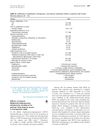 8 citations
,
January 2018 in “Journal of the American Academy of Dermatology”
8 citations
,
January 2018 in “Journal of the American Academy of Dermatology” This study found that maintenance treatment with diphenylcyclopropenone was associated with a lower relapse rate in alopecia areata patients, highlighting the importance of adjusting treatment intervals post-improvement.
 4 citations
,
January 2022 in “Drug design, development and therapy”
4 citations
,
January 2022 in “Drug design, development and therapy” This study demonstrated that intramuscular corticosteroids were effective for severe alopecia areata, with significant hair regrowth in 80.2% of patients, though a high relapse rate was noted post-treatment. Nail involvement and disease duration over six months negatively impacted outcomes.
1 citations
,
May 2022 in “European Journal of Dermatology” This study found that while no predictive factors for response to vismodegib were identified, longer treatment duration was associated with a lower risk of relapse in basal cell carcinoma patients.
1 citations
,
January 2021 in “Skin appendage disorders” This study observed that alopecia areata in children often presents as mild scalp patches, with the majority showing some hair regrowth following treatment, particularly when using potent topical steroids, which were most commonly prescribed in the reviewed cases.
 March 2026 in “Journal of Pakistan Association of Dermatologists”
 In this quasi-experimental study, 24-week tofacitinib treatment significantly improved hair regrowth in South Asian patients with alopecia areata, but a high relapse rate post-withdrawal signals the need for continuous treatment strategies.
 March 2026 in “Mendeley Data”
 In this systematic review and meta-analysis on participants aged 12 and under with alopecia areata, the authors provide supplementary tables and figures, including pooled outcomes for hair regrowth and safety of oral Janus kinase inhibitors, supporting the main findings on their effectiveness and safety.
January 2026 in “International Journal of Medical and All Body Health Research” This study found that both intralesional corticosteroids (TAC) and platelet-rich plasma (PRP) are effective for treating patchy alopecia areata, with TAC providing faster early results but PRP offering better long-term safety and lower relapse rates.
 June 2025 in “Patient Preference and Adherence”
 This study examined Chinese adult patients' discussions on social media about JAK inhibitors for alopecia areata, highlighting significant interest in these treatments but also concerns about efficacy, relapse, side effects, and the emotional impact of the condition.
 January 2012 in “Current Therapy In Oral and Maxillofacial Surgery”
 Endoscopic forehead and brow lifting safely and consistently improves aged eyebrows, but may have complications.
 19 citations
,
June 2018 in “Breast Cancer Research and Treatment”
19 citations
,
June 2018 in “Breast Cancer Research and Treatment” This study found that adjuvant docetaxel treatment for breast cancer at cumulative doses of 400 mg/m² or higher is associated with a 10% prevalence of persistent alopecia leading to wig use, but this was completely prevented with scalp cooling.
 1 citations
,
December 2012 in “Journal of the European Academy of Dermatology and Venereology”
1 citations
,
December 2012 in “Journal of the European Academy of Dermatology and Venereology” This letter to the editor reports that sentinel lymph node status is the strongest independent predictor for both disease-free and overall survival in patients with thick melanoma.
 September 2009 in “European Urology Supplements”
 Surgery for high-risk prostate cancer is challenging but doesn't lead to more complications, and additional treatment is often needed.
63 citations
,
January 1971 in “Acta Medica Scandinavica” This study found that replenishment of iron stores after phlebotomy-induced remission in porphyria cutanea tarda led to biochemical relapse, suggesting that reducing iron stores may be crucial for maintaining remission.
 December 2023 in “Veterinary dermatology”
 This study found that microneedling with longer needles (3 mm) showed better hair regrowth in dogs with hair cycle arrest, although most experienced recurrent hair loss during follow-up. Some dogs also developed minor, temporary itching.
54 citations
,
May 2019 in “Multiple Sclerosis and Related Disorders” This study found that azathioprine may improve relapses and disability in patients with neuromyelitis optica spectrum disorder but is associated with higher adverse events compared to mycophenolate mofetil.
 24 citations
,
February 2021 in “Dermatology and Therapy”
24 citations
,
February 2021 in “Dermatology and Therapy” This study reported a significant relapse in alopecia areata among patients infected with COVID-19, possibly due to the infection's inflammatory response and stress from quarantine.
 16 citations
,
May 2011 in “Dermatologic therapy”
16 citations
,
May 2011 in “Dermatologic therapy” This article reviews side effects and relapse rates of various systemic treatments for severe alopecia areata, reporting no new clinical findings.
 7 citations
,
September 2006 in “Clinical lymphoma & myeloma”
7 citations
,
September 2006 in “Clinical lymphoma & myeloma” This review discusses various treatment challenges and toxicities in patients with relapsed follicular lymphoma and suggests that novel therapies could improve outcomes by reducing exposure to harmful chemotherapy cycles.
 3 citations
,
September 2024 in “BMC Oral Health”
3 citations
,
September 2024 in “BMC Oral Health” This study found that low-level laser therapy effectively reduced relapse rates, while functional appliances did not; combining them offered no additional benefits.