 April 2025 in “Journal of Pharmaceutical Investigation”
 In this study, injectable microdepots containing rapamycin and poly(lactic-co-glycolic acid) were developed and demonstrated to effectively promote hair regrowth in mice by sustaining drug release and inducing anagen phase transition in hair follicles through modulating autophagy and the Wnt/β-catenin pathway.
 November 2025 in “Frontiers of Agricultural Science and Engineering”
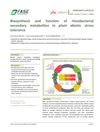
 This study observed that rhizobacterial strain RT3 significantly improved drought tolerance in lettuce by increasing survival rates and fresh biomass after rewatering, with metabolites such as proline and glycine enhancing stress resilience.
 9 citations
,
January 2011 in “EXPERIMENTAL ANIMALS”
9 citations
,
January 2011 in “EXPERIMENTAL ANIMALS” This study describes a novel hairless mutant rat strain, F344-Hr(krh), developed via ENU mutagenesis, which provides a model for skin disease and potentially focal glomerulosclerosis due to specific genetic mutations.
 July 2025 in “The Journal of Dermatology”
 This study identified common and unexpected adverse events associated with ritlecitinib in real-world use, providing insights into its safety profile for treating severe alopecia areata.
August 2026 in “Frontiers in Immunology” This study introduces Immunoguided Cutaneous Regeneration as a potential framework for understanding skin allotransplantation, suggesting that regeneration may depend on the preserved extracellular matrix and a regulated immune response.
September 2010 in “Reactions weekly” The combination of tretinoin, minoxidil, and betamethasone valerate may cause severe scalp inflammation.
 June 2026 in “Journal of health economics and outcomes research”
 This study found that ritlecitinib 50 mg offered a lower cost per responder than baricitinib 2 or 4 mg for treating severe alopecia areata at Weeks 24 and 52, potentially influencing reimbursement decisions.
 April 2012 in “CORD. Coconut research & development/CORD”
 This study observed that vermiwash application can enhance soil microbial activity and sustain crop yields, matching or slightly trailing traditional fertilizers, while offering additional plant health benefits.
1 citations
,
April 1977 in “Munich Personal RePEc Archive (Ludwig Maximilian University of Munich)” This study introduces an efficient ghost-cell based immersed boundary method for simulating fluid-particle mass transfer, capable of accurately handling mixed boundary conditions at particle surfaces.
2 citations
,
June 2024 in “Dermatology” This study found that patients receiving active ritlecitinib doses reported greater satisfaction with hair growth compared to placebo, with high agreement observed between clinician evaluations of scalp hair improvement and patient satisfaction through week 48.
 April 2019 in “The journal of investigative dermatology/Journal of investigative dermatology”
 This study used machine learning to identify molecular predictors of drug response in alopecia areata, suggesting a tool for predicting treatment efficacy based on gene signatures.
This study reports on a new semantic annotation approach used to identify substances in MEDLINE abstracts responsible for adverse drug reactions, with promising performance shown by a prototype system.
1 citations
,
December 2024 in “BMC Genomics” This study used transcriptome analysis to explore the genetic mechanisms behind the development and seasonal variation of nuptial pads in R. chensinensis, identifying key genes and processes that suggest the pads' development involves complex regulatory pathways, particularly those related to cell cycle and hormone synthesis.
This study identified the combination of NCBP3, SDHA, and PTPRA as stable reference genes for normalizing gene expression in goat skin tissue research.
6 citations
,
October 2024 in “Frontiers in Bioengineering and Biotechnology” This study reported that the use of composite RGDmix hydrogel improved the survival and proliferation of human amniotic mesenchymal stem cells and increased growth factor expression, enhancing wound healing through the RGDSP/integrin αv/PI3K/AKT signaling pathway.
 January 2011 in “Web journal anti-aging medicine/Anti-aging medicine”
 In this study, kamishoyosangoshimotsuto extract improved skin moisture, texture, and brightness, as well as hair thickness and strength in women with skin and scalp hair problems over 24 weeks.
1 citations
,
October 2025 in “International Journal of Dermatology” In this study, participants receiving a 50-mg maintenance dose of ritlecitinib reported greater improvements in emotional and activity limitations due to hair loss by Week 48 compared to those on a 10-mg dose.
February 2019 in “bioRxiv (Cold Spring Harbor Laboratory)” In this study, the researchers found that KAP3.1, KRTAP 8-1, and KRTAP 24-1 genes positively correlated with the growth cycle of cashmere in Inner Mongolia goats, aligning with the observed hair cycle phases.
 February 2019 in “Institutional Repositories DataBase (IRDB)” August 2025 in “Animal nutrition”
 This study found that supplementing with 1.5% α-ketoglutaric acid significantly improved the performance, hair follicle density, and antioxidant capacity in Rex rabbits, potentially by enhancing the Wnt signaling pathway and reducing amino acid catabolism.
May 2025 in “Immunotherapy” This study observed that patients with alopecia areata taking ritlecitinib reported higher satisfaction with hair growth after 24 and 48 weeks compared to those taking a placebo, aligning with improvements in hair growth noted by doctors.
August 2023 in “Zenodo (CERN European Organization for Nuclear Research)” This abstract discusses the non-invasive technique of scalp micropigmentation for hair loss, focusing on its cosmetic effects and customization options, and reports no new research findings.
July 2023 in “SKIN The Journal of Cutaneous Medicine” This study found that some patients with alopecia areata who did not respond to ritlecitinib treatment by Week 24 achieved a positive response with continued therapy by Week 48, with tolerable side effects.
 54 citations
,
October 2024 in “Nature Communications”
54 citations
,
October 2024 in “Nature Communications” In this study, researchers developed a method to control the valence states of Mo in nanozymes, optimizing their activity for ROS-related therapies, particularly acute kidney injury treatment, and enabling real-time monitoring with photoacoustic imaging.
June 2026 in “International Journal of Computational and Biological Sciences” This study developed and validated a radiomics-based clinical nomogram using routine renal ultrasound and clinical data to predict early diabetic kidney injury in a community cohort, finding it significantly outperformed clinical-only models in predicting risk and showed potential as a cost-effective screening tool.
20 citations
,
January 2024 in “Journal of the European Academy of Dermatology and Venereology” This study conducted a meta-analysis and found that among therapies for alopecia areata, baricitinib_4 mg was most likely to be effective, followed by ritlecitinib and ivarmacitinib, while other treatments like dupilumab and secukinumab were less effective.
 April 2019 in “Journal of Investigative Dermatology”
 This study reported that mSKPs and DMSCs share similarities in biological characteristics but exhibit distinct transcriptome profiles, with mSKPs being more immune-related and DMSCs more associated with differentiation and disease pathways.
January 2019 in “Prosiding Program Kreativitas Mahasiswa” This study found that a 15% Pisum sativum extract concentration in hair tonic showed the most effective hair growth, with a length of 14.51mm and weight of 0.16g.
November 2025 in “Mendeley Data” November 2025 in “Mendeley Data”