 16 citations
,
February 2018 in “BMC Genomics”
16 citations
,
February 2018 in “BMC Genomics” This paper reviews genome-based personalized medicine developments using Web services for analyzing SNPs in reproductive potential but reports no new clinical findings.
 16 citations
,
June 2008 in “Springer eBooks”
16 citations
,
June 2008 in “Springer eBooks” Over 50% of women over 50 experience hair loss, with minoxidil being the only proven effective treatment.
 16 citations
,
September 2014 in “International Journal of Biological Markers”
16 citations
,
September 2014 in “International Journal of Biological Markers” This study found that the less common CAG-rs4045402 and GGN-rs3138869 polymorphisms were more frequent in patients with post-finasteride syndrome and androgenetic alopecia, suggesting a genetic predisposition to AGA development.
 13 citations
,
December 2012 in “Frontiers in bioscience”
13 citations
,
December 2012 in “Frontiers in bioscience” This review discusses the potential role of vitamin D deficiency in cardiovascular and renal diseases and suggests that supplemental vitamin D could benefit cardiovascular outcomes, especially in African American and postmenopausal women; it reports no new clinical findings.
 11 citations
,
March 2013 in “Gene”
11 citations
,
March 2013 in “Gene” This study reported that the IL1A 4-bp indel polymorphism is associated with a reduced risk of alopecia areata in Chinese populations, possibly through miR-122 mediated regulation of IL-1α expression.
 10 citations
,
January 2020 in “Advances in Dermatology and Allergology”
10 citations
,
January 2020 in “Advances in Dermatology and Allergology” This study suggests that the gene rs27647 polymorphism may play a role in the pathogenesis of severe acne vulgaris in post-adolescent male patients.
 10 citations
,
October 2009 in “Clinical Therapeutics”
10 citations
,
October 2009 in “Clinical Therapeutics” This study found that the orally disintegrating tablet and standard tablet formulations of finasteride met bioequivalence criteria in fasting healthy adult male Han Chinese volunteers, although there was a significant difference in time to maximum concentration.
 10 citations
,
January 2009 in “Elsevier eBooks”
10 citations
,
January 2009 in “Elsevier eBooks” This review discusses the structure, functions, and growth cycle of human hair, emphasizing its reduced growth and protective roles, and reports no new research findings.
 10 citations
,
October 2016 in “Monoclonal antibodies in immunodiagnosis and immunotherapy”
10 citations
,
October 2016 in “Monoclonal antibodies in immunodiagnosis and immunotherapy” This study developed rat monoclonal antibodies that specifically detect Pax1/PAX1 protein, which could improve diagnostic protocols for conditions involving deregulated Pax1/PAX1 expression.
 9 citations
,
September 2015 in “Reproductive Biomedicine Online”
9 citations
,
September 2015 in “Reproductive Biomedicine Online” This study suggests that longer GGN repeat polymorphisms in the androgen receptor gene are associated with polycystic ovary syndrome in women.
 8 citations
,
October 2019 in “Immunological investigations”
8 citations
,
October 2019 in “Immunological investigations” This study suggests that the rs2075876 variant in the AIRE gene may significantly increase susceptibility to alopecia areata in the examined male population.
 7 citations
,
September 2024 in “BMC Genomics”
7 citations
,
September 2024 in “BMC Genomics” In this study, whole-genome sequencing of Lanping black-boned sheep identified ERBB4 and ROR1 genes as potentially important in their distinctive hyperpigmentation, enhancing understanding of their genetic evolution from Lanping normal sheep.
 6 citations
,
January 2020 in “Czech Journal of Animal Science”
6 citations
,
January 2020 in “Czech Journal of Animal Science” This study found that specific SNPs in the sheep FAT1 gene are significantly associated with wool quality traits, suggesting potential markers for improving wool crimp, fibre length, and fibre diameter in breeding.
 6 citations
,
October 2012 in “Journal of Heredity”
6 citations
,
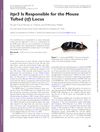
October 2012 in “Journal of Heredity” This study identified the Itpr3 gene as responsible for the tufted hair loss phenotype in the BTBR mouse strain.
 5 citations
,
May 2019 in “Archives of Dermatological Research”
5 citations
,
May 2019 in “Archives of Dermatological Research” This study reported that narrowband UVB treatment significantly increased WNT7B, WNT10B, and TCF7L2 gene expression in lesional skin of psoriasis patients, suggesting these genes may play a role in psoriasis pathogenesis.
 5 citations
,
January 2016 in “Genetics and molecular research”
5 citations
,
January 2016 in “Genetics and molecular research” In this study, a specific SNP in the A2M gene of Murrah buffaloes was significantly associated with increased fat production and higher fat and protein percentages in milk.
 4 citations
,
November 2023 in “Frontiers in immunology”
4 citations
,
November 2023 in “Frontiers in immunology” In this narrative review, researchers outlined the role of T cells in the autoimmune pathogenesis of alopecia areata and highlighted ongoing research into therapeutic pathways, beyond current JAK inhibitors, aimed at developing new treatments for the disease.
 4 citations
,
January 2021 in “Journal of Clinical Medical Research”
4 citations
,
January 2021 in “Journal of Clinical Medical Research” This review provides an in-depth analysis of the structure and function of c-kit activation, and its role in both normal physiological and pathological conditions, with no new research findings reported.
 3 citations
,
September 2024 in “Frontiers in Bioscience-Scholar”
3 citations
,
September 2024 in “Frontiers in Bioscience-Scholar” This study reported that Pantaneiro sheep from the Pantanal region of Brazil exhibit greater genetic variability and adaptability compared to the commercial Texel breed, highlighting their potential for further research and importance in Brazilian sheep farming.
 2 citations
,
August 2022 in “Federal Practitioner”
2 citations
,
August 2022 in “Federal Practitioner” This case report describes a patient with lamotrigine-associated drug-induced hypersensitivity syndrome requiring prolonged and complex treatment, with observed complications including extensive alopecia areata and autoimmune thyroiditis.
 1 citations
,
December 2023 in “Curēus”
1 citations
,
December 2023 in “Curēus” This study observed that five out of fourteen individuals aged 13-16 years, who were homozygous for the p.C282Y mutation related to hemochromatosis, had increased liver and phlebotomy-mobilized iron levels.
 1 citations
,
September 2021 in “Cureus”
1 citations
,
September 2021 in “Cureus” This study found that the rs1128977 SNP in the RXRG gene may be linked to altered clinical characteristics such as higher HDL-cholesterol levels and increased body mass index in individuals with dyslipidemia.
 1 citations
,
November 2015 in “Indian Journal of Clinical Biochemistry”
1 citations
,
November 2015 in “Indian Journal of Clinical Biochemistry” The conference presented findings on how vitamin D levels, genetic factors, and lifestyle choices like smoking and yoga affect various health conditions and diseases.
 February 2026 in “Diabetes Metabolic Syndrome and Obesity”
 This study identified a higher basal metabolic rate as an independent and causally relevant risk factor for nonalcoholic fatty liver disease in the Chinese population, noting that sex-specific effects may require tailored management strategies.
 March 2025 in “OncoTargets and Therapy”
 This study found that in circulating tumor cells from non-invasive liquid biopsies, the GG genotype of the CYP3A5 A6986G affects longer disease-free survival in DLBCL patients, highlighting the significance of circulating biomarkers for prognostic evaluation.
 January 2024 in “Archives of Endocrinology and Metabolism”
 In this case report, a novel heterozygous mutation in the insulin receptor gene was identified in an adolescent girl with type A insulin resistance syndrome, characterized by excessive hair growth and skin changes, and her mother.
 January 2023 in “Annals of Dermatology”
 This study found that alopecia areata patients with a CCHCR1 gene variant had higher recurrence rates and structural abnormalities in hair compared to those without the variant.
 June 2020 in “bioRxiv (Cold Spring Harbor Laboratory)”
 This study found that the HoxC gene cluster is crucial for the development of hair and nails in mice, with key regulation by two mammalian-specific enhancers.
 June 2018 in “International journal of trend in scientific research and development”
 This review discusses the formulations, mechanisms, and physiological aspects of hair cosmetics and types, but reports no new results, suggesting a foundation for future hair research.
 October 2017 in “The Indian Journal of Animal Sciences”
 This study found that prolactin gene polymorphism in Changthangi goats showed no significant association with Cashmere quality traits, indicating the need for further research with larger sample sizes.