This study found that neutrophil-rich hair follicle inflammation caused by a monoclonal antibody targeting murine EGFR in mice involved TNFα and interleukin-1, suggesting these cytokines play a role in EGFR antibody-induced rashes in cancer patients.
This study in mice found that a monoclonal antibody targeting EGFR resulted in skin inflammation mediated by TNFα, suggesting potential pathways for addressing EGFR antibody-induced skin rash in cancer patients.
This article reviews how to properly take a dermatological history and conduct physical examinations for skin rashes and malignancies, discussing commonly used diagnostic tools and the Dermatology Life Quality Index system.
April 2015 in “Journal of the American Academy of Dermatology” This case study suggests that the most likely diagnosis for the patient with a pink, scaling rash is secondary syphilis.
 June 2011 in “Oncology times”
 This article outlines the author's personal strategies for managing dermatological toxicities, such as acneiform rash and dry skin, associated with EGFR inhibitor therapy; it does not present new research findings.
January 2002 in “대한피부과학회지” This study analyzed clinical manifestations in 18 dermatomyositis patients, noting that all exhibited skin rash and variable symptoms like itching and muscle weakness, with treatment involving prednisolone and hydroxychloroquine.
January 1962 in “Archives of Dermatology” This case report describes a 5-year-old girl with lipoid proteinosis, characterized by a raspy voice, thinning scalp hair, and recurrent crusted lesions leading to pock-like scars.
 144 citations
,
September 2006 in “Clinics in Dermatology”
144 citations
,
September 2006 in “Clinics in Dermatology” This article outlines manifestations of systemic lupus erythematosus, noting rapid joint symptom improvement with corticosteroids and antimalarial drug responsiveness for skin symptoms, and links anti-Ro with photosensitive rash and subacute lupus.
86 citations
,
November 2020 in “Annals of Oncology” These guidelines discuss prevention and management strategies for dermatological toxicities but report no new clinical results; they include expert recommendations for conditions like acneiform rash and hand-foot syndrome.
12 citations
,
March 2021 in “JAAD Case Reports” This study reported that immunotherapy in cancer patients can lead to skin-related immune adverse events, such as rashes, pruritus, and vitiligo, affecting a substantial proportion of patients.
 12 citations
,
November 2006 in “Journal of thoracic oncology”
12 citations
,
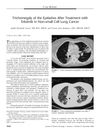
November 2006 in “Journal of thoracic oncology” This case report describes a patient with non-small cell lung cancer who experienced trichomegaly (excessive eyelash growth) as a side effect of erlotinib treatment without developing typical skin rash.
 11 citations
,
November 1990 in “Archives of Dermatology”
11 citations
,
November 1990 in “Archives of Dermatology” This case report describes a patient with eosinophilia-myalgia syndrome, likely linked to L-tryptophan use, who developed a skin rash characterized by cutaneous mucinosis.
7 citations
,
November 2021 in “JAAD Case Reports” This study highlights that although mogamulizumab is highly effective for treating mycosis fungoides and Sézary syndrome, it frequently causes a variety of rashes as side effects.
 7 citations
,
October 2019 in “Annals of palliative medicine”
7 citations
,
October 2019 in “Annals of palliative medicine” This review examines the incidence and management of dermatologic adverse effects from FDA-approved oral targeted cancer therapies, highlighting frequent occurrences like rashes and rarer severe conditions such as Stevens-Johnson Syndrome.
5 citations
,
January 2018 in “Indian Journal of Dermatology/Indian journal of dermatology” This case report describes a 40-year-old woman who developed erythema annulare centrifugum, a type of skin rash, likely triggered by taking the drug aceclofenac.
2 citations
,
May 2008 in “Journal of Clinical Oncology” This study found that patients with unresectable melanoma treated with AZD6244 experienced skin reactions, including depigmentation and papulopustular rashes, in patterns similar to those caused by EGFR inhibitors.
 1 citations
,
January 2018 in “Journal of Neurology Research”
1 citations
,
January 2018 in “Journal of Neurology Research” This case report describes a 23-year-old male who developed leukopenia, thrombocytopenia, and rash associated with lamotrigine treatment, emphasizing the importance for clinicians to monitor for serious side effects, especially early in treatment.
 October 2021 in “Revista Medicina Cutánea Ibero-Latino-Americana”
 This case report describes a patient who developed PRIDE syndrome-associated skin issues, including a pruritic papulopustular rash and alopecia, after starting treatment with the EGFR inhibitor erlotinib.
 June 2026 in “Mediterranean Journal of Hematology and Infectious Diseases”
 This case study reports a 15-year-old girl from a visceral leishmaniasis-endemic area in Greece presenting with various symptoms, including high fever, morning joint pain, and blood in urine, eventually leading to findings like rash, anemia, and kidney issues. Results are not detailed in this abstract.
January 2026 in “China CDC Weekly” This study explored using large language models to automatically identify monkeypox cases from electronic medical records, finding that models based on DeepSeek features performed better than traditional methods, with logistic regression showing high accuracy in detecting key symptoms like fever and rash.
 December 2025 in “npj Breast Cancer”
 In the phase 3 CAPItello-291 trial, capivasertib combined with fulvestrant significantly increased progression-free survival in patients with advanced breast cancer with specific genetic alterations, but the authors highlight that managing side effects like diarrhea, rash, and hyperglycemia is crucial for optimizing treatment adherence and outcomes.
 March 2025 in “Health Science Reports”
 In this study, SLE was found to be more prevalent among Iraqi women, with photosensitivity, hair loss, and malar rash as common symptoms, contributing to the understanding of SLE patterns globally.
 June 2024 in “International Journal of Research in Ayurveda and Pharmacy”
 This study explores Ayurvedic concepts for hair conditions such as hair loss, premature greying, alopecia areata, seborrheic dermatitis, and dandruff, highlighting treatments that include Panchakarma and Rasayana medicines for potential relief.
 June 2024 in “Infection and Drug Resistance”
 This study reports a rare case of tinea capitis in an adult female, where Malassezia species may facilitate Microsporum canis growth, and successful treatment with oral antifungals led to rash resolution and hair regrowth.
January 2024 in “Ankara City Hospital Medical Journal” This case report details a 42-year-old woman with Rhupus, a rare overlap syndrome of rheumatoid arthritis and systemic lupus erythematosus, emphasizing diagnostic challenges due to non-specific clinical criteria and documenting symptoms like inflammatory arthritis, malar rash, and hematological abnormalities.
June 2023 in “The Journal of Family Practice” This report presents a case of an 18-year-old female-to-male transgender man experiencing hair loss and varied hair lengths over his temples, raising questions about the diagnosis as the patient exhibited no itching or rash.
 April 2019 in “Journal of Investigative Dermatology”
 The researchers reported that different allergens showed unique patterns based on season, gender, and age among patients with allergic skin rashes, with notable differences in allergen predispositions across groups.
In this retrospective study, all-female patients with iron deficiency anemia treated with ferric carboxymaltose experienced rapid symptom resolution and increased ferritine and hemoglobin levels, with some reporting manageable side effects such as rash and headache.
September 2017 in “The journal of investigative dermatology/Journal of investigative dermatology” This study using a genetic mouse model found that S. aureus-driven dysbiosis sustains inflammatory skin side effects from EGFR inhibitors, suggesting prophylactic antibiotic treatment may reduce rash severity without fixing barrier defects.
 40 citations
,
February 2012 in “Dermatology Online Journal”
40 citations
,
February 2012 in “Dermatology Online Journal” This review discusses cases and research on paradoxical hair growth after laser hair removal and explores laser and light therapies for treating alopecia, but reports no new results.