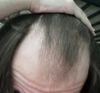
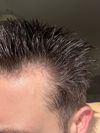
TLDR The hair loss is likely due to a fade haircut.
An 18-year-old transgender man presented with hair loss and varying hair lengths, initially thought to be a "fade" hairstyle, but was diagnosed with trichotillomania after observing hair-pulling behavior. Trichotillomania, more common in females in adulthood, often precedes mental health disorders like depression and anxiety. Differential diagnoses include androgenetic alopecia and tinea capitis. Behavioral therapy is the primary treatment, with N-acetylcysteine showing potential benefits. The patient continued his current medication regimen and cognitive behavioral therapy, with education on trichobezoar symptoms, and was scheduled for a follow-up in 6 months.
21 citations
,
November 2012 in “Plastic and Reconstructive Surgery” Both genetic and lifestyle factors significantly affect female hair loss.
March 2022 in “International Journal of Trichology” Smoking may worsen hair loss, but more research is needed.
37 citations
,
April 2013 in “Plastic and Reconstructive Surgery” Genetic and environmental factors, like smoking and exercise, affect male hair loss.
PCOS is a common hormonal disorder with symptoms like irregular periods and excess hair growth, managed with lifestyle changes and medications.
January 2022 in “Journal of Ayurveda case reports” Ayurvedic treatment significantly reduced hair loss and improved hair quality in a 30-year-old male.
32 citations
,
January 1986 in “The Journal of Dermatologic Surgery and Oncology” Surgical correction can treat hair loss in black women caused by styling practices, with techniques chosen based on individual needs and hair loss severity.