 February 2009 in “Journal of The American Academy of Dermatology”
 Atopic dermatitis significantly lowers the quality of life for infants and their families.
 May 2024 in “Animal genetics”
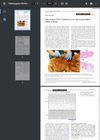
 The researchers investigated a Maine Coon cat with suspected classical Ehlers-Danlos Syndrome and discovered a heterozygous deletion in the COL5A1 gene, underscoring the value of whole-genome sequencing for precise veterinary diagnostics.
 January 2025 in “Organics”
 This study found that differently charged micelles influence the acid-base equilibria of cetirizine by altering its ionization constants, indicating potential interactions with biomolecules of various charges under physiological conditions.
September 2025 in “Value in Health”  June 2026 in “Strathprints: The University of Strathclyde institutional repository (University of Strathclyde)”
 In this study, researchers found that inhibiting IKKα in patient-derived CCS tumour models reduces tumour viability, supporting the potential for topical IKKα inhibitors as a treatment for CCS.
December 2025 in “Egyptian Reviews for Medical and Health Sciences .” This study found that, among patients in Ismailia, Egypt, patchy alopecia areata was the most common form, with a significant positive correlation between the number of lesions and disease severity, and noted males predominantly affected by this condition.
 February 1998 in “American Journal of Health-System Pharmacy”
 This article discusses Yale–New Haven Hospital's high ranking as a contender in the Abbott quality awards and reports no new research findings.
2 citations
,
July 2024 in “Journal of Cosmetic Dermatology” The HAIR-Q is a reliable tool for assessing patient satisfaction with hair loss treatments.
December 2012 in “http://isrctn.org/>”  June 2026 in “International Journal of Drug Delivery Technology”
 This study developed a Hyaluronic acid-Carbopol liposomal gel co-loaded with Adapalene and Clindamycin Phosphate, optimized to improve skin penetration and anti-acne efficacy, showing enhanced drug delivery, superior clinical effectiveness, and excellent skin tolerability compared to commercial formulations.
2 citations
,
August 2009 in “Journal of advances in medical and biomedical research” This study found that 2.9% of adolescents in Zanjan, Iran, have polycystic ovarian syndrome, with prevalence similar to other societies.
July 2025 in “Food Safety and Health” This study used metabolomics to identify distinctive metabolic and phenolic profiles in American ginseng (Panax quinquefolius) from various regions, revealing specific biomarkers that can help differentiate between ginseng from Northeast China, Shandong, and the United States.
 February 2022 in “Pakistan Armed Forces Medical Journal”
 This study concluded that androgenetic alopecia more severely impacts the quality of life of females compared to males among Pakistani patients, as measured by Skindex-29 scores.
May 2025 in “CPT Pharmacometrics & Systems Pharmacology” This study examined the safety profile of ritlecitinib, a drug for alopecia areata, and found that it does not cause significant QTc prolongation or severe lymphopenia, with no unique safety risks expected in adolescents.
![Benzo[c]quinolizin-3-ones: A Novel Class of Potent and Selective Nonsteroidal Inhibitors of Human Steroid 5α-Reductase 1](/images/assets/ff6e6cbe-cb9c-4d11-87ef-671d28ffd4fa/small/15506.jpg) 28 citations
,
September 2000 in “Journal of Medicinal Chemistry”
28 citations
,
September 2000 in “Journal of Medicinal Chemistry” This study identified novel compounds as selective inhibitors of the type 1 isoenzyme of 5α-reductase, displaying promising potential for treating DHT-dependent disorders such as acne and androgenic alopecia.
 2 citations
,
August 2022 in “The journal of investigative dermatology/Journal of investigative dermatology”
2 citations
,
August 2022 in “The journal of investigative dermatology/Journal of investigative dermatology” This review discusses the genetic origins of autosomal recessive woolly hair with hypotrichosis and reports no clinical results; it highlights the link to homozygous variants in the K25 keratin gene.
 July 2025 in “International Journal of Ayurveda and Pharma Research”
 This study reported that a month-long treatment using the Ayurvedic methods of leech therapy, herbal paste application, and rejuvenative medications resulted in visible improvement in scalp condition and hair density for a 32-year-old female with androgenetic alopecia.
 April 2023 in “Journal of Investigative Dermatology”
 This study found that long-term imiquimod treatment on mice intensified skin inflammation early on, but topical corticosteroids significantly reduced skin infiltration and inflammatory cytokines after initial inflammation subsided.
27 citations
,
June 2020 in “Genes” This study identified multiple loss of function variants in the HR gene linked to the unique hair coat phenotype in lykoi cats, also known as werewolf cats.
 39 citations
,
October 2015 in “Case Reports”
39 citations
,
October 2015 in “Case Reports” In this case series, four adults developed severe, disabling multisymptom illness potentially linked to fluoroquinolone use, which persisted and progressed even after discontinuation of the drug.

This study evaluated an online survey tool designed to identify polycystic ovary syndrome, identifying areas for improvement that can aid in accurately assessing PCOS prevalence in general populations.
 2 citations
,
December 2019 in “International Journal of Medical Research and Review”
2 citations
,
December 2019 in “International Journal of Medical Research and Review” This study found that Tinea Corporis significantly impacts the quality of life of patients, with disease duration and body surface area involved being key factors.
6 citations
,
July 2025 in “Cancer Medicine” This study reported that ZSYY001, a nanoparticle formulation of polymeric micellar paclitaxel, showed promising antitumor activity and was safe and well-tolerated in preclinical models and a phase I trial, without acute hypersensitivity reactions at doses up to 390 mg/m².
 December 2023 in “Research Journal of Pharmacy and Technology”
 In this study, Hibiscus rosa-sinesis flower extract was found to contain 0.33% quercetin according to HPTLC analysis and 0.37% according to HPLC. Heavy metals measured were within acceptable limits, supporting the standardization of the plant material for efficacy and safety testing.
 16 citations
,
August 2004 in “Tetrahedron”
16 citations
,
August 2004 in “Tetrahedron” In this study, all stereoisomers of cyoctol were synthesized and tested, revealing that contrary to initial patent claims, cyoctol does not function as an anti-androgen.
January 2009 in “Repositório Científico do Instituto Politécnico de Viseu (Instituto Politécnico de Viseu)” This case study found that a skin lesion in a Samoyed dog did not match any single known follicular cyst or neoplasm type described in the literature.
 June 2026 in “Zenodo (CERN European Organization for Nuclear Research)”
 In this study, quercetin and kaempferol, two plant-derived flavonoids, showed stronger binding affinities to JAK3 kinase and moderate binding to 5-alpha reductase type 2, suggesting their potential as natural treatments for androgenetic alopecia, with quercetin demonstrating suitable properties for topical application.

This study analyzed stable isotopes in animal fibers from Bronze and Iron Ages sites in Xinjiang, China, revealing that caprines and cattle primarily consumed C3 plants, while some Iron Age individuals showed unusual high C4 plant intake likely linked to millet foddering practices.
 September 2022 in “Piretc”
 This article reviews the lexical features and development of modern British slang, exploring linguistic, cultural, and social group specifics but reports no new research results.
September 2000 in “PubMed”