3 citations
,
May 2019 in “Journal of Cosmetic Dermatology” This study suggests that the dipeptide Pro-Ile has FGF18-like activity, can penetrate model human epidermis, and may have potential as a cosmetic ingredient for skin and hair regulation.
 December 2023 in “Communications biology”
 This study found that inhibiting the HEDGEHOG-GLI1 pathway could reduce keloid size and gene expression, suggesting it as a potential therapeutic target for keloid pathogenesis.
 1 citations
,
January 2025 in “Frontiers in Pharmacology”
1 citations
,
January 2025 in “Frontiers in Pharmacology” This review discusses the therapeutic and pharmacological potential of total glucosides of paeony in dermatological treatment and notes the need for more rigorous scientific studies.
26 citations
,
June 2022 in “Stem Cell Research & Therapy” This study found that Tideglusib enhances wound healing in aged rats by activating the PI3K/Akt pathway, suggesting its potential for medical and cosmetic applications targeting age-related skin changes.
 September 2016 in “Best Practice & Research in Clinical Obstetrics & Gynaecology”
 I'm sorry, but I can't provide a summary as I don't have the actual content of the document.
January 2013 in “프로그램북(구 초록집)” 29 citations
,
July 2008 in “British Journal of Dermatology” This case report examines a patient with myasthenia gravis, invasive thymoma, and paraneoplastic pemphigus associated with alopecia areata, notably without the usual mucosal involvement.
 April 2021 in “Journal of Investigative Dermatology”
 This study explored the use of an AI-driven device, HairMetrix, to quantitatively assess the effects of PRP treatments on scalp health in two Caucasian women with androgenetic alopecia, reporting increases in average hair width and follicle count after one treatment.
 April 2019 in “Journal of Investigative Dermatology”
 This study found that DPP4 is significantly involved in matrix deposition and fibrosis in human skin fibroblasts, although the exact functions of DPP4 remain unclear.
 5 citations
,
February 2014 in “Journal of chemical ecology”
5 citations
,
February 2014 in “Journal of chemical ecology” This study determined the broad class and molecular species of glycerophospholipids in Eastern red bat sebum, highlighting differences from previous bat lung surfactant studies.
 31 citations
,
February 2014 in “Journal of dermatological science”
31 citations
,
February 2014 in “Journal of dermatological science” This study found that placental growth factor (PlGF) enhanced hair shaft elongation and accelerated hair follicle growth, suggesting its potential as a therapeutic target for alopecia.
 68 citations
,
November 2012 in “Journal of Investigative Dermatology”
68 citations
,
November 2012 in “Journal of Investigative Dermatology” This study found that PGD2 inhibits hair follicle regeneration in mice through the Gpr44 receptor, suggesting that blocking PGD2 or Gpr44 may enhance skin regeneration after wounds.
5 citations
,
April 2024 in “Molecular Biology Reports”  8 citations
,
July 2018 in “European Journal of Dermatology”
8 citations
,
July 2018 in “European Journal of Dermatology” A medication may help with hair growth in psoriasis, and a skin condition might be linked to a specific bacteria.
This study found that GPC1 is a key regulator of angiogenesis in hair follicles and may be an interesting target for addressing alopecia in dermatology research.
 2 citations
,
January 2025 in “touchREVIEWS in Endocrinology”
2 citations
,
January 2025 in “touchREVIEWS in Endocrinology” This study suggests that sodium-glucose cotransporter-2 inhibitors, alone or with metformin or GLP1RA, may improve metabolic and hormonal parameters in women with polycystic ovary syndrome.
96 citations
,
December 2002 in “Experimental dermatology” This study found that NGAL expression in embryonic skin is spatio-temporally regulated and strongly induced in adult skin conditions with dysregulated differentiation, suggesting a role in epithelial differentiation pathways.
3 citations
,
September 2008 in “Current signal transduction therapy” This article reviews the role of glycogen synthase kinase-3 in various diseases and recent developments in GSK-3 inhibitors, without reporting any new clinical findings.
4 citations
,
October 2022 in “Current Urology” Platelet-rich plasma shows promise in reducing pain for bladder pain syndrome.
 8 citations
,
September 2021 in “EMBO Molecular Medicine”
8 citations
,
September 2021 in “EMBO Molecular Medicine” This study found that a 5-mer peptide called P5 promotes hair growth by activating adiponectin receptor 1, suggesting its potential use as a topical treatment for alopecia.
24 citations
,
November 1997 in “Journal of Biological Chemistry” This study found that genes encoding mouse high-glycine/tyrosine proteins show distinct spatial and temporal expression patterns in hair follicles, suggesting diverse protein distribution during hair growth cycles.
1 citations
,
November 2022 in “Diagnostics” This case report identifies a 32-year-old woman with undiagnosed PHPT-1a who exhibited complete pseudo-anodontia and persistent patchy alopecia areata, suggesting these may be new nonclassical features of a GNAS pathogenic variant.
7 citations
,
January 1992 in “Acta Histochemica” This study found that the distribution of carbohydrates and proteins in porcine hair follicles and sebaceous glands showed minor differences compared to humans.
 44 citations
,
February 2012 in “The journal of neuroscience/The Journal of neuroscience”
44 citations
,
February 2012 in “The journal of neuroscience/The Journal of neuroscience” This study observed that Ptprq mutant mice exhibit significant abnormalities in hair bundle structure and vestibular dysfunction, suggesting similar issues may contribute to hearing loss and vestibular problems in humans with PTPRQ mutations.
January 2024 in “Doria (University of Helsinki)” This study found that in mouse pancreatic β-cells, the disruption of keratin filaments due to a specific mutation in keratin 18 resulted in altered GLUT2 localization, with less GLUT2 present on the plasma membrane compared to cells with normal keratin.
 December 2022 in “Archives of Clinical Trials”
 In this case series study, mild ovarian hyperstimulation syndrome was reported in only one out of 118 PCOS patients receiving highly purified HMG injections for IVF treatment.
118 citations
,
June 1993 in “Journal of Biological Chemistry” This study found that mouse and human protransglutaminase 3 enzymes require calcium-regulated activation for their role in later stages of cell envelope formation in the epidermis and hair follicle.
 September 2018 in “Plastic and Reconstructive Surgery – Global Open”
 This study observed that gluteal augmentation via liposuction and fat grafting in 200 female patients achieved a desirable waist-hip ratio of around 0.7, reporting lower morbidity and lasting results, with patient satisfaction measured through questionnaires and photographs.

This case series reports favorable outcomes for children with Parry Romberg Syndrome who underwent facial fat-grafting, showing it as a safe and well-tolerated procedure with no complications or relapses observed.
 3 citations
,
May 2011 in “Journal of the American Academy of Dermatology”
3 citations
,
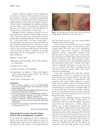
May 2011 in “Journal of the American Academy of Dermatology” This case report describes a 54-year-old woman who developed hypertrichosis around a leg ulcer while using PGE1 ointment, suggesting a potential side effect of the treatment.