 2 citations
,
March 2004 in “Journal of the American Academy of Dermatology”
2 citations
,
March 2004 in “Journal of the American Academy of Dermatology” This study found that a 60-second timed hair count is a practical and reproducible method for women to document hair shedding and treatment response at home, with significant differences in hair shedding observed between age groups in follow-up results.
 1 citations
,
March 2004 in “Journal of the American Academy of Dermatology”
1 citations
,
March 2004 in “Journal of the American Academy of Dermatology” This study reports a strong association between the MICA locus, specifically the MICA∗3-DR∗6-DQ6 haplotype, and Alopecia Areata in families.
 126 citations
,
January 2001 in “World Journal of Surgery”
126 citations
,
January 2001 in “World Journal of Surgery” This review discusses current treatment options for liver hydatidosis, noting the potential benefits and limitations of chemotherapy and highlighting the need for more clinical trials to prevent recurrent disease; it reports no new findings.
 54 citations
,
September 2012 in “Dermatologic Clinics”
54 citations
,
September 2012 in “Dermatologic Clinics” This review discusses possible medication-induced hair loss and the need to exclude other confounding factors like stress and illness; it reports no new clinical findings and emphasizes careful assessment before attributing hair loss to medications.
 7 citations
,
July 2018 in “International Journal of Applied Pharmaceutics”
7 citations
,
July 2018 in “International Journal of Applied Pharmaceutics” This study found that optimizing chitosan-tripolyphosphate nanoparticles can enhance the sustained percutaneous delivery of caffeine, with certain conditions affecting stability and release rates.
 4 citations
,
December 2013 in “International Journal of Dermatology”
4 citations
,
December 2013 in “International Journal of Dermatology” This correspondence discusses nasal sporotrichosis in children and does not report any clinical results.
 3 citations
,
November 2017 in “International Journal of Pharmacy and Pharmaceutical Sciences”
3 citations
,
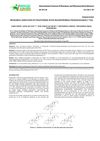
November 2017 in “International Journal of Pharmacy and Pharmaceutical Sciences” This study identified new oxidative derivatives of finasteride, including a newly discovered metabolite, by using the fungus Macrophomina phaseolina.
 1 citations
,
August 2020 in “Food Research”
1 citations
,
August 2020 in “Food Research” This review discusses management strategies for androgenic alopecia using plant derivatives and highlights the need for prolonged efficacy but reports no new clinical findings.
 March 2025 in “Jurnal Farmamedika (Pharmamedica Journal)”
 In this study, Indonesian spices were screened in silico for their potential to inhibit MMP9 and TNFα, which are involved in chronic diabetic wounds, and procyanidin was identified as the most promising therapeutic candidate due to its low binding energy to both proteins.
 January 1953 in “The Lancet”
 Alopecia areata's causes are unclear, treatments exist but relapses are common.
 56 citations
,
June 1970 in “The BMJ”
56 citations
,
June 1970 in “The BMJ” Drug addicts often have scars, skin color changes, blocked veins, and bruising, with severe ulcers from barbiturate injections.
 44 citations
,
March 1991 in “International Journal of Dermatology”
44 citations
,
March 1991 in “International Journal of Dermatology” This article presents two cases of tinea capitis in postpubertal individuals highlighting the importance of early treatment to prevent scarring and permanent hair loss; it reports no new clinical results.
 36 citations
,
November 2000 in “Journal of the American Academy of Dermatology”
36 citations
,
November 2000 in “Journal of the American Academy of Dermatology” This case study describes a unique patient with dermatomyositis who exhibited features of pityriasis rubra pilaris and porokeratosis, suggesting markers for malignancy warranting thorough investigation and monitoring.
 25 citations
,
July 1994 in “Archives of Dermatology”
25 citations
,
July 1994 in “Archives of Dermatology” This study describes a patient with metastatic renal cell carcinoma who experienced a recurrence of pemphigus vulgaris after receiving interleukin 2 immunotherapy, suggesting a possible link between the treatment and autoimmune disease recurrence.
 17 citations
,
January 2011 in “Indian journal of dermatology, venereology, and leprology”
17 citations
,
January 2011 in “Indian journal of dermatology, venereology, and leprology” This paper describes a rare case of keratosis follicularis spinulosa decalvans in a nine-year-old girl, a condition typically more severe in males due to its X-linked inheritance.
 13 citations
,
September 2011 in “Archives of dermatology”
13 citations
,
September 2011 in “Archives of dermatology” This case report describes a 3-year-old male with X-linked ichthyosis and associated neurologic abnormalities, identifying an unusual cortical development malformation and suggesting that abnormal hair banding may assist diagnosis.
 11 citations
,
January 2013 in “Ocular Surface”
11 citations
,
January 2013 in “Ocular Surface” This review summarizes the ophthalmic complications of common periocular aesthetic treatments but reports no new clinical findings, emphasizing the importance of recognizing potential side effects.
 10 citations
,
March 1990 in “The Journal of Dermatology”
10 citations
,
March 1990 in “The Journal of Dermatology” In this study, a psoriatic patient developed retinoid-induced granulation tissue after long-term oral etretinate therapy, suggesting prolonged use may lead to delayed wound healing.
 9 citations
,
November 2000 in “Journal of the American Academy of Dermatology”
9 citations
,
November 2000 in “Journal of the American Academy of Dermatology” This report presents a rare case of a patient with type Wong dermatomyositis who also exhibits clinical and histologic features of porokeratosis, potentially signaling associated malignancies in dermatomyositis patients.
 2 citations
,
June 2018 in “Journal of the American Academy of Dermatology”
2 citations
,
June 2018 in “Journal of the American Academy of Dermatology” This review discusses various nail changes in alopecia areata and suggests that they may be more prevalent than previously recognized, impacting quality of life and potentially indicating disease progression.
 1 citations
,
January 2015 in “Journal of Pigmentary Disorders”
1 citations
,
January 2015 in “Journal of Pigmentary Disorders” This article reviews melasma in men, its causes, and treatment options, but reports no new clinical findings.
 1 citations
,
January 2014 in “International Journal of Trichology”
1 citations
,
January 2014 in “International Journal of Trichology” This case report describes a 35-year-old woman with diffuse partial woolly hair occurring alongside epidermolysis bullosa with mottled pigmentation.
 August 2010 in “Journal of Investigative Dermatology”
 New hair regrowth model introduced, imiquimod kills skin cancer cells, T-cadherin loss makes skin cancer more invasive, no strong link between PTCH1 gene and skin cancer after transplant, and male teens more likely to have hereditary hair loss.
 July 2010 in “British Journal of Dermatology”
 New hair regrowth model proposed, imiquimod found to kill skin cancer cells, T-cadherin loss linked to invasive skin cancer, no clear gene link to skin cancer after transplant, and study on children's hair loss shows male dominance and genetic ties.
 January 2026 in “Dermatology Practical & Conceptual”
 This study observed that 78.3% of patients with alopecia areata exhibited nail changes detectable by dermoscopy, notably nail pitting, in contrast to 14.2% of healthy controls, with these changes significantly associated with disease severity, age, and duration.
 January 2026 in “Dermatology and Therapy”
 This study suggests that using UVFD to examine non-pigmented facial lesions can potentially enhance diagnostic accuracy and reduce unnecessary biopsies.
 January 2024 in “Dermatology Practical & Conceptual”
 In this study, researchers identified the presence of a "spotted lunula" as a rare sign in patients with alopecia areata, detailing its clinical and onychoscopic features.
 June 2017 in “JPRAS Open”
 This case report describes a successful hair transplant surgery using the follicular unit extraction method to restore a bald area following scalp tumor resection and skin grafting, highlighting its utility in such complex cases.
 April 2017 in “Australasian Journal of Dermatology”
 Different skin conditions show distinct types of vessel inflammation, a new quality of life index for vulval disease is reliable, a certain intrauterine system might be linked to chronic vaginal yeast infections, and oral minoxidil reduces hair loss in women.
 November 2015 in “European Journal of Inflammation”
 This review discusses the potential pathogenic mechanisms of cicatricial alopecia and emphasizes the need for further research on treatment methods, but it reports no new clinical findings.