 July 2018 in “Our Dermatology Online”
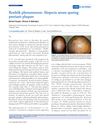
 In this study, researchers examined the under-studied mechanisms behind specific dermatological phenomena such as co-localization, Wolf's isotopic phenomenon, Koebner's isomorphic phenomenon, and the recently described Renbök phenomenon, noting that only a few cases have been reported so far.
11 citations
,
September 2024 in “Journal of Advanced Research” This study found that PC 3DP models are reliable preclinical tools that could potentially customize treatment strategies and predict patient prognoses by correlating drug sensitivity profiles with clinical outcomes, though larger patient cohort validation is needed to confirm clinical utility.
January 2023 in “Zenodo (CERN European Organization for Nuclear Research)” This article reviews the polycystic ovary syndrome as a polyendocrine disease, detailing its etiology, pathogenesis, and research methods, but presents no new clinical results.
 September 2017 in “Journal of Investigative Dermatology Symposium Proceedings”
 This report highlights four cases where squamous cell carcinoma was misdiagnosed in individuals with darker skin, emphasizing the challenges in accurate diagnosis for this population.
 April 2025 in “BMC Urology”
 This case report highlighted a rare occurrence of both adrenocortical carcinoma and uric acid kidney stones in a 5-year-old boy, with hormonal levels and clinical symptoms returning to normal after treatment and no recurrence over four years, emphasizing comprehensive endocrine evaluations in pediatric ACC management.
6 citations
,
May 2000 in “Pediatric Dermatology” This article discusses a case study supporting the reclassification of KID syndrome as an ectodermal dysplasia, introducing a potential treatment combination that may alleviate symptoms in affected patients.
 2 citations
,
December 2013 in “Veterinary dermatology”
2 citations
,
December 2013 in “Veterinary dermatology” This study describes three adult dogs with sebaceous gland dysplasia, reporting that two showed moderate to marked improvement in symptoms with treatment, though ongoing management is required as the condition cannot be cured.
November 2024 in “Journal of Investigative Dermatology” Blocking the JAK/STAT pathway may help reduce skin sensitivity in Xeroderma pigmentosum.
October 2019 in “European Journal of Dermatology” This review discusses the diagnosis and treatment of pityriasis rubra pilaris and reports no new clinical results.
297 citations
,
December 2005 in “Journal of controlled release” This study found that POD-loaded solid lipid nanoparticles using 0.5% poloxamer 188 and 1.5% soybean lecithin (P-SLN) improved epidermal targeting and POD accumulation in porcine skin compared to traditional tincture.
 January 2023 in “Skin appendage disorders”
 This case report describes a patient who experienced proton-induced alopecia after proton therapy for a frontal meningioma, which was effectively treated with topical minoxidil, resulting in full hair regrowth after 4 months.
 14 citations
,
January 2001 in “Current Treatment Options in Oncology”
14 citations
,
January 2001 in “Current Treatment Options in Oncology” Treat limited stage small cell lung cancer with chemotherapy and radiation, and consider preventive brain radiation for better survival chances.
 January 2022 in “bioRxiv (Cold Spring Harbor Laboratory)”
 This study suggests that typical skin lesions in Carney complex may originate from the pro-melanogenic activity of a specific dermal fibroblast population influenced by PKA signaling.
 62 citations
,
September 2014 in “PLoS ONE”
62 citations
,
September 2014 in “PLoS ONE” This study identified distinct human and bacterial protein profiles in sebaceous follicular casts, with acne samples showing proteins linked to inflammation and normal samples showing proteins involved in stress protection.
 25 citations
,
October 2018 in “Journal of The American Academy of Dermatology”
25 citations
,
October 2018 in “Journal of The American Academy of Dermatology” This study concluded that erosive pustular dermatosis of the scalp may be a type of spongiotic, pustular superficial folliculitis, sharing similarities with other neutrophilic dermatoses.
November 2015 in “Bulletin of University of Agricultural Sciences and Veterinary Medicine Cluj-Napoca Veterinary Medicine” This article discusses the complexities of diagnosing pituitary dependent hyperadrenocorticism in dogs and reports no new clinical findings, highlighting issues with varied symptoms and episodic hormone secretion complicating diagnosis.
January 2013 in “Вестник Томского государственного университета. История” This study suggests that the presence of vellus hairs and empty spaces in prepubertal scalps may reflect a natural resting phase of hair growth rather than indicating early androgenetic alopecia.
January 2006 in “International water power & dam construction” This report details a rare case of late-onset, bilateral nevus comedonicus on the eyelids in a 79-year-old man, discussing its clinical presentation and histopathologic features without presenting new research findings.
47 citations
,
August 2016 in “American Journal Of Pathology” This study reports that in systemic sclerosis, CD34+ dermal fibroblasts transition to CD34−, podoplanin+, and CD90+ fibroblasts across the dermis, suggesting a role in unchecked fibrosis.

In this case report, an 8-year-old Spitz dog with refractory dermatophytosis showed significant clinical improvement after switching to posaconazole, chosen based on antifungal susceptibility testing, offering a promising treatment option for dogs unresponsive to standard antifungal therapies.
8 citations
,
January 1984 in “Veterinary Pathology” This study found no conclusive link between prolonged mibolerone treatment and perifollicular mineralization in toy poodles, suggesting it may instead be a senile change common in the breed.
 12 citations
,
June 2012 in “Revista da Sociedade Brasileira de Medicina Tropical”
12 citations
,
June 2012 in “Revista da Sociedade Brasileira de Medicina Tropical” This case study reported a rare infection by Trichosporon inkin, causing white piedra in a family in Southern Brazil, emphasizing the importance of molecular tools for precise identification.
 September 2025 in “Cureus”
 In this case report, the researchers documented a rare instance of plica neuropathica, characterized by matted and twisted hair, occurring alongside diffuse alopecia, marking the first such documented association and emphasizing its diagnostic challenges in identifying causes of alopecia.
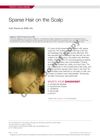
This case study describes a young girl with sparse, brittle scalp hair and multiple keratotic papules, but no systemic or familial abnormalities were found.
72 citations
,
December 2018 in “Journal of Experimental Zoology Part B Molecular and Developmental Evolution” This review provides an overview of the molecular evolution of corneous beta-proteins in reptiles and birds, highlighting their distinct genetic origin and role in epidermal structures, but reports no new results.
 April 2017 in “Turkish Journal of Pediatric Disease”
 This study found that 20% of children initially diagnosed with premature pubarche were later identified with other conditions like central puberty precox or congenital adrenal hyperplasia during follow-up, emphasizing the importance of ongoing differential diagnosis.
21 citations
,
April 2000 in “Journal of Cutaneous Pathology” This case report describes a 22-year-old woman with a nevoid plaque termed localized follicular hamartoma, characterized by skin-colored papules and specific cellular and structural features.
 14 citations
,
June 2013 in “Joint Bone Spine”
14 citations
,
June 2013 in “Joint Bone Spine” This review discusses current anti-inflammatory treatment options for calcium pyrophosphate crystal deposition disease (CPPD) and highlights the lack of crystal-targeted therapies, emphasizing the need for more research to guide treatment.
 1 citations
,
August 2005 in “British Journal of Dermatology”
1 citations
,
August 2005 in “British Journal of Dermatology” This case report describes a 7-year-old girl who developed widespread erythroderma and systemic symptoms after ingesting clobetasone butyrate cream, despite previous psoriasis treatment.
12 citations
,
December 1965 in “Immunology and Cell Biology” This study found that experimentally induced calcification in rat skin led to rapid and localized mineralization in hair follicles, progressing to more extensive calcification with prior hypercalcemic treatment.