July 2026 in “npj Regenerative Medicine” This study found that applying Laponite clay gels to skin wounds in mice did not speed up wound closure but significantly improved healing quality compared to phosphate-buffered saline or alginate treatments, with benefits such as enhanced re-epithelialization and hair follicle stimulation near wounds.
13 citations
,
March 2000 in “Veterinary Dermatology” This study characterized a novel form of mural folliculitis in dogs, resembling human pseudopelade, marked by persistent alopecia, lymphocyte infiltration, and severe follicular atrophy without effective treatment response.
September 2021 in “CRC Press eBooks” This review discusses erosive pustular dermatosis of the scalp, including its characteristics, potential triggers, and its classification as a neutrophilic dermatosis, but reports no new clinical findings.
57 citations
,
January 1987 in “Journal of Biological Chemistry” This study identified and sequenced several keratin cDNA clones showing distinct expression patterns in mouse epithelia, with in situ hybridization highlighting differences in keratin distribution between normal and hyperproliferative tissues.
2 citations
,
January 2019 in “Acta dermato-venereologica” 6 citations
,
June 1986 in “The Journal of Dermatology” This report discusses a case of reticular erythematous mucinosis syndrome, highlighting minimal mucin deposition and significant lymphocytic infiltration around the hair follicle, contributing to the ongoing debate about its nature as a mucinosis.
 June 2026 in “World Journal of Clinical Pediatrics”
 This study highlights the importance of recognizing non-nutritional forms of rickets, which can manifest with subtle symptoms like alopecia and cataracts, and emphasizes that a comprehensive diagnostic approach, including genetic testing, can improve management and treatment outcomes.
 5 citations
,
October 2015 in “The American journal of pathology”
5 citations
,
October 2015 in “The American journal of pathology” This study found that a spontaneous deletion in the Dsg3 gene of mice leads to hypomorphic desmoglein 3 expression, resulting in severe immunodeficiency, cyclic hair loss, and wasting disease, without causing the blistering typical of pemphigus vulgaris.
7 citations
,
June 2017 in “Journal of Cutaneous Pathology” This study reports a case of cystic panfolliculoma, highlighting the role of epithelial-mesenchymal interactions in its pathogenesis and explaining its histological resemblance to trichofolliculoma.
2 citations
,
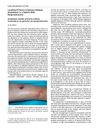
October 2023 in “Skin Health and Disease” This case report describes a rare instance of alopecia neoplastica, where breast cancer metastasized to the scalp, which can be mistakenly diagnosed as alopecia areata.
 3 citations
,
March 2012 in “Actas Dermo-Sifiliográficas”
3 citations
,
March 2012 in “Actas Dermo-Sifiliográficas” An elderly man with skin amyloidosis and abnormal blood proteins was monitored without finding widespread disease after 18 months.
5 citations
,
January 2016 in “International Journal of Trichology” This case report describes two patients who experienced loose anagen hairs and pili torti, resulting in nonscarring alopecia, potentially linked to erlotinib treatment for solid tumors.
1 citations
,
February 2014 in “Italian journal of medicine” This case study describes the clinical presentation and diagnostic findings of an 80-year-old woman with Cronkhite-Canada syndrome.
 April 2018 in “The journal of investigative dermatology/Journal of investigative dermatology”
 This study found that in a mouse model of Focal Dermal Hypoplasia, treatment with lithium carbonate improved skin disease symptoms compared to controls, though disease severity varied and posed interpretation challenges.
January 2026 in “Indian Journal of Paediatric Dermatology” In this case report, a 14-year-old boy was diagnosed with nevus comedonicus, a condition characterized by dilated follicular openings filled with keratin, presenting in a Blaschkoid pattern; treatment with topical tretinoin 0.1% cream was recommended.
 9 citations
,
August 2013 in “Facial Plastic Surgery Clinics of North America”
9 citations
,
August 2013 in “Facial Plastic Surgery Clinics of North America” This article reviews nonscarring and scarring hair loss conditions that may mimic androgenetic alopecia, reporting no new clinical results and highlighting the need for accurate diagnosis in hair restoration surgery.
June 2025 in “British Journal of Dermatology” In this study, researchers describe a rare case of trichoepitheliomas in a 7-year-old boy, characterized by multiple skin lesions in a Blaschko-linear pattern, hypothesizing it as a type 1 segmental mosaicism without detected CYLD gene mutations.
 March 2026 in “Scientific Journal”
 This case study reported a 15-year-old girl with a nevus sebaceus of Jadassohn, where a secondary neoplasm potentially developed into either pigmented trichoblastoma or pigmented basal cell carcinoma, highlighting the importance of early recognition and evaluation of such lesions for effective management.
 January 2018 in “The Kaohsiung journal of medical sciences”
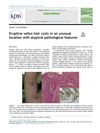
 This case report describes an atypical presentation of eruptive vellus hair cysts on the elbows, where standard diagnostic techniques were unreliable due to the loss of cystic structural integrity.
 6 citations
,
December 2013 in “Journal of Cosmetic Dermatology”
6 citations
,
December 2013 in “Journal of Cosmetic Dermatology” This article reviews the use of pigmented concealing powders as a viable cosmetic option for patients with alopecia, noting the potential for a more natural appearance compared to traditional hairstyling or hairpieces, but it presents no new clinical results.
28 citations
,
June 1995 in “The Journal of Dermatology” This study reports that flaky skin mice exhibit skin and nail features that closely resemble human psoriasis vulgaris, suggesting they may serve as a natural model for this condition.
February 2025 in “Gastroenterology” Corticosteroids improved symptoms in a man with Cronkhite-Canada Syndrome.
June 2025 in “Dermatologic Surgery” This article reviews multiple noncutaneous manifestations of pityriasis rubra pilaris, such as subungual hyperkeratosis and hair loss, but reports no new clinical results.
37 citations
,
August 2000 in “Journal of Cutaneous Pathology” This study found that keratin immunohistochemistry suggests neoplastic cells in eccrine and apocrine poromas are closely related to dermal sweat duct cells, but cannot differentiate these poromas based solely on keratin patterns.
 21 citations
,
January 2015 in “Dermatologic Therapy”
21 citations
,
January 2015 in “Dermatologic Therapy” This letter discusses a case of erosive pustular dermatosis of the scalp linked to topical latanoprost use for androgenetic alopecia, but reports no clinical results.
 3 citations
,
June 2023 in “Cureus”
3 citations
,
June 2023 in “Cureus” This case study describes a 4-year-old boy whose neck tumor was initially misdiagnosed as scrofuloderma before being correctly identified as a pilomatricoma, underscoring the need to include pilomatricoma in differential diagnoses for persistent skin lesions.
40 citations
,
March 1991 in “Journal of Investigative Dermatology” 13 citations
,
November 1985 in “International Journal of Dermatology” This study examined patients with trichostasis spinulosa and identified distinct differences in the distribution and microscopic appearances of lesions compared to keratosis pilaris and eruptive vellus hair cysts.
April 2011 in “www.virtualization.info” This report describes a case of trachyonychia with associated various types of lichen planus in a young male, highlighting the importance of accurate diagnosis for effective treatment.
6 citations
,
March 2018 in “Proceedings - Baylor University. Medical Center” This case report describes a patient with sarcoidosis who experienced severe symptomatic hypercalcemia, scarring alopecia, and acute-on-chronic kidney failure.