114 citations
,
October 2006 in “Journal of the European Academy of Dermatology and Venereology” In this study, clobetasol propionate foam demonstrated effectiveness and good patient compliance as a safe topical treatment for moderate to severe alopecia areata, with significant hair regrowth compared to placebo.
October 2006 in “Clinical Cancer Research” This study found that doxorubicin-induced oxidative stress downregulates FLIPs and phosphorylates EF2, sensitizing prostate cancer cells to TRAIL; antioxidants may reduce doxorubicin's effectiveness, warranting further investigation.
April 2006 in “Journal of Korean Pharmaceutical Sciences” This study found that Procare and Proscar® finasteride tablets were bioequivalent according to Korea Food and Drug Administration guidelines in healthy male subjects.
March 2026 in “SKIN The Journal of Cutaneous Medicine” This study found that ritlecitinib was well tolerated in children aged 6 to under 12 years with severe alopecia areata, with ongoing trials examining its efficacy and safety over a 24-week period and in long-term use up to 36 months.
October 2020 in “Der Hautarzt” This case study demonstrated that off-label tofacitinib treatment led to full regrowth of scalp hair after 18 months in a patient with alopecia areata universalis, following unsuccessful therapies.
3 citations
,
January 2025 in “Journal of Cutaneous Medicine and Surgery” Many patients with alopecia areata relapse after stopping tofacitinib.
 146 citations
,
July 2003 in “Journal of the American Academy of Dermatology”
146 citations
,
July 2003 in “Journal of the American Academy of Dermatology” In this study, clobetasol propionate 0.05% ointment was found to induce hair regrowth in 28.5% of patients with severe alopecia areata under occlusive conditions, though long-term benefit was limited to 17.8%.
This study explored new molecular structures as potential COVID-19 treatments, identifying a compound called Hit15 that inhibited viral infection in lab settings and reduced inflammation markers in human neutrophils, suggesting further development is warranted.
 October 2000 in “Pediatrics in Review”
 This report describes a case in which poststreptococcal reactive arthritis in a girl was effectively treated with naproxen, and highlights the importance of considering nongroup A Streptococcus in similar presentations.
 18 citations
,
January 1999 in “CNS Drugs”
18 citations
,
January 1999 in “CNS Drugs” This review discusses challenges in managing cutaneous drug reactions to anticonvulsants and reports no new clinical findings; the authors emphasize the complexity of discontinuing or rechallenging suspected agents.
 1 citations
,
March 2023 in “Science Translational Medicine”
1 citations
,
March 2023 in “Science Translational Medicine” The researchers reported that targeting glycoprotein 130's signaling site in animal models promoted tissue regeneration and reduced osteoarthritis progression through anti-inflammatory and protective effects.
 48 citations
,
April 2019 in “ACS Applied Materials & Interfaces”
48 citations
,
April 2019 in “ACS Applied Materials & Interfaces” In this study, researchers introduced calcium carbonate-based carriers for transdermal drug delivery, observing efficient transport of substances and systemic absorption in rats, suggesting potential applications in regenerative medicine and dermatology beyond conventional topical treatments.
This study found that radiofrequency microneedling significantly enhanced the absorption of topical triamcinolone acetonide, with insertion depth being more influential than RF energy levels.
April 2025 in “Journal of Advances in Medical and Pharmaceutical Sciences” This review highlights the potential of spanlastics, a new type of drug delivery system, to enhance drug administration by offering better deformability and stability compared to other nanocarriers, potentially improving targeted drug delivery across various applications.
 10 citations
,
April 2007 in “Aesthetic Plastic Surgery”
10 citations
,
April 2007 in “Aesthetic Plastic Surgery” This study demonstrated the feasibility of a new patient-controlled method for tissue expansion that achieved full expansion in about 3 weeks with minimal complications after mastectomy.
 February 2026 in “Preprints.org”
 This review synthesizes the latest advances in wound healing and scar management, exploring molecular mechanisms, therapeutic strategies, and providing an evidence-based comparison of topical agents like Dermatix Ultra and Contractubex for scar improvement, aimed at informing clinicians and patients in decision-making.
1 citations
,
December 2023 in “Life” This article discusses the potential role of telocytes in skin regeneration and the need to understand their interaction with platelet-rich plasma, reporting no new experimental results.
 1 citations
,
May 2025 in “Natural Products and Bioprospecting”
1 citations
,
May 2025 in “Natural Products and Bioprospecting” In this study, PEVIII, a nanocomposite chitosan-coated vesicle containing both α-hederin and hederacoside C, demonstrated notable antibacterial activity against Pseudomonas aeruginosa in a keratitis model, showing significant lesion reduction, tissue improvement, and decreased bacterial load and inflammatory markers compared to other treatments.
March 2025 in “Clinical and Experimental Dermatology” In this study, 37.5% of alopecia areata patients treated with tofacitinib were identified as super-responders, with significant predictors for this status being older age and no prior JAK inhibitor treatment, leading to faster and sustained hair regrowth.
July 2026 in “Journal of the American Academy of Dermatology” CRT is more effective than oral minoxidil alone for treating hair loss.
 16 citations
,
August 2004 in “Tetrahedron”
16 citations
,
August 2004 in “Tetrahedron” In this study, all stereoisomers of cyoctol were synthesized and tested, revealing that contrary to initial patent claims, cyoctol does not function as an anti-androgen.
 41 citations
,
December 2015 in “JAMA Dermatology”
41 citations
,
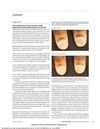
December 2015 in “JAMA Dermatology” Tofacitinib citrate improved nail dystrophy and pain in patients with alopecia universalis without causing side effects.
 August 2025 in “BMJ Open”
 In this randomized controlled trial, researchers are assessing the efficacy and safety of acupoint catgut embedding combined with topical 5% minoxidil in treating androgenetic alopecia among 70 men, with primary outcomes focusing on changes in hair count after 24 weeks of treatment.
December 1998 in “福井大学教育学部紀要 第4部 教育科学” This study found that the bioconjugate nanoparticle HA-P5 significantly alleviated acne and reduced sebum production by inhibiting key signaling pathways without inducing unwanted protein expression that hinders acne treatment.
 1 citations
,
September 2022 in “BioNanoScience”
1 citations
,
September 2022 in “BioNanoScience” This clinical case report describes a patient with ulcerative colitis whose symptoms improved using the Janus kinase inhibitor, tofacitinib, allowing disease remission and hair regrowth.
November 2025 in “Сибирский научный медицинский журнал” In this study, TS-13, an antioxidant, accelerated hair regrowth in a mouse model of chemotherapy-induced alopecia but did not completely prevent cyclophosphamide's hair loss effects, showing potential for mitigating such side effects without interfering with the drug's therapeutic action.
December 2025 in “Journal of Drug Discovery and Therapeutics” This review discusses spanlastics, advanced elastic vesicles used in drug delivery to enhance bioavailability of poorly soluble drugs, offering improved stability and targeted delivery compared to traditional systems like liposomes and nanoparticles, thus reducing side effects and enhancing therapeutic outcomes.
 April 2026 in “International Journal of Clinical Case Reports and Reviews”
 In this preclinical study, researchers developed and evaluated a new non-invasive laser system designed for personalized medical use, showing its potential for chronic disease management and adjunctive fat reduction by offering enhanced treatment precision and adaptability over existing devices.
 9 citations
,
September 2017 in “Journal of Investigative Dermatology Symposium Proceedings”
9 citations
,
September 2017 in “Journal of Investigative Dermatology Symposium Proceedings” In this study, PGD2 was shown to increase testosterone production in human keratinocytes through reactive oxygen species, suggesting potential benefits of antioxidants like N-acetyl-cysteine for AGA patients.
12 citations
,
July 2016 in “Journal of dermatology” This study found that intramuscular triamcinolone acetonide may be an effective and safe treatment option for managing refractory alopecia areata, showing a 63% response rate in patients and hair regrowth negatively correlated with initial scalp involvement.